
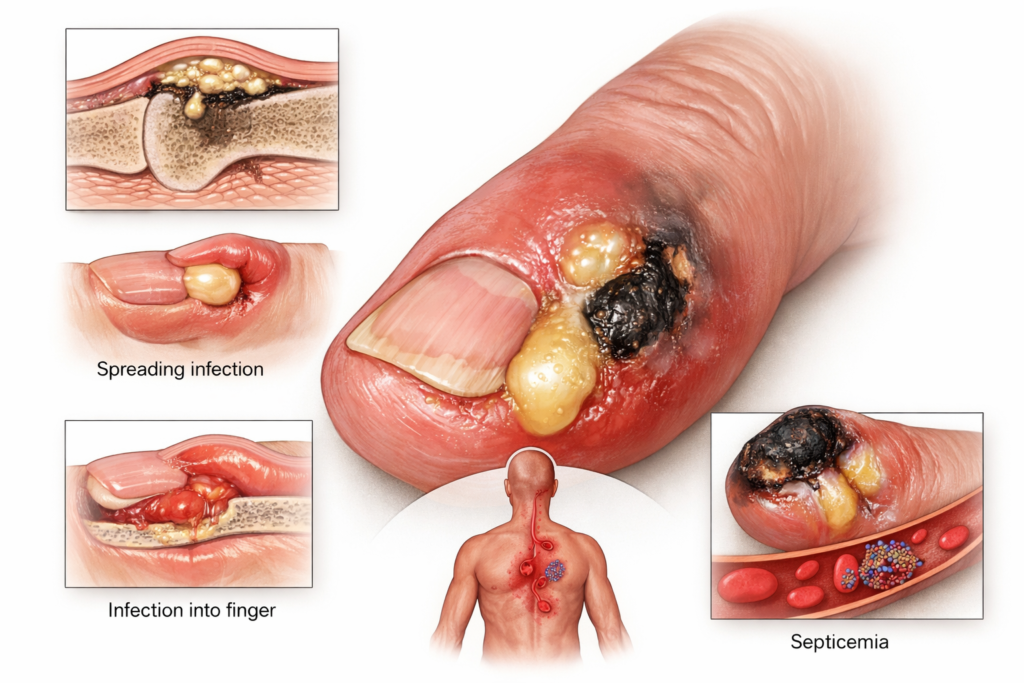
Paronychia is a common infection that affects the skin around the nail. In many cases it is mild and improves with simple care. However, if the infection continues or is ignored, paronychia complications can sometimes develop.
Untreated paronychia can sometimes lead to complications such as a nail abscess, spreading skin infection, nail deformity, or long-lasting inflammation around the nail. In rare cases, the infection may spread deeper into the fingertip or bloodstream. Early care usually prevents these complications.
Understanding what can happen if paronychia is untreated can help you recognize when symptoms are getting worse and when medical care may be needed. Most nail infections remain mild, but knowing the warning signs can help prevent more serious problems.
What It Is
Paronychia complications occur when a nail fold infection spreads deeper into nearby tissues or continues for a long time without improving.
This may happen when:
- bacteria or fungi continue growing in the nail fold
- the skin around the nail remains injured or irritated
- the infection is not treated early
- the nail area is frequently exposed to moisture or trauma
If the infection worsens, it may lead to swelling, pus formation, nail changes, or spread of the infection beyond the nail area.
For a full explanation of the condition, see what paronychia is and why it occurs.
What It Looks or Feels Like
Mild Signs of Worsening Infection
Early complications of untreated paronychia may include:
- swelling that does not improve
- increasing tenderness around the nail
- redness that becomes more noticeable
- thickened or irritated nail fold
- mild nail shape changes
These symptoms suggest the infection may still be active.
More Noticeable Symptoms
If the infection progresses, symptoms may become more obvious.
These may include:
- visible pocket of pus near the nail
- increasing pressure or throbbing pain
- redness spreading beyond the nail fold
- nail lifting or separating from the nail bed
- difficulty using the finger or toe
These signs may indicate a more severe paronychia infection.
Common Causes of Complications
Complications of paronychia are more likely when the infection:
- is left untreated for several days
- continues to be irritated by nail biting or picking
- occurs after repeated nail injuries
- develops in people with diabetes
- occurs in individuals with weakened immune systems
- becomes long-lasting inflammation around the nail
Long-lasting infections may sometimes develop into chronic nail fold inflammation.
Possible Complications of Untreated Paronychia
Nail Abscess
One of the most common paronychia complications is a small collection of pus called an abscess.
This may cause:
- swelling that feels tight
- throbbing pain
- a yellow or pale area under the skin near the nail
An abscess may need medical care to relieve pressure and allow the infection to drain.
Spread of Infection to Nearby Skin
In some cases the infection can spread beyond the nail fold.
This may lead to redness and swelling in the surrounding skin of the finger or toe.
Signs may include:
- expanding redness
- warmth around the nail
- swelling extending into nearby skin
You can learn more about skin infections from CDC guidance on skin infections.
Deep Fingertip Infection (Felon)
In rare cases, infection from untreated paronychia can spread deeper into the fingertip pad. This deeper infection is sometimes called a felon.
It may cause:
- severe throbbing pain in the fingertip
- tight swelling of the fingertip pad
- difficulty bending or using the finger
- increasing pressure inside the fingertip
Because the fingertip contains many small tissue compartments, pressure from infection can build quickly. Medical care is usually needed to relieve the pressure and treat the infection.
Bone Infection Near the Nail (Osteomyelitis)
Very rarely, a severe and long‑lasting nail infection may spread deeper and affect the bone near the fingertip or toe. Doctors call this osteomyelitis, which simply means an infection in the bone.
Possible warning signs may include:
- persistent or worsening pain
- swelling that does not improve
- tenderness deep in the fingertip or toe
- infection that keeps returning or does not heal
This complication is uncommon, but it can occur when infections are ignored for a long time or in people with weakened immune systems. Medical evaluation is important if symptoms continue to worsen.
Nail Deformity or Nail Damage
Long-lasting inflammation around the nail may affect how the nail grows.
Possible nail changes include:
- ridges in the nail surface
- thickened nail growth
- nail lifting or partial separation
These changes are usually temporary, but nails grow slowly and recovery may take several months.
Chronic Paronychia
If irritation continues, the infection may become persistent.
Chronic paronychia may involve:
- repeated swelling of the nail fold
- thickened skin around the nail
- recurring redness or tenderness
- slow or distorted nail growth
Protecting the nail from irritation can help reduce this risk.
Rare Spread of Infection in the Body
In rare situations, bacteria from a severe nail infection may enter the bloodstream. This is sometimes called bacteremia, which simply means bacteria circulating in the blood.
When this happens, the infection can potentially spread to other parts of the body.
Possible warning signs may include:
- fever
- chills or feeling unwell
- rapidly worsening swelling or redness
- severe pain
Although this is uncommon, it is more likely in people with weakened immune systems or uncontrolled diabetes.
Information about infection spread and prevention is also discussed by dermnet NZ guidance on paronychia.
What You Can Safely Do First
If symptoms are mild and early, simple care may help reduce irritation around the nail.
You may try:
- keeping the nail area clean and dry
- soaking the finger or toe briefly in warm water
- avoiding nail biting or picking
- protecting the nail from repeated injury
- limiting exposure to harsh chemicals or prolonged moisture
These steps may help early infections settle before complications develop.
When to See a Doctor
Seek medical evaluation if you notice:
- spreading redness around the nail
- fever
- severe or worsening pain
- visible pus that does not drain
- symptoms lasting more than a few days
- diabetes or a weakened immune system
You may also want to read when to see a doctor for a nail infection for additional guidance.
Complications Summary
Most paronychia infections improve with early care. However, untreated paronychia may sometimes lead to:
- nail abscess formation
- spreading skin infection
- nail growth changes
- chronic inflammation around the nail
- rare spread of infection into the bloodstream (bacteremia)
Recognizing symptoms early can help prevent more serious complications.
Conclusion
Paronychia is usually a mild nail infection, but ignoring symptoms may allow complications to develop. Understanding the possible effects of untreated paronychia helps you recognize when symptoms are not improving and when medical advice may be helpful.
Early care and protecting the nail area can often prevent these complications.
FAQs
What happens if paronychia is untreated?
Untreated paronychia may sometimes lead to complications such as a nail abscess, spreading redness around the nail, nail changes, or persistent inflammation.
Yes. In some cases the infection can spread to nearby skin, causing redness, warmth, and swelling around the nail.
This is rare, but severe infections can occasionally allow bacteria to enter the bloodstream, a condition known as bacteremia.
Most nail changes caused by paronychia are temporary. However, long-lasting inflammation may affect nail growth until a new nail grows out.
Most cases are mild, but infections that worsen, form abscesses, or spread may require medical evaluation.
Educational Disclaimer
This article is for educational purposes only and does not replace professional medical care. If you are unsure about your symptoms, consult a qualified healthcare provider.