
Loading views...
Chronic paronychia is a long-lasting irritation around the skin that surrounds a fingernail or toenail. It develops gradually and may cause persistent redness, swelling, or tenderness near the nail fold.
This condition is one form of paronychia, a group of nail fold infections explained in detail in the guide; what paronychia is and why it develops around the nail.
Read More from DermExplained
Many people describe this problem as a swollen nail fold for weeks or a nail infection that keeps returning. Although the appearance can be concerning, the condition often improves when the nail area is protected from ongoing irritation.
Understanding the causes of chronic paronychia, its symptoms, and what you can safely do first can help prevent the problem from worsening.
General information about common skin and nail infections can also be found in NHS health information on skin and nail conditions.
What Is Chronic Paronychia?
Chronic paronychia is a persistent inflammation around the nail fold that usually lasts longer than six weeks.
Unlike sudden nail infections, this condition develops slowly and may repeatedly improve and return. Because the inflammation lasts for a long time, it is sometimes referred to as persistent paronychia.
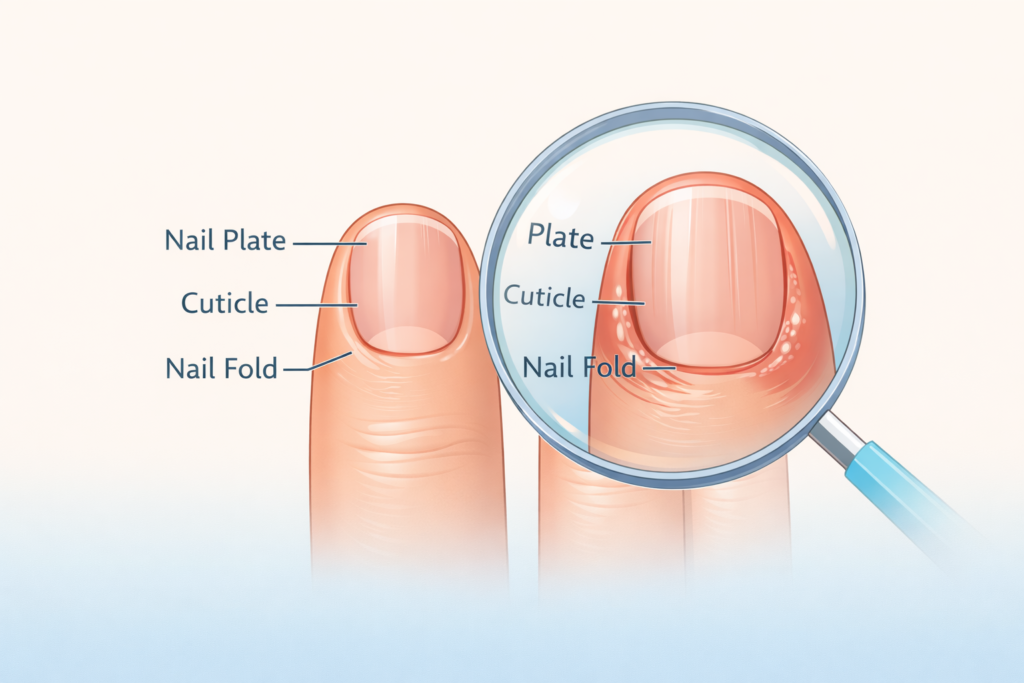
The condition often begins when the protective seal between the cuticle and the nail plate becomes damaged. When this seal breaks down, moisture and irritants can repeatedly enter the nail fold.
Over time, this may lead to swelling, redness, and irritation that can resemble a chronic nail fold infection.
For comparison, a rapidly developing infection around the nail is explained in this related guide on acute paronychia and sudden nail fold infections.
What Chronic Paronychia Looks or Feels Like
Symptoms usually develop slowly and may affect one or several fingers.
Mild symptoms
Early signs of chronic paronychia may include:
- Mild redness around the nail fold
- Slight swelling near the cuticle
- Tenderness when pressing around the nail
- Dryness or peeling skin around the nail
Some people first notice what seems like a swollen nail fold for weeks that does not completely settle.
More noticeable symptoms
As irritation continues, symptoms may become more obvious:
- Persistent swelling around the nail fold
- Thickened or inflamed skin near the nail
- Loss of the normal cuticle seal
- Nail ridges or uneven nail growth
- Changes in nail color
In some cases, chronic irritation may allow microorganisms to grow in the area, which can contribute to a chronic paronychia infection.
This long-term nail fold inflammation may affect multiple fingers, particularly in people whose hands are frequently exposed to water.
Common Causes of Chronic Paronychia
Chronic paronychia is usually linked to repeated irritation or moisture exposure, rather than a single injury.
Common contributing factors include:
- Frequent hand washing
- Prolonged exposure to water
- Contact with soaps, detergents, or cleaning chemicals
- Repeated damage to the cuticle
- Nail biting or picking around the nails
- Aggressive manicures or cuticle trimming
- Occupations involving “wet work” such as cleaning, healthcare, or food preparation
Repeated irritation weakens the natural nail barrier, allowing inflammation to continue and sometimes leading to persistent paronychia.
People who frequently experience nail infections may benefit from understanding the broader condition described in the article paronychia: infection around the nail fold.
What You Can Safely Do First for Chronic Paronychia
If symptoms are mild, simple protective care may help the nail fold recover.
You can try the following steps:
- Keep hands clean and dry whenever possible
- Avoid prolonged soaking of the hands
- Wear protective gloves during cleaning or dishwashing
- Avoid trimming or pushing back the cuticle
- Moisturize the skin around the nails regularly
- Avoid picking, biting, or pulling the skin around the nail
These steps help restore the natural barrier around the nail fold and may reduce irritation associated with chronic paronychia infection.
Because this condition develops gradually, improvement may take time.
When to See a Doctor for Chronic Paronychia
Medical evaluation may be helpful if any of the following occur:
- Redness begins spreading beyond the nail fold
- The area becomes increasingly painful or swollen
- Fever develops
- Visible pus appears and does not drain
- Symptoms persist for several days without improvement
- The condition occurs in someone with diabetes or a weakened immune system
A healthcare professional can determine whether the symptoms are due to chronic paronychia, another chronic nail fold infection, or a sudden infection such as acute paronychia.
Further general educational material about skin infections is also available from World Health Organization skin health resources.
Possible Complications of Persistent Paronychia
If this long-standing inflammation continues for a long time, it may begin to affect the nail itself.
Possible complications include:
- Nail ridging
- Distorted nail growth
- Nail discoloration
- Recurrent inflammation around the nail
Protecting the nail fold early often helps prevent these complications.
Conclusion
Chronic paronychia is a long-lasting inflammation around the nail fold that usually develops due to repeated moisture exposure or irritation of the cuticle area.
Many cases improve once the nail area is protected from further irritation. If symptoms continue or worsen, medical evaluation can help identify the cause and guide appropriate care. A decision can be made whether you need facility based or homecare for the condition.
If you would like to understand the broader condition affecting the nail fold, the overview guide paronychia and infections around the nail explains the different types and causes.
Frequently Asked Questions
Yes. Persistent paronychia may return if the nail fold continues to be exposed to moisture or repeated irritation.
Long-lasting inflammation may affect nail growth and can cause ridges, uneven nail surface, or color changes.
Chronic paronychia is usually not contagious. It most often develops from repeated irritation around the nail rather than spreading between people.
This condition typically lasts longer than six weeks and may improve slowly once the nail fold is protected from ongoing irritation.