
Loading views...
If you are searching for what causes a swollen, painful nail edge, why the skin around your nail is red and tender, or how to treat a nail infection safely, this guide gives you clear, medically accurate answers and practical next steps.
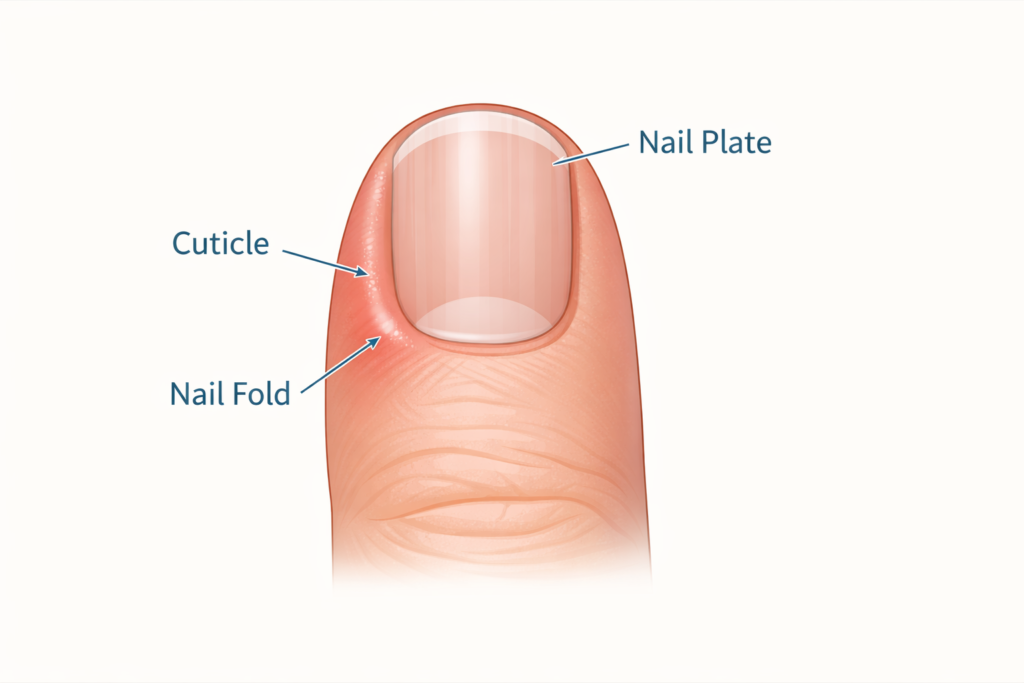
Paronychia is inflammation or infection of the skin surrounding a fingernail or toenail. It typically begins when the protective cuticle barrier becomes damaged or separated from the nail plate, allowing bacteria, yeast, or irritants to enter and trigger swelling, redness, and pain.
Read More from DermExplained
Most cases are mild and respond to early care. However, some require medical treatment. Therefore, knowing when to monitor symptoms and when to seek help makes an important difference.
For a clinical overview written for patients, the Cleveland Clinic provides a clear explanation of nail infections in their guide on paronychia and nail infections.
What Is Paronychia?
Paronychia is inflammation of the nail fold, the soft tissue bordering the nail plate.
It can be:
- Acute, meaning sudden and short-term
- Chronic, meaning persistent or recurring
- Bacterial, fungal, or irritant-related
The nail fold normally seals the space between skin and nail. However, when this seal is disrupted, infection or inflammation can develop more easily.
Acute Paronychia: Sudden Nail Infection
If your symptoms started quickly and seem severe, you may want to read our detailed guide below:
Acute paronychia develops quickly, often within hours or days.
It is most commonly caused by bacteria entering through small breaks in the skin, although other organisms can occasionally contribute:
- Nail biting
- Picking or trimming cuticles
- Hangnails
- Minor trauma
- Manicure injury
Common Symptoms
- Redness around one side of the nail
- Swelling
- Pain and tenderness
- Throbbing discomfort
- Pus formation
If pus builds up under the skin, a painful pocket of infection can form. This often needs to be treated by a healthcare professional instead of at home.
Without treatment, infection can spread into nearby skin. As a result, early recognition and care are important.
Chronic Paronychia: Long-Standing Nail Fold Inflammation
Chronic paronychia develops gradually and may last six weeks or longer.
It is often linked to repeated moisture exposure and irritants rather than a single injury.
Contributing factors include:
- Frequent hand washing
- Wet work occupations
- Detergents and chemicals
- Long-term glove use
- Underlying eczema (a long-term skin condition that causes dry, itchy, easily irritated skin)
Chronic cases often involve separation of the cuticle from the nail plate, allowing ongoing irritation.
Common Symptoms
- Persistent swelling
- Mild discomfort
- Thickened nail fold
- Nail ridging or distortion
- Nail discoloration
In contrast to acute infection, pain is usually less intense in chronic cases.
DermNet NZ, a respected dermatology resource, also explains how chronic moisture and skin irritation contribute to long-term nail fold inflammation in their overview of paronychia.
What Causes Infection Around the Nail?
Paronychia begins when the skin barrier around the nail is damaged. For example, even small cuts or pulled hangnails can create an entry point for germs.
Common triggers include:
- Nail biting or picking
- Cutting cuticles too closely
- Artificial nails
- Ingrown nail irritation
- Repeated wet-dry cycles
- Skin conditions such as eczema
People at higher risk include:
- Individuals with diabetes
- Those with weakened immune systems
- Healthcare workers
- Cleaners and food handlers
- People with chronic dermatitis
For broader public health information about skin and soft tissue infections, the World Health Organization provides general guidance on bacterial infections and prevention principles.
Symptoms of a Swollen Nail Fold
Symptoms depend on severity.
Early Stage
- Mild redness
- Slight swelling
- Tenderness
- Warm sensation
Progressive Stage
- Increasing swelling
- Throbbing pain
- Visible pus
- Tight or shiny skin
Warning Signs
- Spreading redness
- Fever
- Red streaks
- Increasing pain
- No improvement after several days
These signs suggest medical evaluation is needed. In addition, people with underlying health conditions should seek advice sooner rather than later.
How to Treat Paronychia Safely at Home
For a complete breakdown of medical and home management options, see our guide on Paronychia treatment.
In many cases, mild symptoms may improve with conservative care.
You can:
- Soak the finger or toe in warm water several times daily
- Dry thoroughly afterward
- Keep the area clean
- Avoid squeezing or cutting the area
- Reduce moisture exposure
- Stop nail biting or picking
Do not attempt to drain pus yourself.
If pain worsens, swelling increases, or pus persists, medical treatment may be necessary.
When to See a Doctor
Seek medical care if you have:
- Severe or worsening pain
- Spreading redness
- Fever
- Persistent pus
- Underlying diabetes
- Immune compromise
- No improvement after a few days
Early professional treatment can prevent deeper infection and long-term nail damage. Therefore, do not delay seeking help if symptoms are worsening.
For more information, you can get more details about when to see a doctor from our guide. You can also look for a more detailed medical discussion of causes, organisms, and treatment approaches, at the National Center for Biotechnology Information which provides an evidence-based review of paronychia in StatPearls.
Can Paronychia Be Prevented?
Yes, especially recurrent cases.
Prevention strategies include:
- Avoid biting nails
- Do not cut cuticles aggressively
- Wear protective gloves during wet work
- Dry hands thoroughly
- Moisturize the nail folds
- Manage eczema effectively
Overall, reducing moisture and trauma is key to prevention.
In addition, our detailed guide offers practical advice on prevention of nail infections and knowing when to seek medical help in its patient guide to paronychia and nail fold infections. You can also get details from our other guide on why paronychia keeps on coming back.
Conclusion: What to Do Next
Paronychia is a common nail infection or inflammation that usually starts with minor skin damage.
Early warm soaks and protective care may help mild cases resolve. However, increasing pain, spreading redness, abscess formation, or systemic symptoms require medical evaluation.
In summary, taking action early may prevent complications and protect nail structure.
Frequently Asked Questions About Paronychia
The most common cause of acute paronychia is bacteria entering through small breaks in the skin around the nail. Chronic paronychia is often related to repeated moisture exposure and irritation.
In most cases, yes. However, prolonged inflammation or repeated infection may temporarily affect nail growth. Early treatment reduces the risk of permanent changes.
Yes. If untreated, infection may spread to surrounding tissue and cause cellulitis. Spreading redness or fever requires prompt medical attention.
Paronychia itself is not typically spread through casual contact. However, sharing nail tools or damaging the skin barrier can increase risk.
Acute cases may improve within several days with appropriate care. Chronic cases may take weeks, especially if moisture exposure continues.
Educational Disclaimer
This article is for educational purposes only and does not replace professional medical care. If you are unsure about your symptoms, if pain is worsening, or if you have underlying health conditions, consult a qualified healthcare provider promptly.