
Loading views...
Noticing a painful or damaged nail after an injury can feel worrying. Many people search “injured fingernail pain” or “what happens when you hit your toenail” when they first notice these changes.
In many cases, this may be linked to nail trauma. The good news is that most mild injuries improve with simple care. Understanding what is happening can help you take calm, practical steps. For a broader overview of nail problems, see the nail conditions guide.
What It Is
Nail trauma is an injury to the fingernail or toenail that happens when the nail is hit, crushed, or exposed to repeated pressure.
As a result, you may notice:
- Pain or tenderness around the nail
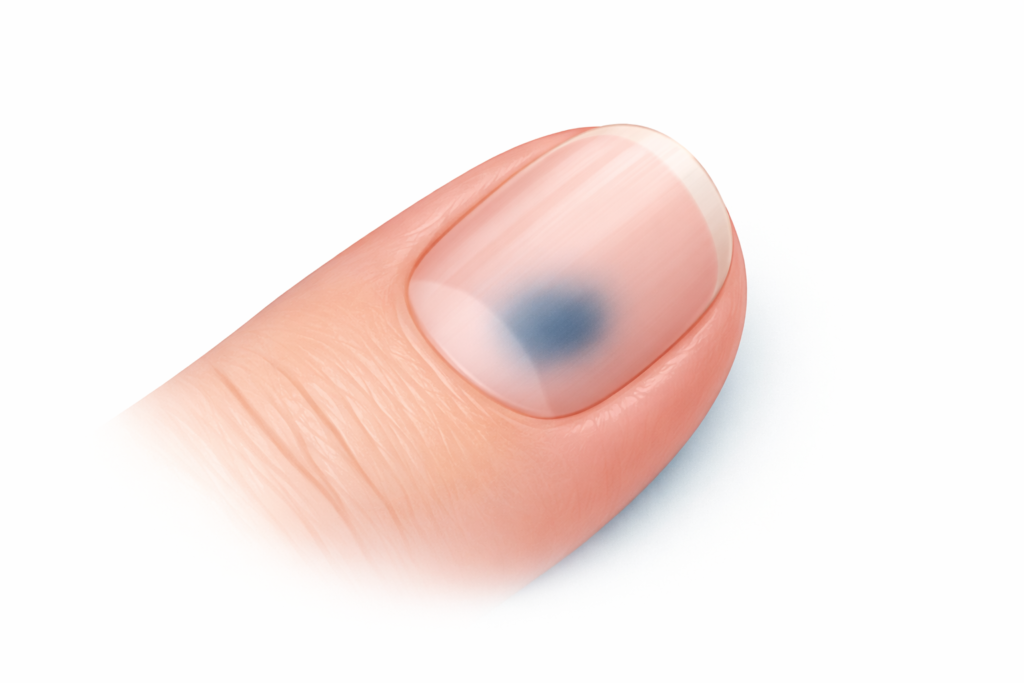
- Color changes under the nail (such as a dark or bruised appearance)
- Temporary damage to the nail or slight lifting from the nail bed
Because of this, many people notice symptoms shortly after injury. For general guidance, see basic injury care from the World Health Organization.
What It Looks or Feels Like
Symptoms can vary depending on how the nail was injured. In many cases, changes start mild and become more noticeable over time.
Mild Symptoms (Early Stage)
- Mild pain when touching the nail
- Slight redness or swelling
- A small dark spot under the nail
These early changes can sometimes resemble mild irritation seen in early nail infections.
More Noticeable Symptoms of Nail Trauma
- Throbbing pain under the nail
- Dark purple or black discoloration
- Nail lifting from the nail bed
Common Causes
Nail trauma usually happens when the nail is exposed to sudden force or repeated pressure during everyday activities.
Often, several factors may contribute, including:
- Dropping a heavy object
- Stubbing the toe
- Tight shoes
- Repetitive pressure
What You Can Safely Do First
If the injury is mild, simple care at home can often relieve discomfort and allow the nail to heal naturally. In the early stages, you may find these steps helpful:
- Rest and protect the nail
- Apply a cool compress
- Keep the nail clean and dry
- Wear comfortable footwear
You can also review safe nail care guidance from DermNet and self-care for minor injuries from the NHS.
Avoid attempting to drain the nail yourself.
When to See a Doctor
While many nail injuries improve on their own, some signs may indicate the need for medical attention.
However, it is important to seek medical care if you notice:
- Spreading redness
- Fever
- Severe or worsening pain
- Visible pus that does not drain
- Symptoms lasting more than a few days
- Diabetes or immune suppression
If unsure whether this could be an infection, see the paronychia hub.
Complications
Although most nail injuries heal without problems, complications can occur if the injury is more severe or not properly cared for.
If untreated or more severe, nail trauma may lead to:
- Nail infection
- Permanent nail changes
- Nail loss
Conclusion
Overall, nail trauma (injured fingernail or toenail) is a common condition that often improves with simple care.
Importantly:
- Most mild injuries heal on their own
- Early protection can prevent complications
- Medical review is important if symptoms worsen
FAQs
Blood collecting under the nail is the most common cause.
Pain improves quickly, but nail regrowth takes weeks.
Not usually, but injury can sometimes lead to infection.
Educational Disclaimer
This article is for educational purposes only and does not replace professional medical care. If you are unsure about your symptoms, consult a qualified healthcare provider.