
Not sure what this skin condition is?
Try our Skin Symptom Checker to understand possible causes.
Loading views...
Nail conditions are changes that affect nail color, thickness, shape, or strength. Common nail problems include fungal nail infections, ingrown toenails, brittle nails, and nail trauma. Most nail changes are harmless, but some may need medical attention if pain, swelling, or infection develops.
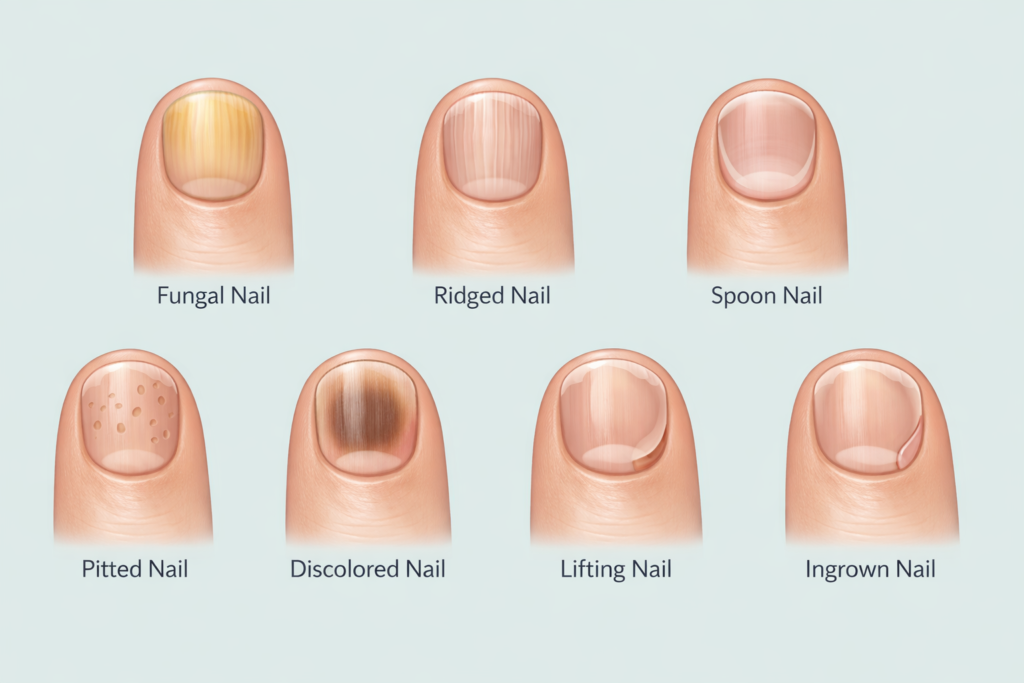
Nail conditions are common, and many people notice changes in their nails at some point in life. Nails may become thicker, develop ridges, change color, or sometimes lift away from the nail bed.
In many cases, nail changes are harmless and temporary, although they can sometimes cause discomfort or concern.
This guide explains common nail conditions, what nail changes may look like, possible causes, and when it may be helpful to seek medical advice.
What Nail Change Did You Notice?
Many people search for information about nail conditions because they notice a specific change in their nail.
If you are unsure which condition you may be experiencing, start by identifying the main change below.
| Nail Change | Possible Condition |
|---|---|
| Painful nail edge growing into skin | Ingrown Toenail |
| Thick yellow nail | Nail Fungus |
| Dark nail after injury | Blood Under the Nail |
| Nail splitting or breaking easily | Brittle Nails |
| Nail becoming unusually thick | Thickened Nails |
| Nail changing color | Nail Discoloration |
| Nail lifting from the nail bed | Nail Separation |
| Raised lines on nail surface | Ridged Nails |
| Nail curving inward | Spoon Nails |
| Small dents appearing on the nail | Nail Pitting |
| Nail damaged after impact | Nail Trauma |
Each of these nail conditions is explained later in this guide.
What Are Nail Conditions?
Nail conditions are changes that affect the appearance, structure, or strength of the nails.
These changes may involve:
- Nail color
- Nail thickness
- Nail shape
- Nail surface texture
- Nail attachment to the nail bed
Nails grow slowly, which means changes often develop gradually. A nail problem that begins today may not become fully visible until several weeks later.
Some conditions affect the nail plate, which is the hard surface of the nail. Others affect the skin surrounding the nail, known as the nail fold.
More detailed dermatology explanations of nail disorders can also be found on DermNet NZ’s nail disorder resource, which provides educational information about many nail conditions.
What Nail Conditions May Look or Feel Like
Different nail conditions can produce different types of changes.
Mild nail changes
Some nail conditions cause subtle symptoms such as:
- Small ridges on the nail surface
- Nails that split easily
- Slight color changes
- Nails growing more slowly than usual
These changes are often harmless and may improve as the nail grows.
More noticeable nail changes
Other nail disorders may cause clearer symptoms such as:
- Thickened nails
- Yellow or brown discoloration
- Nails lifting away from the nail bed
- Tenderness around the nail edge
- Dark discoloration beneath the nail after injury
Persistent or painful nail changes sometimes require medical assessment.
Common Causes of Nail Conditions
Many different factors can influence nail health.
Common causes include:
- Minor injuries to the nail
- Repeated pressure from footwear
- Fungal infections
- Skin conditions affecting the nails
- Aging
- Frequent exposure to water or cleaning chemicals
- Nail biting or picking
Because nails grow slowly, changes caused by these factors may take weeks or months to become visible.
General infection prevention guidance is also available through the CDC fungal nail infection resource, which explains how fungal infections may affect nails.
Quick Comparison of Common Nail Conditions
The table below summarizes several common nail conditions and how they differ.
| Nail Condition | What It Looks Like | Common Causes | Often Painful? |
|---|---|---|---|
| Ingrown Toenail | Nail edge grows into surrounding skin | Tight footwear, improper trimming | Often painful |
| Nail Fungus | Thick yellow or crumbly nail | Fungal infection | Usually painless early |
| Nail Trauma | Damaged nail after injury | Impact or repeated friction | Often painful initially |
| Blood Under Nail | Dark red or purple area under nail | Nail injury | Often painful |
| Brittle Nails | Nails crack or split easily | Frequent wetting, chemicals | Usually painless |
| Thickened Nails | Nail becomes unusually thick | Aging or infection | Sometimes uncomfortable |
| Nail Discoloration | Nail turns yellow, brown, white, or dark | Infection or injury | Usually painless |
| Nail Separation | Nail lifts away from nail bed | Trauma or irritation | Sometimes tender |
| Ridged Nails | Raised lines on nail surface | Aging or nail stress | Usually painless |
| Spoon Nails | Nail curves inward | Nutritional factors or trauma | Usually painless |
| Nail Pitting | Small dents on nail surface | Skin conditions | Usually painless |
Nail Symptoms and Possible Nail Disorders
People often notice symptoms before knowing the name of a condition.
The table below links common nail symptoms with possible nail conditions.
| Nail Symptom | Possible Nail Condition |
|---|---|
| Nail growing into surrounding skin | Ingrown Toenail |
| Thick yellow nail | Nail Fungus |
| Dark purple nail after injury | Blood Under Nail |
| Nail splitting or cracking | Brittle Nails |
| Nail becoming unusually thick | Thickened Nails |
| Nail turning yellow or brown | Nail Discoloration |
| Nail lifting from nail bed | Nail Separation |
| Raised lines on nail surface | Ridged Nails |
| Nail curving inward | Spoon Nails |
| Small dents appearing on nail | Nail Pitting |
| Nail damaged after impact | Nail Trauma |
Some nail conditions can appear similar. For example, thick nails may occur with fungal infection or aging, while dark nails often appear after injury.
Nail Conditions by Category
Nail conditions can often be grouped into a few broad categories.
Understanding these groups may help explain why nail changes occur.
Nail Infections
Some nail conditions develop because of infections affecting the nail.
Examples include fungal infections that may cause thickened or discolored nails, as well as infections of the skin around the nail such as paronychia.
Nail Injuries
Nails may also change after injury or repeated pressure.
Examples include nail trauma, bleeding beneath the nail, and ingrown toenails.
Structural Nail Changes
Some nail conditions affect the shape or texture of the nail.
These include ridged nails, spoon-shaped nails, nail pitting, and nails that gradually become thicker.
Nail Color Changes
Changes in nail color are also common.
Nails may appear yellow, white, brown, or dark depending on the underlying cause.
Global health resources describing common infections that can affect the skin and nails are also available through the World Health Organization health fact sheets.
Common Nail Conditions Explained
Below are brief explanations of several common nail conditions.
Ingrown Toenail
An ingrown toenail occurs when the edge of the nail grows into the surrounding skin. This may cause pain, swelling, and tenderness.
Nail Fungus
Nail fungus is a common infection that may cause thickened, yellow, or brittle nails.
Nail Trauma
Nail trauma occurs when the nail is injured by impact, pressure, or repeated friction.
Blood Under the Nail
Blood trapped beneath the nail can appear as a dark red or purple discoloration after injury.
Brittle Nails
Brittle nails split, crack, or break easily.
Thickened Nails
Some nails gradually become thicker and harder to trim. Learn more about the possible causes of thick nails in this detailed guide on thickened nails causes.
Nail Discoloration
Nail discoloration refers to changes in nail color such as yellow, brown, white, or dark spots.
Nail Separation
Nail separation occurs when the nail lifts away from the nail bed.
Ridged Nails
Ridged nails have raised lines along the nail surface.
Spoon Nails
Spoon nails curve inward and form a shallow depression in the nail.
Nail Pitting
Nail pitting appears as small dents in the nail surface.
What You Can Safely Do First
Simple nail care habits may help protect nail health.
You may consider:
- Keeping nails trimmed and clean
- Avoiding biting or picking at nails
- Wearing gloves when using cleaning products
- Choosing properly fitting footwear
- Protecting nails from repeated injury
These habits may reduce stress on the nail and surrounding skin.
When to See a Doctor
Although many nail conditions are harmless, medical advice may be helpful if you notice:
- Spreading redness around the nail
- Severe or worsening pain
- Fever
- Visible pus that does not drain
- Symptoms lasting more than a few days
- Nail problems in someone with diabetes or immune suppression
A healthcare professional can examine the nail and determine whether further care is needed.
Conclusion
Nail conditions are common, and many nail changes are harmless.
Understanding what causes nail changes can help you recognize symptoms early and decide whether simple nail care may help or whether medical advice may be useful.
Educational Disclaimer
This article is for educational purposes only and does not replace professional medical care. If you are unsure about your symptoms, consult a qualified healthcare provider.
FAQs About Nail Conditions
Common nail conditions include ingrown toenails, fungal nail infections, brittle nails, nail trauma, and nail discoloration.
Nail color may change due to infection, injury, staining, or structural changes in the nail.
Vertical ridges are common and often develop with aging.
Some nail changes improve as the nail grows out.
Medical advice may be helpful if nail changes cause pain, spreading redness, fever, or persistent swelling.