
Not sure what this skin condition is?
Try our Skin Symptom Checker to understand possible causes.
Loading views...
Rashes and inflammatory skin conditions are very common. They may appear suddenly and feel worrying. However, most are mild and improve with simple care. This guide explains common skin rashes, what causes skin inflammation, and what you can safely do first.
Reassurance: Many rashes are harmless and temporary. With the right first steps, your skin often settles without complications.
👉 Could your rash be related to a nail infection?
Learn how surrounding skin changes can happen in this guide to paronychia and nail fold infections.
What Are Rashes and Inflammatory Skin Conditions?
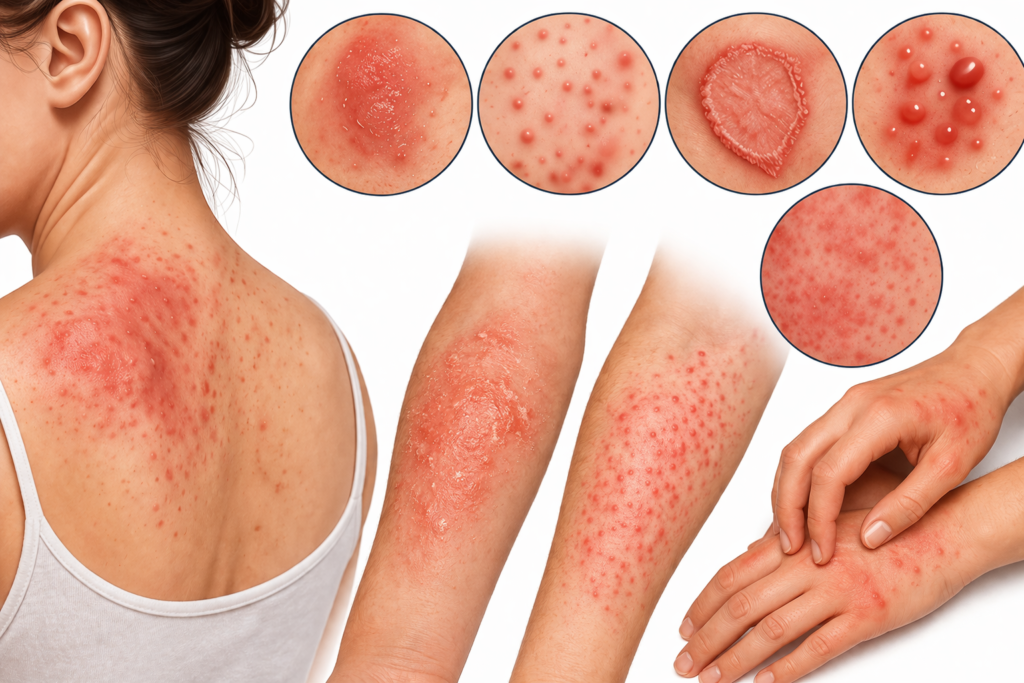
A rash is any visible change in the skin. It may include redness, bumps, dryness, or irritation. Inflammatory skin conditions happen when the skin reacts to triggers such as irritants, allergens, or internal factors. Some rashes are short-lived. Others may come and go. While many are mild, understanding causes of skin inflammation helps you respond calmly and safely.
Quick self-check:
- Is your rash itchy or painful?
- Did it appear after contact with something new?
- Is it spreading or staying in one place?
- Do you feel unwell or have a fever?
Common Types of Skin Rashes
There are many types of skin rashes. Each has slightly different features, but most follow similar patterns.- Contact dermatitis: Reaction to soaps, chemicals, or plants
- Eczema: Dry, itchy, and recurring patches
- Heat rash: Small bumps caused by sweat buildup
- Hives: Raised, itchy welts that appear suddenly
- Psoriasis: Thick, scaly patches that may persist
- Fungal rashes: Often found in warm, moist areas
What Skin Rashes Look or Feel Like
Symptoms vary, but many rashes share common features. Recognizing these helps you decide what to do next.Mild symptoms
- Light redness or patchy skin
- Dryness or rough texture
- Mild itching
- Small bumps
More noticeable symptoms
- Intense itching or burning
- Swelling or raised areas
- Scaling or flaking skin
- Spreading rash across a wider area
Common Causes of Skin Inflammation
Understanding causes of skin inflammation can help you avoid triggers in the future.- Contact with irritants like soaps or detergents
- Allergic reactions to foods or materials
- Heat and sweating
- Dry skin and weather changes
- Stress or immune responses
- Fungal or bacterial growth on the skin
What You Can Safely Do First
Simple steps often help calm the skin and reduce irritation.- Wash gently with clean water
- Avoid new or harsh products
- Keep the area cool and dry
- Wear loose, breathable clothing
- Try not to scratch the skin
Home care tip: A cool, clean cloth placed on the rash may help reduce itching and discomfort.
👉 Not sure if your rash is irritation or infection?
Learn how to compare symptoms in this guide to cellulitis vs local infection.
When to See a Doctor
Most skin rashes improve on their own. However, some signs suggest you should seek medical care.- Redness that spreads quickly
- Fever or feeling unwell
- Severe or worsening pain
- Visible pus that is not draining
- Symptoms lasting more than a few days
- You have diabetes or a weakened immune system
Important: If your rash worsens or spreads, it may need medical review. Early care can prevent complications.
Possible Complications
Most rashes settle without issues. However, complications can happen if the skin becomes damaged.- Skin thickening from repeated scratching
- Secondary infection
- Persistent inflammation
Conclusion
Rashes and inflammatory skin conditions are common and often manageable. Many improve with simple care and time. If your symptoms do not improve or become more severe, it is safest to seek medical advice. Acting early helps protect your skin and your overall health.
👉 Still unsure what your rash means?
Start with this simple guide on when to see a doctor for a skin infection.
Frequently Asked Questions
Are all rashes infections?
No. Many rashes are not infections. They are often caused by irritation or inflammation
How long do rashes usually last?
Many rashes improve within a few days. Persistent rashes may need medical review.
What should I do for an itchy rash?
If you have an itchy rash, keep the area cool, avoid irritants, and try not to scratch.
What are the most common skin rashes?
Common skin rashes include eczema, contact dermatitis, heat rash, and hives.