
Not sure what this skin condition is?
Try our Skin Symptom Checker to understand possible causes.
Loading views...
If you’re wondering when to see a doctor for a skin infection, you’re not alone. Many skin infections are mild and improve with simple care. However, some signs may mean the infection needs medical attention.
You may need to see a doctor if redness starts spreading, pain increases, fever develops, or the area does not improve within a few days.
Reassurance: Most mild skin infections improve with basic care. Knowing what to watch for helps you stay calm and act early if needed.
👉 Not sure if your infection is spreading?
Understand the difference in this guide to local vs spreading skin infections.
What This Means
A skin infection happens when bacteria enter through a break in the skin. As a result, redness, swelling, and discomfort may develop.
In many cases, the infection stays in one area. However, sometimes it can spread and require medical care.
Quick self-check:
- Is the redness small and contained?
- Is the discomfort mild and not worsening?
- Are there no signs of spreading?
If yes, it may still be safe to monitor.
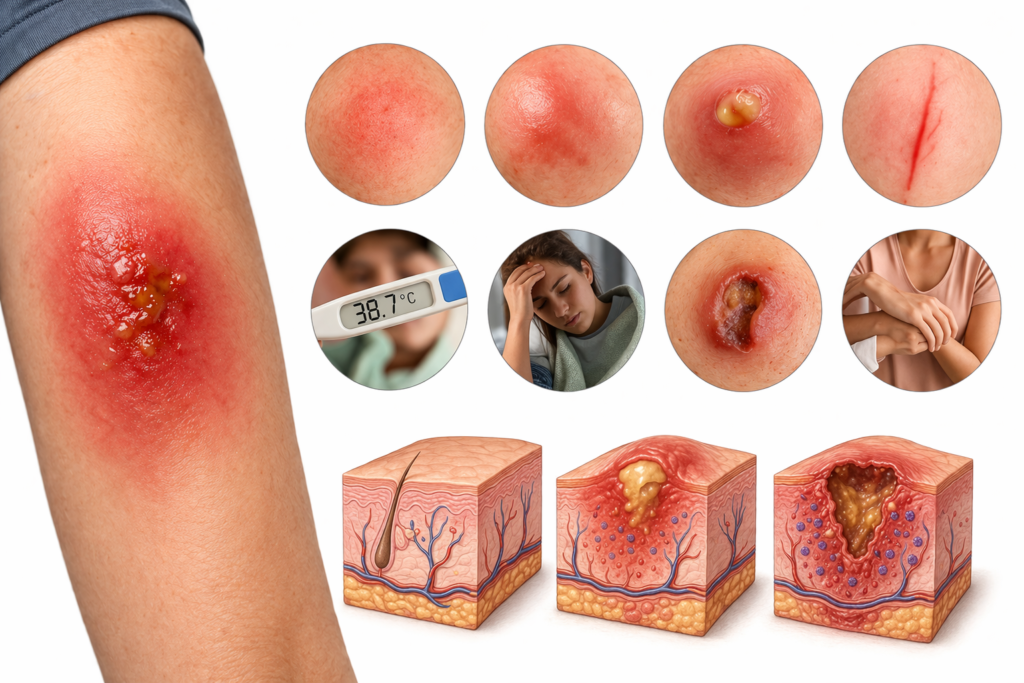
What It May Look or Feel Like
Mild signs
- Small, localized redness
- Slight swelling
- Mild tenderness
- Stable warmth without spreading
More noticeable signs
- Redness spreading outward
- Increasing swelling or warmth
- Throbbing or worsening pain
- Fluid or pus under the skin
Common Causes
- Minor cuts or scrapes
- Insect bites
- Frequent scratching or irritation
- Poor wound hygiene
- Close contact with infected skin
- Reduced immune defenses
What You Can Safely Do First
If symptoms are mild, simple care can help prevent worsening.
Home care steps:
- Clean the area gently with water
- Keep the skin dry and protected
- Avoid squeezing or picking
- Use a clean dressing if needed
- Check the area daily for changes
For more detail, this guide on infected cuts explains safe first steps clearly.
👉 Want to manage a mild infection safely?
Follow this simple skin infection home-care guide for early care.
When to See a Doctor
Knowing when a skin infection needs medical care is important. Some symptoms suggest the infection may be spreading or becoming more serious.
See a doctor if you notice:
- Redness spreading beyond the original area
- Fever or feeling unwell
- Severe or worsening pain
- Visible pus that is not draining
- Symptoms lasting more than a few days
- Increasing swelling or warmth
- You have diabetes or a weakened immune system
These are key skin infection warning signs. Therefore, early care helps prevent complications and supports recovery.
For trusted guidance, review
DermNet skin infection guidance and
CDC skin infection advice.
Possible Complications
If a skin infection is ignored, it may worsen over time.
- Spread to nearby skin areas
- Formation of deeper infection pockets
- Delayed healing
- Increased discomfort
In addition, understanding boil vs abscess differences can help you recognize more serious infections.
Conclusion
Most skin infections improve with simple care and monitoring. However, knowing when to see a doctor for a skin infection helps you act early.
If symptoms spread, worsen, or do not improve, it is safer to seek medical care.
👉 Still unsure about your symptoms?
Check the early signs of infection to guide your next step.
FAQs
You should seek care if redness spreads, pain worsens, fever develops, or symptoms last several days.
People with diabetes or weakened immunity should seek care sooner.
Pus may indicate infection. If it builds up or does not drain, medical care may be needed.
Spreading redness, warmth, and increasing swelling are common signs of serious skin infection.
Yes, mild infections may improve with basic care and monitoring.