
Not sure what this skin condition is?
Try our Skin Symptom Checker to understand possible causes.
Loading views...
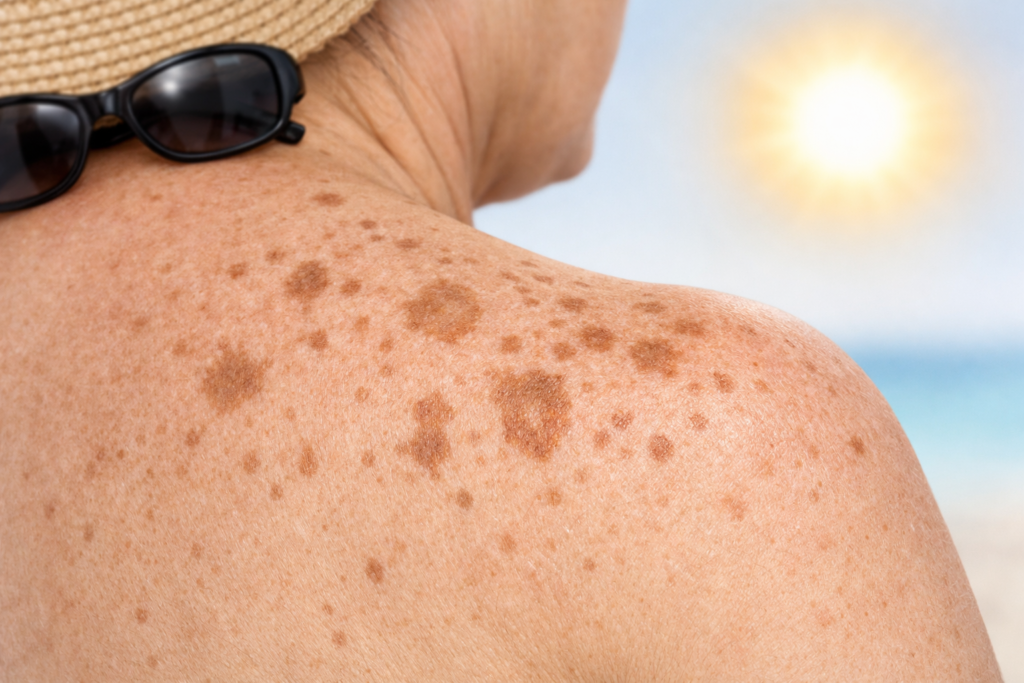
Sunspots are common skin marks that appear after repeated sun exposure. They are also called age spots or solar lentigines. Many people notice them on the face, hands, or arms. Many people also wonder if sunspots are dangerous or how to fade them safely. This guide explains both clearly in simple terms.
Reassurance: Sunspots are very common and usually harmless. They often develop slowly and do not damage your health.
👉 Not sure if your skin spots are harmless or concerning?
Learn how to tell the difference between harmless and worrying dark spots on skin.
What Are Sunspots?
Sunspots are flat, darkened areas of skin caused by long-term exposure to ultraviolet (UV) rays from the sun. Over time, the skin produces more pigment in certain areas. This creates visible brown or tan patches. Sunspots are well-recognized in dermatology and are linked to long-term UV exposure.
Quick self-check:
- Flat brown or tan spots
- Appear on sun-exposed areas
- Not painful or itchy
- Develop slowly over time
What Do Sunspots Look or Feel Like?
Mild:- Light brown or tan spots
- Flat and smooth
- Small and scattered
- Darker brown patches
- Larger or clustered spots
- Clearly visible on exposed skin
Where Do Sunspots Commonly Appear?
- Face
- Hands
- Arms
- Shoulders
- Upper back
Sunspots vs Other Dark Spots
Not all dark spots are the same. Understanding the difference can help you feel more confident.- Sunspots: Caused by sun exposure, flat, and stable
- Melasma: Often linked to hormones, usually appears in patches
- Post-inflammatory pigmentation: Follows acne, injury, or irritation
Common Causes of Sunspots
- Frequent sun exposure without protection
- Aging skin
- Outdoor work or activities
- Use of tanning beds
- Light or sensitive skin types
What You Can Safely Do First
Sunspots usually do not need treatment. However, simple habits can help protect your skin and prevent new ones.- Use shade or protective clothing outdoors
- Wear a wide-brim hat in strong sunlight
- Cleanse skin gently without scrubbing
- Keep skin moisturized
- Avoid picking or scratching spots
Home care tip: Consistent sun protection is the most effective way to prevent new sunspots.
👉 Want to improve uneven skin tone safely?
Explore simple ways to manage skin pigmentation at home.
How to Prevent Sunspots
Prevention is the most effective approach.- Limit time in strong midday sunlight
- Wear protective clothing and hats
- Seek shade whenever possible
- Build consistent daily skin protection habits
When to See a Doctor
Most sunspots remain stable and harmless. However, it is important to watch for unusual changes.- Spreading redness
- Fever or feeling unwell
- Severe or worsening pain
- Visible pus not draining
- Spots changing quickly in size, shape, or color
- Symptoms lasting more than a few days
- If you have diabetes or a weakened immune system
Important: Any spot that looks different from others or changes suddenly should be checked by a healthcare professional.
Possible Complications
Sunspots themselves are harmless. However, they can sometimes be confused with more serious skin conditions. This is why monitoring changes is important. For more information, see NHS guidance on sun exposure and Cleveland clinic information on sunspots.Conclusion
Sunspots are a normal response to long-term sun exposure. They are very common and usually harmless. You are not alone in noticing these changes. With simple care and awareness, you can manage them confidently. Watch your skin for changes and seek advice if anything seems unusual.
👉 Not sure if your skin changes need attention?
Learn when to act in our guide to skin discoloration.
Frequently Asked Questions
Are sunspots the same as freckles?No. Freckles often fade, while sunspots tend to stay longer.
How can I prevent sunspots?
Limiting sun exposure and protecting your skin daily can help.
Can young people get sunspots?
Yes, especially with frequent sun exposure over time.
Can sunspots fade or be removed naturally?
They may fade slightly, but often remain. Prevention is the best approach.
Are sunspots dangerous?
They are usually harmless. However, any changes should be checked.