
Not sure what this skin condition is?
Try our Skin Symptom Checker to understand possible causes.
Loading views...
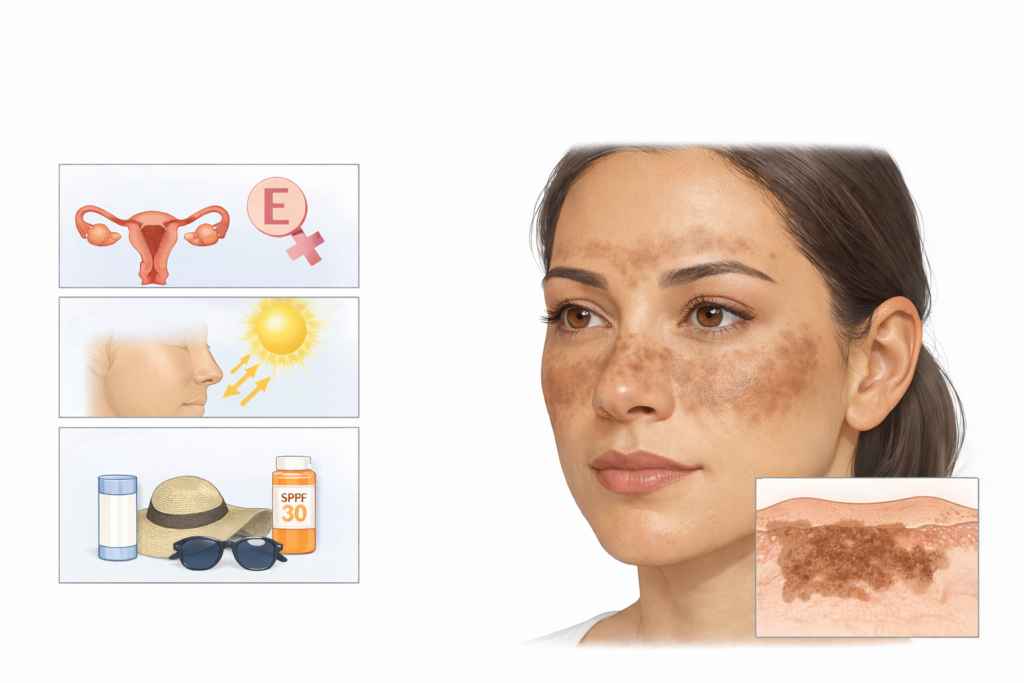
Melasma is a common skin condition that causes symmetrical brown or gray patches, usually on the face. It is often triggered by sun exposure and hormonal changes.
Although it can feel worrying, melasma is harmless. With the right care, it often becomes lighter over time.
Reassurance: Melasma is not dangerous and does not turn into skin cancer. Many people experience it, and it can improve with simple, consistent care.
👉 Not sure what type of dark patches you have?
Learn how to recognize different types of skin discoloration.
What Is Melasma?
Melasma happens when the skin produces more pigment than usual. This leads to darker patches on the skin.
It most often affects sun-exposed areas and tends to appear on both sides of the face.
Where Does Melasma Appear?
- Cheeks
- Forehead
- Nose
- Upper lip
- Chin
Quick self-check:
- Are the patches brown or gray?
- Do they appear symmetrically on your face?
- Did they develop after sun exposure or hormonal changes?
What Does Melasma Look or Feel Like?
Melasma does not usually cause pain or itching. It mainly affects skin appearance.
Mild:
- Light brown patches
- Uneven skin tone
- Small areas of discoloration
More noticeable:
- Darker brown or gray patches
- Clear symmetrical patterns on the face
- Larger areas covering cheeks or forehead
Melasma vs Other Dark Spots
Not all dark patches are melasma. Understanding the difference can help reduce confusion.
- Melasma: Symmetrical patches, often linked to hormones and sun
- Post-inflammatory hyperpigmentation: Appears after acne or irritation
- Sunspots: Small, isolated spots from long-term sun exposure
If you are unsure, it is always safe to get a professional opinion.
Common Causes of Melasma
Melasma usually develops due to a combination of factors.
- Sun exposure
- Hormonal changes such as pregnancy
- Hormonal medications
- Genetic tendency
- Skin irritation from certain products
What Makes Melasma Worse?
- Sun exposure
- Heat
- Hormonal fluctuations
- Harsh or irritating skincare
Even small amounts of sunlight can darken existing patches.
What You Can Safely Do First
Gentle, consistent care can help prevent melasma from worsening.
- Use daily sun protection such as hats and shade
- Avoid direct midday sun when possible
- Reapply sun protection during the day
- Use gentle, non-irritating skincare products
- Avoid harsh scrubs or strong treatments
Home care tip: Sun protection is the most important step. Even on cloudy days, UV exposure can make melasma darker.
👉 Struggling with stubborn dark patches that won’t fade?
Learn safe ways to manage dark spots on skin.
When to See a Doctor
Melasma is harmless, but some signs need medical review.
- Spreading redness
- Fever
- Severe or worsening pain
- Visible pus not draining
- Symptoms lasting more than a few days with concern
- If you have diabetes or a weakened immune system
Important: If you are unsure whether the patches are melasma, a clinician can help confirm and guide safe care.
Possible Complications
Melasma does not harm the body. However, it can affect confidence and emotional well-being.
It may last for a long time or return, especially with sun exposure or hormonal changes.
Conclusion
Melasma is a common and harmless condition that causes dark patches on the skin.
It is normal to feel concerned about visible skin changes. Many people experience melasma, and support is available.
With consistent sun protection and gentle care, it can improve over time. If you are unsure, seeking medical advice is a safe next step.
👉 Want to understand why some dark spots appear after skin irritation?
Explore the difference in post-inflammatory hyperpigmentation.
FAQs About Melasma
-
How can I prevent melasma from worsening?
Daily sun protection and gentle skincare are the most effective steps.
How is melasma different from other dark spots?
Melasma usually appears symmetrically and is linked to hormones, while other spots may follow irritation or sun damage.
Is melasma dangerous?
No. Melasma is harmless and does not lead to serious disease.
What causes melasma on the face?
Melasma is commonly triggered by sun exposure and hormonal changes. Genetics can also play a role.
Does melasma go away on its own?For medically reviewed information, see
It can fade over time, especially with good sun protection. However, it may return.
DermNet NZ
and
American Academy of Dermatology.