
Loading views...
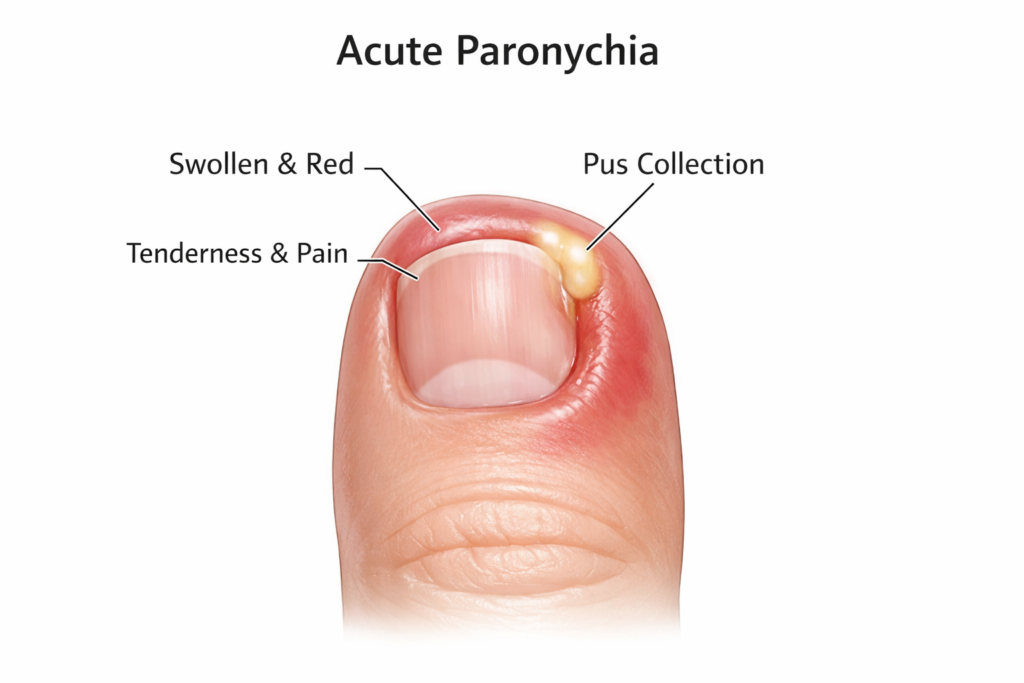
Acute paronychia is a sudden nail infection that causes pain, redness, and swelling around the nail. It usually develops quickly after minor skin damage, such as nail biting, picking at a hangnail, or a small cut near the cuticle. It is one type of paronychia nail infection, a condition affecting the skin surrounding the fingernail or toenail.
If you have noticed a painful infection around the nail or swollen red skin around your fingernail, you are not alone. Acute paronychia is common and typically affects just one finger.
Read More from DermExplained
The reassuring news is that many mild cases improve with early, simple care. This guide explains what acute paronychia is, what you can safely try first, and when a sudden nail infection needs medical attention.
What Is Acute Paronychia?
Acute paronychia is a rapid infection of the skin around the nail, usually along the cuticle or side nail fold.
It develops when bacteria enter through a small break in the skin. Even tiny injuries can allow infection to form. Educational resources from Cleveland Clinic explain that this type of infection commonly starts when bacteria enter damaged skin around the cuticle or nail fold.
- Develops over hours to a few days
- Is usually bacterial
- Often affects one finger
- Causes noticeable pain
Acute paronychia is different from chronic paronychia, which develops slowly over weeks and is often linked to repeated moisture or irritation. Learn more about these differences and other related disorders in our nail conditions overview.
What Does Acute Paronychia Look or Feel Like?
Mild Signs of a Sudden Nail Infection
Early acute paronychia may cause:
- Tenderness along the nail edge
- Mild redness
- Slight swelling
- Warmth around the nail
- Throbbing discomfort
At this stage, the swollen red skin around the fingernail may feel sensitive but manageable.
When Symptoms Become More Noticeable
As acute paronychia progresses, you may notice:
- Increased swelling
- More intense pain
- Shiny or tight skin
- A small pocket of fluid under the skin
- Difficulty using the finger comfortably
Sometimes a small collection of pus (called an abscess) can form. This may require medical evaluation for safe drainage.
Common Causes of Acute Paronychia
Acute paronychia often begins after small injuries to the skin around the nail.
Common triggers include:
- Nail biting
- Picking at hangnails
- Cutting or pushing back cuticles aggressively
- Artificial nails
- Frequent exposure to water
- Small cracks near the nail
- Minor trauma
An infected cuticle with pain usually means bacteria entered through one of these small openings. Clinical reviews published by the American Academy of Family Physicians describe acute paronychia as a rapidly developing bacterial infection after disruption of the nail fold.
What You Can Safely Do First
If symptoms are mild and there are no red flags, early conservative care may help.
- Soak the finger in warm water several times daily
- Gently dry the area afterward
- Keep the nail clean
- Avoid squeezing or cutting the swollen skin
- Stop nail biting or picking
- Remove artificial nails if present
- Protect the finger from further trauma
Warm water soaks may help encourage natural drainage and reduce discomfort. Public health guidance from the UK National Health Service also notes that early soaking and protecting the nail area are common first‑step care approaches for mild infections.
Avoid trying to drain the area yourself. This can push infection deeper.
If symptoms do not improve within a few days, medical evaluation may be needed.
When to See a Doctor
Seek medical care if you notice:
- Spreading redness beyond the nail area
- Fever
- Severe or worsening pain
- Visible pus that does not drain
- Symptoms lasting more than a few days
- You have diabetes
- You have a weakened immune system
These signs may indicate that the infection requires professional evaluation.
Possible Complications
Most cases of acute paronychia improve without serious problems. However, untreated infection can sometimes lead to:
- Spread of infection into deeper finger tissues
- Nail growth changes
- Delayed healing
- Rarely, more extensive finger infection
Early care and medical evaluation when needed help reduce these risks.
Conclusion
Acute paronychia is a common and usually mild sudden nail infection. It often begins after minor skin injury and may cause redness, swelling, warmth, and pain around the nail.
Many cases improve with early warm soaks and protection of the nail area. Watching for warning signs is important.
If symptoms worsen, spread, or fail to improve within a few days, medical care is the safest next step.
Understanding acute paronychia helps you stay calm, take appropriate first steps, and know when to seek help.
Frequently Asked Questions
Most cases are mild. However, spreading redness, fever, severe pain, or pus that does not drain may require medical care.
Warm water soaks and avoiding further irritation may help in mild cases. If symptoms worsen, seek medical advice.
Not always. Irritation or trauma can also cause redness. Persistent pain, warmth, and swelling may suggest infection.
Mild acute paronychia may improve with early home care such as warm soaks and protecting the nail. If symptoms worsen or swelling increases, medical evaluation is recommended.