
Not sure what this skin condition is?
Try our Skin Symptom Checker to understand possible causes.
Loading views...
Paronychia treatment focuses on helping the skin around the nail heal while preventing the infection from worsening. Paronychia is a common nail fold infection that often starts with redness, tenderness, and swelling along the edge of the nail.
Many mild cases improve with simple care that protects the nail and reduces irritation. Early attention can help prevent the infection from progressing.
This guide explains paronychia treatment options, safe first-care steps for a nail fold infection, and when medical evaluation may be needed. This condition is sometimes described as an infected cuticle or nail fold infection, and early care can help prevent worsening swelling or pain.
For a full overview of causes, symptoms, and management options, see our complete guide to paronychia.
What helps treat paronychia?
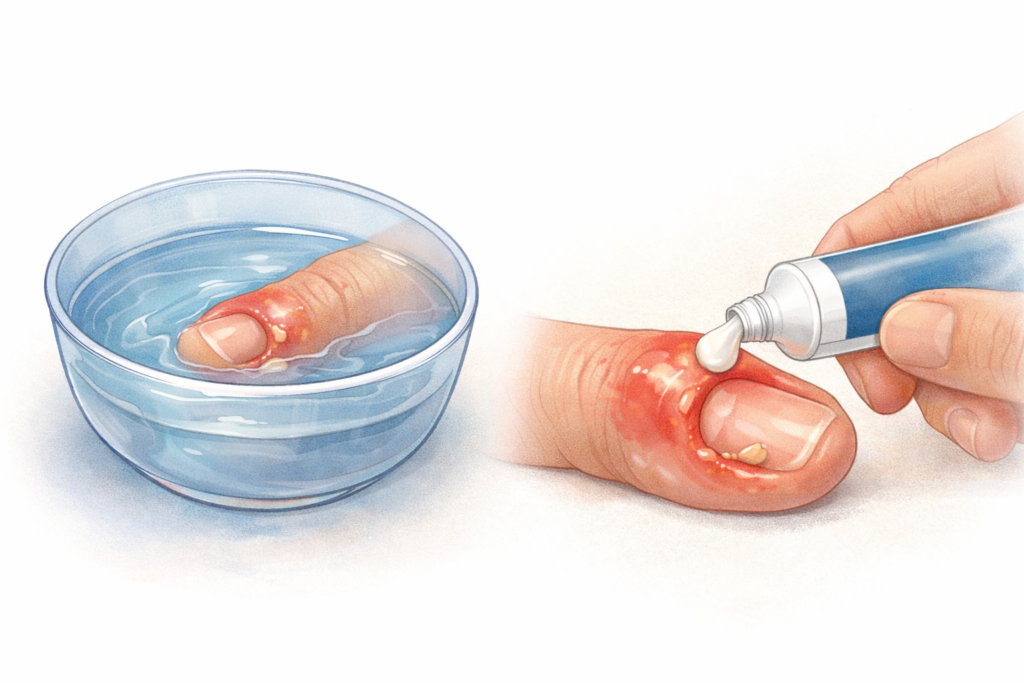
Paronychia treatment focuses on reducing swelling, protecting the nail fold, and allowing the surrounding skin to heal. Mild paronychia infections may improve with warm water soaks, gentle cleaning, and avoiding nail irritation. More severe infections may require medical care to drain trapped fluid or treat the infection.
What Is Paronychia?
Paronychia is an infection or inflammation of the skin around the nail, known as the nail fold. It develops when bacteria or fungi enter through a small break in the skin near the nail edge.
These small breaks may occur from everyday habits such as nail biting, trimming the cuticle too closely, or minor injuries during manicures.
Two patterns of infection are commonly seen:
- Acute paronychia – a sudden nail fold infection that develops quickly
- Chronic paronychia – long‑lasting inflammation around the nail that may persist for weeks or months
Understanding the cause helps guide the most appropriate treatment for paronychia.
What It Looks or Feels Like
Mild Symptoms of Paronychia
Early paronychia symptoms often include:
- Mild redness along the nail edge
- Tenderness when touching the nail fold
- Slight swelling near the cuticle
- Sensitivity when pressure is applied
At this stage, the infection is usually limited to the skin around the nail and may respond well to simple home care for paronychia. These early symptoms are sometimes described as an inflamed cuticle or swollen nail fold, which can signal a developing nail infection around the finger.
More Noticeable Nail Fold Infection Symptoms
As the infection progresses, symptoms may become more obvious:
- Increased swelling around the nail fold
- Throbbing discomfort or pressure
- Skin appearing tight or shiny
- A small pocket of fluid near the nail edge
These signs may indicate that the nail fold infection has progressed and medical evaluation may be helpful.
Common Causes of Paronychia
Paronychia usually develops after irritation or injury to the nail fold. Common causes include:
- Nail biting or picking
- Cutting or pushing back the cuticle
- Aggressive manicures or pedicures
- Ingrown nails
- Frequent exposure to water
- Repeated contact with detergents or chemicals
- Small skin injuries near the nail
In some cases, nail changes such as thickening may increase pressure around the nail fold. You can explore this further in our guide to thickened nails causes.
Chronic irritation weakens the protective barrier of the skin around the nail, making paronychia infection more likely.
What Helps Paronychia Heal?
| Situation | What May Help |
|---|---|
| Early redness and tenderness | Warm water soaks and protecting the nail fold |
| Mild swelling around nail | Keeping the area clean and dry |
| Irritated cuticle or nail edge | Avoiding nail biting or picking |
| Frequent moisture exposure | Reducing wet work and drying hands carefully |
| Persistent swelling or fluid pocket | Medical evaluation may be needed |
Key idea: Early care often helps mild nail fold infections settle before they worsen.
What You Can Safely Do First for Paronychia
Many mild paronychia infections improve with simple care that supports natural healing.
Gentle Warm Soaks
Soaking the affected finger or toe in warm water may help:
- Reduce swelling
- Encourage natural drainage
- Ease tenderness
Warm soaks are commonly recommended as a first step in home treatment for paronychia. This simple step may help calm a painful nail fold or infected cuticle during the early stages of a nail fold infection.
Keep the Nail Area Clean
Keeping the nail fold clean supports healing and helps prevent worsening infection.
Helpful steps include:
- Washing the area gently
- Drying the nail carefully after washing
- Avoiding harsh scrubbing
Protect the Nail Fold
Preventing further irritation is important during paronychia recovery.
Helpful steps include:
- Avoid biting or picking the nail
- Avoid trimming the cuticle
- Keep nails trimmed and smooth
Reduce Moisture Exposure
Excess moisture can slow healing of a nail fold infection.
If hands are frequently exposed to water:
- Dry them thoroughly afterward
- Consider protective gloves during wet work
Many mild cases begin to improve within a few days when irritation is reduced.
Home Care vs Medical Treatment for Paronychia
When Simple Care May Help
Home care is often helpful when symptoms are mild, including:
- Slight redness around the nail
- Mild tenderness
- Small area of swelling
- No spreading redness
Supportive care focuses on protecting the nail fold and reducing irritation.
When Medical Care May Be Needed
Medical treatment for paronychia infection may be required if:
- Pain becomes severe
- Swelling continues to increase
- A fluid pocket forms near the nail
- Symptoms persist for several days
A healthcare professional can evaluate the nail and determine the most appropriate paronychia treatment.
Medical Treatment for Nail Fold Infections
When symptoms become more severe or do not improve, medical care may be needed.
A healthcare professional may examine the nail fold and determine whether additional treatment is necessary.
Possible medical care for paronychia may include:
- Releasing trapped fluid if pressure develops beneath the skin
- Treating bacterial nail fold infection
- Managing fungal involvement in chronic paronychia
- Addressing underlying nail problems
The exact treatment for paronychia depends on the cause and duration of the infection. You can also read the American Academy of Dermatology overview of nail infections for further educational information about nail infections.
How Long Paronychia Takes to Heal
Many people wonder how long paronychia lasts or how long an infected cuticle takes to heal. Recovery time often depends on how early the nail fold infection is treated.
Typical recovery patterns include:
- Mild infections: improvement within a few days
- Moderate infections: about one week or longer
- Chronic paronychia: several weeks for the nail fold to recover
Reducing irritation and protecting the nail helps support faster healing.
When to See a Doctor for Paronychia
Medical evaluation is important if a nail fold infection becomes more severe or does not improve.
Seek medical care if:
- Redness spreads beyond the nail fold
- Pain becomes severe or worsening
- Fever develops
- Visible pus does not drain
- Symptoms last more than a few days
- You have diabetes
- You have a weakened immune system
Prompt evaluation helps prevent complications and supports recovery.
Possible Complications of Untreated Paronychia
Complications from paronychia are uncommon but may occur if infection spreads.
Possible complications include:
- Infection spreading deeper into the finger
- Changes in nail growth or nail shape
- Persistent inflammation around the nail fold
Early care usually prevents these problems.
Conclusion
Paronychia is a common nail fold infection that usually begins with redness and tenderness near the cuticle.
In many cases, early care such as warm soaks, protecting the nail fold, and reducing irritation can help the infection settle. Understanding how to treat paronychia early may reduce pain and help prevent the infection from spreading around the nail fold.
If symptoms worsen or do not improve within a few days, medical care is important. With proper attention, most paronychia infections improve without long‑term problems.
For additional educational information on nail infections, you may find it at Cleveland Clinic guide to paronychia symptoms and treatment.
FAQs About Paronychia Treatment
Early infections often improve with warm water soaks, keeping the nail area clean, and avoiding irritation of the nail fold.
Mild cases of paronychia infection may improve with simple care. Worsening symptoms should be evaluated by a healthcare professional.
Both are possible. Sudden infections are often bacterial, while chronic nail fold inflammation may involve fungal irritation.
Drainage should be performed by a healthcare professional to avoid worsening the infection.
Prevention focuses on avoiding nail biting, protecting the cuticle, keeping nails trimmed, and reducing prolonged moisture exposure.
Educational Disclaimer
This article is for educational purposes only and does not replace professional medical care. If you are unsure about your symptoms, consult a qualified healthcare provider.