
Not sure what this skin condition is?
Try our Skin Symptom Checker to understand possible causes.
Loading views...
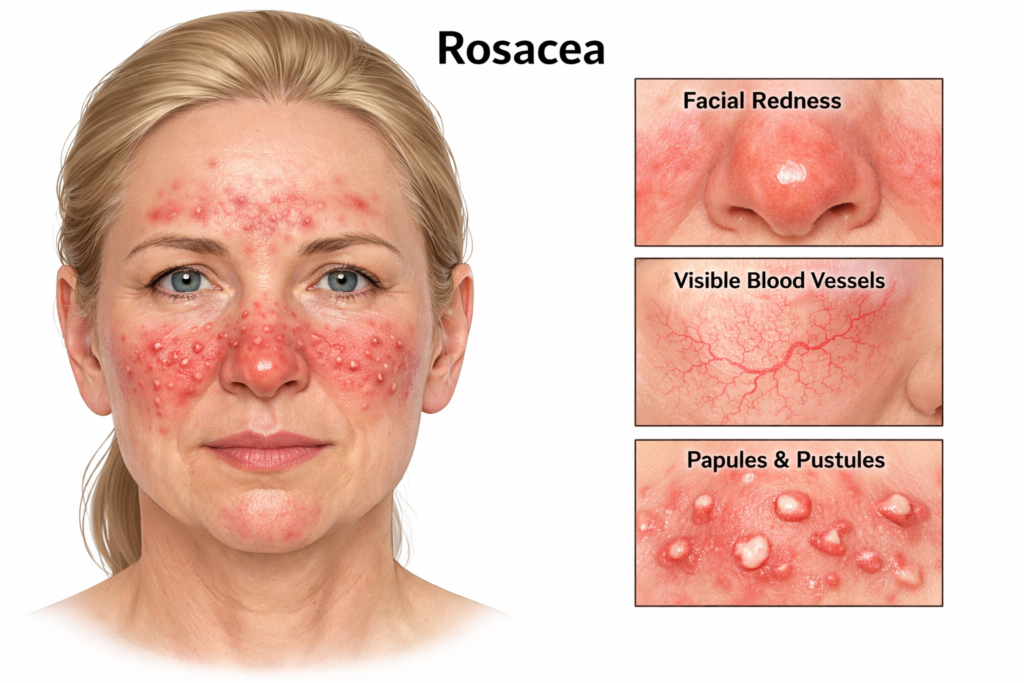
Rosacea is a long-term skin condition that causes facial redness, flushing, and sensitivity. It often affects the cheeks, nose, forehead, and chin. Although it can feel worrying at first, rosacea is common and manageable.
It often starts with occasional flushing. Over time, the redness may last longer or become more noticeable without care.
Reassurance: Rosacea is not dangerous or contagious. Many people manage it well with simple daily care and by avoiding triggers.
👉 Not sure if your redness is rosacea or something else?
Use our skin symptom checker to guide your next step clearly.
What Is Rosacea?
Rosacea is a long-term condition that mainly affects the central face. It causes flushing, persistent redness, and sometimes acne-like bumps.
Some people notice visible small blood vessels. Others experience burning or sensitive skin.
Quick self-check:
- Do you have frequent facial redness or flushing?
- Does your skin react to heat, sun, or spicy foods?
- Do certain products cause stinging or burning?
Who Gets Rosacea?
Rosacea can affect anyone, but some people are more likely to notice it.
- Adults over the age of 30
- People with sensitive skin
- Those with a family history of similar redness
However, it can occur in all skin tones and skin types.
Types of Rosacea
Rosacea can appear in different forms. Some people may have one type, while others notice a mix.
- Erythematotelangiectatic: Persistent redness with visible blood vessels
- Papulopustular: Red bumps that may look like acne
- Phymatous: Thickened skin, often around the nose
- Ocular: Eye irritation, dryness, or redness
What Rosacea Looks or Feels Like
Mild:
- Frequent flushing of the face
- Light but persistent redness
- Sensitive or easily irritated skin
More noticeable:
- Visible small blood vessels (thread veins)
- Red bumps that resemble acne
- Burning or stinging sensation
- Dry or rough skin patches
Although it may look noticeable, rosacea is very common and many people manage it successfully.
Common Causes and Triggers
The exact cause is not fully understood. However, certain triggers often make symptoms worse.
- Sun exposure
- Hot weather or temperature changes
- Spicy foods and hot drinks
- Alcohol
- Stress or emotional changes
- Harsh skincare products
Because triggers vary, it helps to observe what affects your skin.
Once you understand your triggers, the next step is simple daily care.
What You Can Safely Do First
Start with gentle, consistent care. This helps reduce irritation and prevent flare-ups.
- Use mild, fragrance-free cleansers
- Apply sunscreen daily
- Wash with lukewarm, not hot, water
- Avoid known triggers where possible
- Keep your skincare routine simple
Home care tip: Keep a simple diary of flare-ups. Note foods, weather, or products used to identify patterns.
👉 Want to compare rosacea with other causes of redness?
Read our rash vs infection guide for clearer understanding.
Common Mistakes to Avoid
Some habits can worsen rosacea without you realizing it.
- Using harsh scrubs or exfoliants
- Overwashing the face
- Skipping sunscreen
- Trying too many new products at once
Simple, gentle routines usually work best.
When to See a Doctor
Most cases are mild. However, some signs suggest you should seek medical advice.
- Redness that spreads or becomes persistent
- Fever or feeling unwell
- Severe or worsening pain
- Visible pus that is not draining
- Symptoms lasting more than a few days
- If you have diabetes or a weakened immune system
Important: Early medical advice can help prevent worsening symptoms and improve long-term control.
Possible Complications
If not managed, rosacea may become more noticeable over time.
- Persistent redness
- Skin thickening, especially around the nose
- Eye irritation or dryness
This condition may sometimes be confused with other skin problems such as eczema or psoriasis.
Trusted sources like
NHS rosacea overview and
DermNet NZ rosacea guide provide additional information.
Conclusion
Rosacea can feel unpredictable at first. However, it becomes easier to manage once you understand your triggers and use gentle care.
Start with simple steps and observe your skin. If symptoms persist or worsen, seeking medical advice early is a safe next step.
👉 Want clear explanations of common skin problems?
Explore our skin conditions guide to learn more.
Frequently Asked Questions
Early signs include facial flushing, redness, and sensitive skin that reacts to triggers like heat or food.
Rosacea is usually not serious, but symptoms may worsen without care. Medical advice helps if symptoms persist.
Common triggers include sunlight, heat, spicy foods, alcohol, and stress.
No. Rosacea may look similar but usually does not include blackheads.
Rosacea may improve at times, but it often returns. Ongoing care helps control symptoms.