
Loading views...
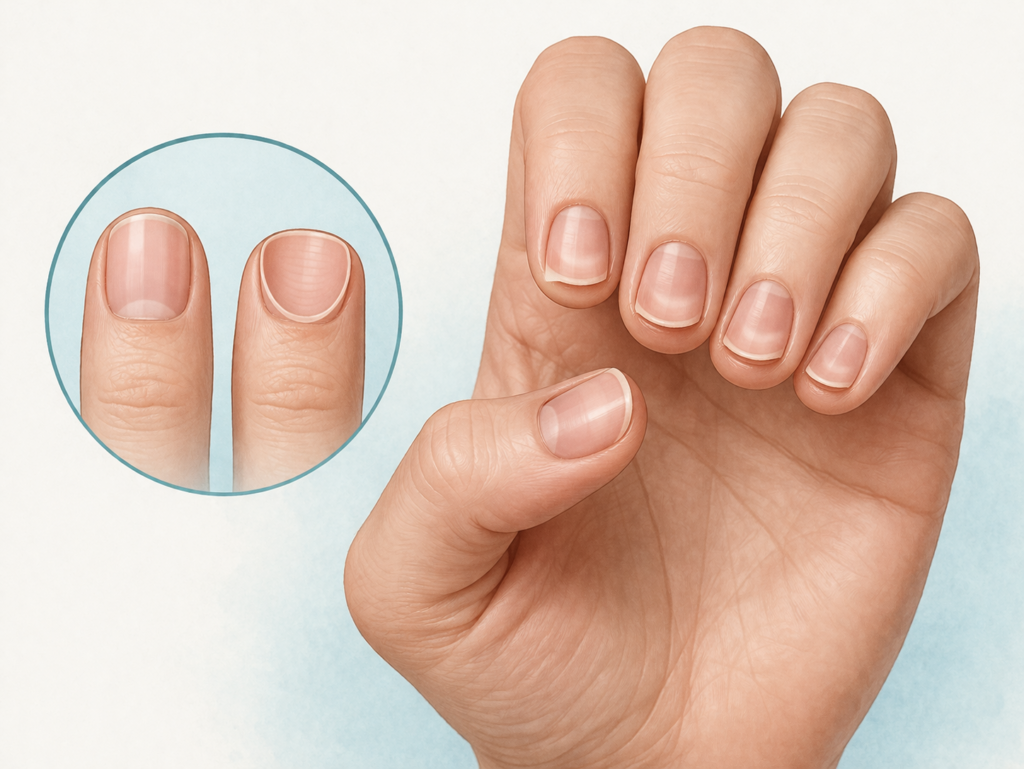
Spoon nails, also known as koilonychia, are nails that curve inward instead of growing flat. If your nails look slightly scooped or can hold a drop of water, you may be noticing early spoon-shaped nail changes.
In many cases, this condition develops gradually and is often linked to everyday factors like nutrition, nail care habits, or repeated exposure to water. Understanding spoon nails causes early can help you take simple steps to improve nail health.
Read More from DermExplained
Reassurance: Spoon nails are usually not dangerous. In many cases, they improve once the underlying cause is addressed.
👉 Not sure what changes in your nails mean?
Explore our complete guide to nail conditions to better understand common nail changes.
What Are Spoon Nails (Koilonychia)?
Spoon nails are a nail shape change where the center of the nail dips inward, creating a concave or “spoon-like” appearance.
This condition may start subtly, with nails becoming thin or flat before the curve becomes more noticeable. If you are wondering about spoon shaped nails meaning, it often reflects changes in nail growth rather than direct nail damage.
Quick Self-Check:
- Do your nails look slightly scooped?
- Can a drop of water sit on your nail?
- Are multiple nails affected?
What Do Spoon Shaped Nails Look or Feel Like?
Mild Symptoms
- Slight flattening of the nail surface
- Soft or thin nails
- Early inward curvature
More Noticeable Symptoms
- Clear spoon-shaped depression
- Nails that bend easily
- Changes affecting several nails
- In some cases, fatigue or weakness may be present
Common Causes of Spoon Nails
Understanding what causes spoon nails can help guide your next steps.
- Low iron levels (a common cause of spoon nails)
- Frequent exposure to water or detergents
- Nail trauma or repeated pressure
- Nutritional deficiencies
- Certain long-term health conditions
- Rare genetic tendency
Low iron levels are one of the most common explanations. You can learn more from this NHS guide on iron deficiency anaemia, which explains how iron levels may affect the body, including nails.
What You Can Safely Do First for Spoon Nails
Home Care:
- Keep nails short and protected
- Avoid prolonged soaking in water
- Moisturize nails and cuticles regularly
- Wear gloves during cleaning or washing
- Maintain a balanced, nutrient-rich diet
If you are also noticing nail ridges or splitting, see our guide on ridged nails causes and care to understand related nail changes.
👉 Want to improve your nail health naturally?
Learn simple daily habits in our nail care guide that help protect and strengthen nails.
When to See a Doctor for Spoon Nails
Seesk medical advice if you notice:
- Spoon nails developing without a clear reason
- Increasing nail thinning or breakage
- Fatigue or weakness alongside nail changes
- Changes affecting multiple nails
- Symptoms lasting more than a few days
- Spreading redness
- Fever
- Severe or worsening pain
- Visible pus that does not drain
- Diabetes or immune suppression
If you are unsure whether your symptoms could be related to infection, compare with our paronychia nail infection guide for additional clarity.
For a broader medical overview, the American Academy of Dermatology nail conditions resource provides further educational information.
Possible Complications of Spoon Nails
- Nails becoming fragile or easily damaged
- Ongoing cosmetic concerns
- Underlying causes remaining unaddressed
Conclusion
Spoon nails are often a sign that something affecting nail growth has changed. While they may look unusual, they are commonly linked to manageable causes.
With simple care and attention, many people notice gradual improvement. Understanding koilonychia causes and treatment helps you take the right steps early and avoid unnecessary worry.
👉 Trying to understand what’s causing your nail changes?
Explore our complete nail conditions guide to learn how different nail problems compare.
FAQs About Spoon Nails
Spoon nails are often linked to low iron levels, frequent water exposure, or nail trauma.
They are usually not serious, but they may indicate an underlying issue that needs attention.
Yes, if the cause is addressed, nails can gradually return to a normal shape.
They can be associated with low iron, but not always. Other factors may also contribute.
Concave nails (spoon nails) can develop due to nutritional issues, environmental exposure, or repeated stress on the nails.
Educational Disclaimer
This article is for educational purposes only and does not replace professional medical care. If you are unsure about your symptoms, consult a qualified healthcare provider.