
Loading views...
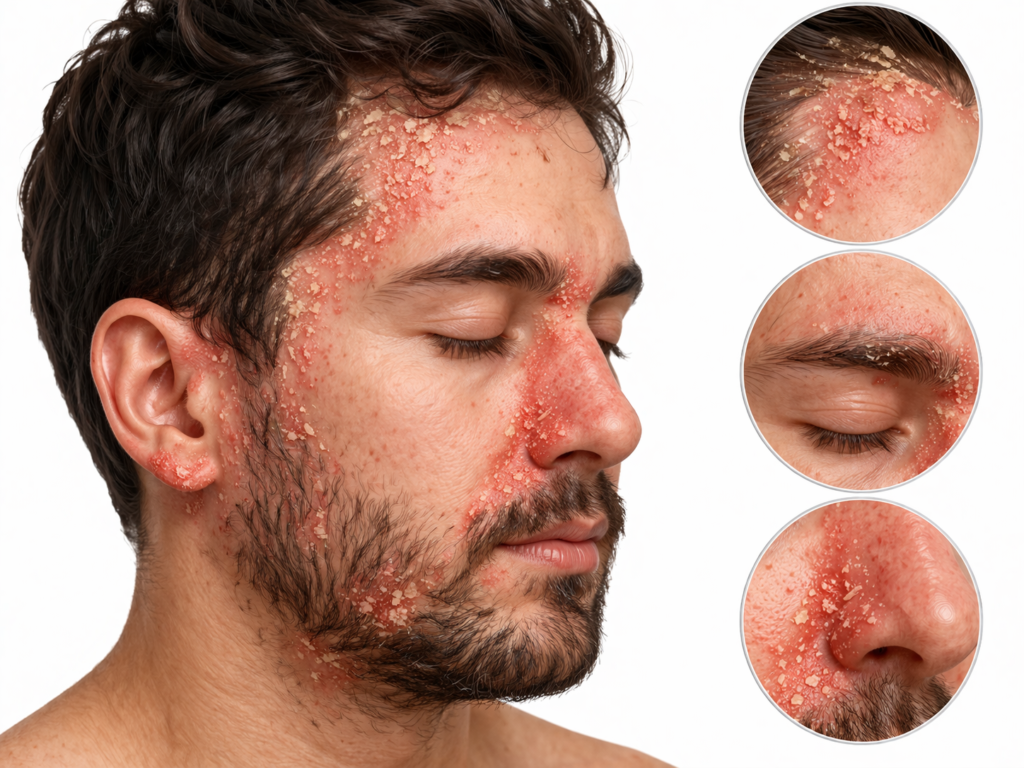
Seborrheic dermatitis is a common skin condition that causes flaky, greasy, and sometimes itchy patches. It often affects the scalp, face, and chest. If you are noticing dandruff or redness around your nose or eyebrows, this condition may be the reason.
Reassurance: This condition is very common and not dangerous. It can come and go over time, and many people manage it with simple care.
👉 Wondering about the difference between dandruff and dry skin?
Learn more in this healthline article about dandruff vs dry skin.
What Is Seborrheic Dermatitis?
Seborrheic dermatitis is a long-term skin condition that affects areas rich in oil glands. These include the scalp, sides of the nose, eyebrows, ears, and chest. It is linked to skin oil (sebum), natural yeast on the skin, and how your body responds to them. It is not caused by poor hygiene.
Quick Self-Check:
- Flaky or scaly patches on the scalp
- Red or greasy skin around the nose or eyebrows
- White or yellowish flakes
- Itchiness that comes and goes
What It Looks or Feels Like
Mild:- Light dandruff on the scalp
- Dry or slightly oily flakes
- Mild itching
- Red, inflamed skin
- Greasy yellow or white scales
- Patches on face, chest, or ears
- Persistent itching or irritation
Common Causes
The causes are not completely understood though associations have been with;- Overactive oil (sebum) production
- Natural yeast on the skin
- Stress or fatigue
- Hormonal changes
- Certain neurological or immune conditions
What You Can Safely Do First
You can often manage seborrheic dermatitis with simple daily care.- Wash affected areas regularly with gentle cleansers
- Use mild, non-irritating shampoos for the scalp
- Avoid harsh soaps or alcohol-based products
- Keep the skin moisturized but not oily
- Reduce stress where possible
Home Care Tip: Consistency matters. Gentle daily care often helps more than occasional strong treatments.
👉 Not sure if it’s eczema or something else?
Compare symptoms in our guide to eczema causes and care.
When to See a Doctor
While this condition is usually mild, some situations need medical review.
Seek medical care if you notice:
- Spreading redness beyond usual areas
- Fever
- Severe or worsening pain
- Visible pus not draining
- Symptoms lasting more than a few days without improvement
- If you have diabetes or a weakened immune system
Complications
Most cases stay mild. However, scratching may cause skin breaks. This can lead to secondary infections. Long-lasting irritation may also affect comfort and confidence.Conclusion
Seborrheic dermatitis is a common and manageable skin condition. It often improves with simple, consistent care. While it may come and go, it is not harmful. If symptoms worsen or do not improve, seeking medical advice is a safe next step.
👉 Want to understand other common skin rashes?
Explore our guide on common skin rashes and causes.
FAQs
Is seborrheic dermatitis the same as dandruff?Dandruff is a mild form of seborrheic dermatitis affecting the scalp only.
Is it related to hygiene?
No. It is not caused by poor hygiene.
Is it contagious?
No. It cannot spread from one person to another.
What triggers flare-ups?
Stress, weather changes, and skin oil levels may trigger symptoms.
Can it go away on its own?
It may improve, but it often comes back over time.
For more medical background, see NHS guidance on seborrheic dermatitis and DermNet NZ overview.