
Loading views...
A painful red swelling next to your fingernail can be worrying. Many people immediately wonder if something serious is happening.
In many cases, this problem is paronychia, a common infection of the skin around the nail. The encouraging news is that mild infections often respond well to simple paronychia home care when addressed early.
Read More from DermExplained
If you would like a broader explanation of this nail infection and how it develops, you can read more in our complete guide explaining paronychia and how it affects the nail fold. Medical references describing nail fold infections can also be found in a clinical overview of paronychia from a major medical clinic.
Understanding how to treat paronychia at home safely can help reduce pain, calm swelling, and support the body’s natural healing process.
What Is Paronychia? Understanding This Common Nail Fold Infection
Paronychia is an infection or inflammation of the skin surrounding the nail, often along the nail fold near the cuticle.
This area normally acts as a protective barrier that keeps bacteria and other microbes out. When the skin becomes damaged, germs may enter and cause an infection.
A small injury is often enough to trigger an infected nail fold, such as:
- A hangnail
- Nail biting
- Picking at the cuticle
- Minor cuts during nail trimming
Paronychia may appear suddenly over a few days or develop slowly over several weeks.
When the infection appears suddenly after a hangnail or small injury, it is usually the type discussed in our explanation of sudden nail fold infections and early symptoms.
What Does Paronychia Look or Feel Like?
Recognizing symptoms early can help you begin paronychia home care before the infection worsens.
Early Signs of Paronychia
Mild infections often begin with:
- Redness around the nail fold
- Slight swelling near the cuticle
- Tenderness when the finger is touched
- Warmth around the nail area
These early symptoms are usually the stage where home remedies for paronychia may be most helpful. General educational information about early nail infections is also discussed in a patient guide to nail infections from a trusted health organization.
More Noticeable Symptoms of a Nail Fold Infection
As the infection progresses, symptoms may become more noticeable.
These may include:
- Increasing swelling around the nail
- Throbbing discomfort
- Tight or shiny skin around the nail fold
- A small fluid-filled pocket under the skin
If symptoms last for many weeks or keep returning, it may be helpful to review our guide on long‑lasting nail fold inflammation and recurring paronychia.
Common Causes of Paronychia
Paronychia usually develops after minor damage to the skin around the nail.
Common causes include:
- Nail biting or chewing
- Picking at the skin near the nail
- Pulling or tearing hangnails
- Cutting the cuticle during manicures
- Frequent exposure to water
- Irritation from soaps or chemicals
- Repeated nail trauma
These small injuries create openings where bacteria or fungi may enter and cause an infected nail fold.
Paronychia Home Care: What You Can Safely Do First
For mild early infections, paronychia home care may help the body control the infection naturally.
The goal is to keep the area clean, reduce swelling, and avoid further irritation.
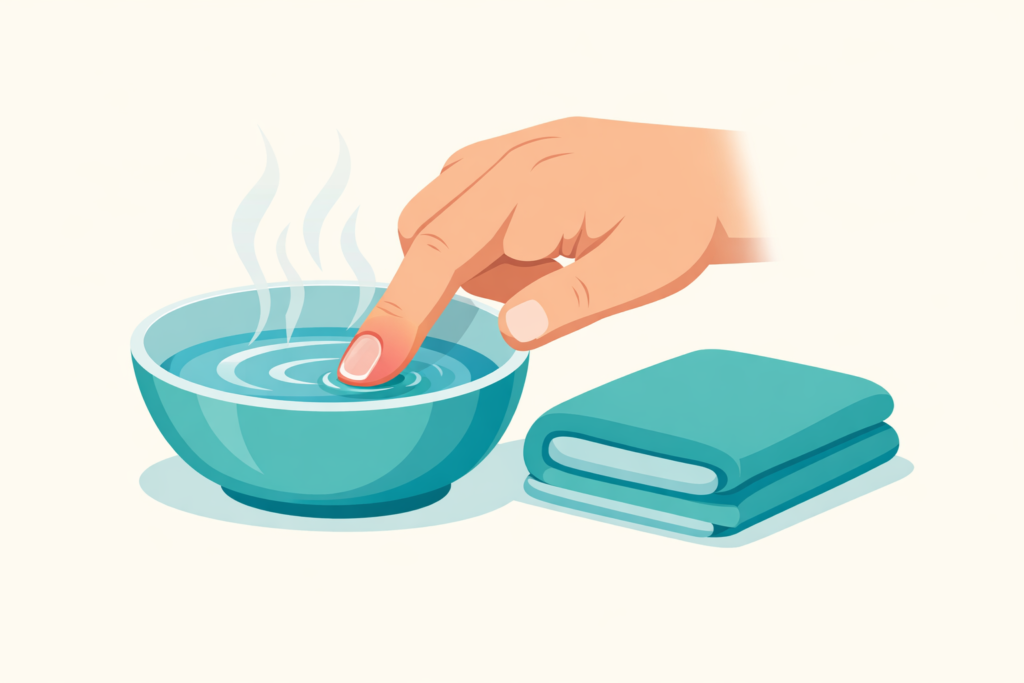
Warm Soaks for Paronychia
A warm soak for paronychia is one of the simplest and most widely recommended first steps.
Warm water may help improve blood circulation and reduce swelling around the nail.
Basic steps include:
- Use comfortably warm water
- Soak the affected finger for 10–15 minutes
- Repeat two to three times daily
- Dry the finger gently afterward
Consistent warm soaks may support healing and relieve discomfort. Many dermatology resources recommend similar supportive care steps, including evidence‑based guidance on caring for mild nail infections at home.
Keeping the Nail Area Clean
Maintaining gentle hygiene can help prevent the infection from worsening.
Helpful steps include:
- Washing the area with mild soap and water
- Avoiding harsh chemicals or strong antiseptics
- Drying the finger carefully after washing
Protecting the Nail Fold While It Heals
Reducing irritation around the nail helps the skin recover.
You can help protect the nail by:
- Avoiding nail biting or picking
- Not cutting the cuticle
- Protecting the finger during household chores
- Limiting contact with detergents or chemicals
Reducing Irritation and Pressure
Resting the affected finger may help reduce throbbing and swelling.
Helpful measures include:
- Avoiding pressure on the nail
- Limiting repetitive hand activities
- Elevating the hand occasionally to reduce swelling
When Home Care Is Not Enough: When to See a Doctor for Paronychia
While learning how to treat paronychia at home can help with mild cases, some infections require medical attention.
You should see a healthcare professional if:
- Redness spreads beyond the nail area
- Severe or worsening pain develops
- Fever occurs
- A visible pocket of pus does not drain
- Symptoms last more than a few days without improvement
- You have diabetes or a weakened immune system
Possible Complications of Untreated Paronychia
Most cases improve without lasting problems.
However, untreated infections may occasionally lead to:
- A deeper pocket of infection around the nail
- Changes in nail growth
- Spread of infection to nearby tissues
Preventing Paronychia: Nail Care Habits That Help
Preventing paronychia often involves protecting the skin around the nails.
Helpful habits include:
- Keeping nails trimmed and clean
- Avoiding nail biting
- Not cutting or tearing the cuticle
- Moisturizing dry skin around the nails
- Wearing protective gloves when working with water or chemicals
Conclusion: Managing Mild Paronychia at Home
Paronychia can be uncomfortable, but many mild infections improve with simple paronychia home care.
The most helpful steps include:
- Warm water soaks
- Gentle cleaning of the nail area
- Protecting the nail fold from irritation
- Avoiding further injury to the skin
If symptoms worsen or fail to improve after several days, medical evaluation is recommended.
For a broader understanding of nail infections and how the different types are managed, you can explore our full overview of paronychia and related nail fold infections.
Frequently Asked Questions About Paronychia Home Care
Can paronychia heal on its own?
Mild cases may improve with proper paronychia home care, including warm soaks and gentle hygiene. If symptoms worsen or do not improve after a few days, medical evaluation is recommended.
How long does paronychia take to heal?
With early care, mild infections may improve within a few days.
Should I drain paronychia at home?
It is generally not recommended to drain an infected nail at home.
Can nail biting cause paronychia?
Yes. Nail biting can damage the skin around the nail and allow germs to enter.
Can paronychia come back?
Yes. Repeated nail trauma or constant moisture exposure may increase the risk of recurrence.
Educational Disclaimer
This article is for educational purposes only and does not replace professional medical care. If you are unsure about your symptoms, consult a qualified healthcare provider.