
Loading views...
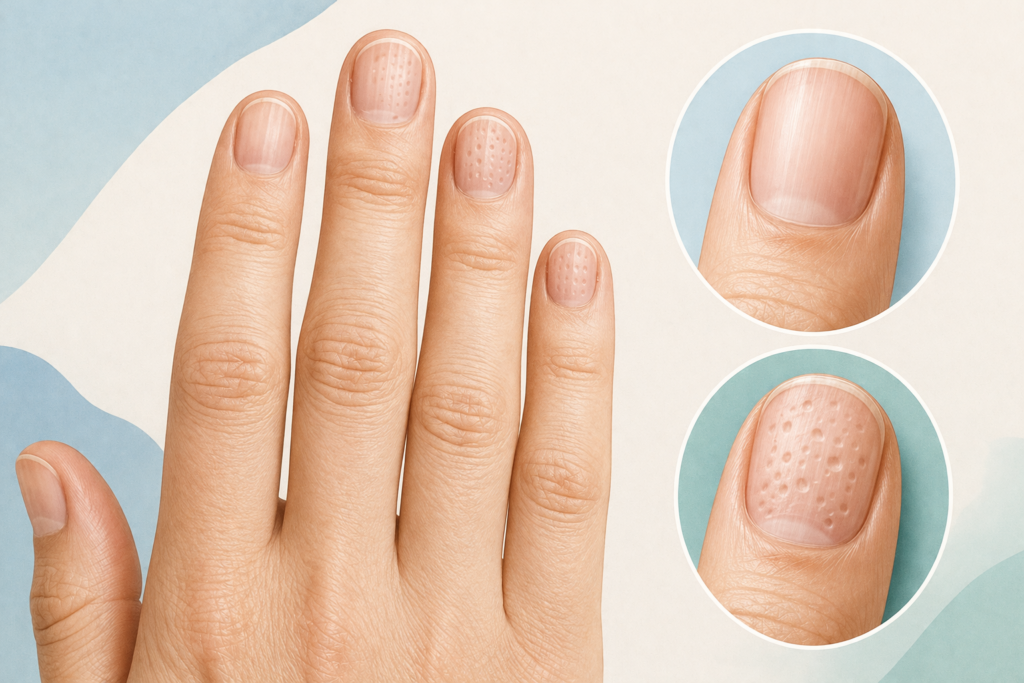
Nail pitting appears as small dents or tiny holes in the nail surface and is often linked to changes in how the nail grows. It is usually harmless but may sometimes be associated with underlying skin conditions.
If you’ve noticed small dents in your nails, you’re not alone. Nail pitting is a common nail change and in many cases, it does not cause pain or serious problems.
Read More from DermExplained
Reassurance: This is a common nail change, and many people notice it at some point. Nail pitting is often manageable with simple care and does not always mean something serious.
Understanding what is happening can help you feel more in control and less concerned about these changes.
👉 Not sure what your nail changes mean?
Explore our complete guide to nail conditions to better understand what you’re seeing.
What It Is
Nail pitting happens when small areas of the nail do not form smoothly, leading to tiny dents or irregularities on the surface.
These changes usually begin in the nail root (matrix), where the nail is produced. When this process is disrupted, the nail grows out unevenly.
Dermatology sources commonly associate nail pitting with changes in nail matrix function, which helps explain why the surface appears affected.
It is also helpful to know that nail pitting is different from other nail changes, such as ridges or splitting. For example, you can explore why nails develop ridges and texture changes to better understand these differences.
What It Looks or Feels Like
Once you know what nail pitting is, it becomes easier to recognize how it may appear in daily life.
Mild Symptoms
- Small shallow dents on one or two nails
- Slight roughness of the nail surface
- No pain or discomfort
More Noticeable Symptoms
- Multiple pits across several nails
- Nails appear uneven or damaged
- Rough or slightly crumbly texture
- Changes in nearby skin (such as dryness or scaling)
These tiny holes in fingernails may develop gradually, which is why they are sometimes noticed later.
Common Causes
To understand why this happens, it helps to look at possible causes.
- Skin conditions that affect nail growth
- Repeated minor trauma (such as picking or pressure)
- Long-term inflammation around the nail
- Naturally fragile or dry nails
- Systemic conditions affecting skin and nails
In some cases, nail pitting may be linked to conditions like psoriasis. You can learn more from trusted sources such as the psoriasis overview by NHS.
While identifying an exact cause is not always necessary at first, it can help guide your next steps.
👉 Seeing dents in your nails and unsure what’s behind them?
Compare symptoms in our paronychia and nail infection guide to understand how conditions differ.
What You Can Safely Do First
Before considering medical care, there are simple steps you can take to protect your nails and support healthy growth.
Home Care Guidance:
These simple steps can help protect your nails as they grow:
- Keep nails trimmed short and smooth
- Moisturize nails and surrounding skin regularly
- Avoid picking, biting, or scratching nails
- Limit prolonged exposure to water
- Use gentle nail care tools
These habits can make a noticeable difference over time, especially as new nail growth replaces older areas.
When to See a Doctor
Most cases are mild, but some situations need closer attention.
Seek medical advice if you notice:
- Spreading redness around the nails
- Fever or feeling unwell
- Severe or worsening pain
- Visible pus that does not drain
- Symptoms lasting more than a few days
- You have diabetes or a weakened immune system
You can also review general nail warning signs from trusted sources like the American Academy of Dermatology nail conditions guide.
Recognizing these signs early helps you act confidently without unnecessary worry.
Complications
If nail pitting continues or worsens, a few changes may develop over time:
- Nails may become more fragile
- Surface changes may become more noticeable
- Underlying skin conditions may flare if not addressed
Although not everyone experiences these, it highlights the importance of monitoring changes.
👉 Want to keep your nails healthy and prevent further damage?
Learn simple, practical habits in a nail care basics guide to support stronger nails.
Conclusion
Bringing everything together, nail pitting is usually a visible change rather than a serious condition. In many cases, it can be managed with simple care and awareness.
Paying attention to patterns—such as how many nails are affected or whether other symptoms are present—can help guide your next step with confidence.
FAQs About Nail Pitting
Nail pitting is often linked to changes in nail formation, sometimes associated with skin conditions or repeated minor trauma.
It is usually not serious on its own but may be connected to underlying conditions that need attention.
In some cases, it improves as the nail grows out, especially with proper care.
Not usually. It is more commonly related to nail or skin conditions rather than infection.
A single affected nail is often less concerning, but persistent or spreading changes should be checked.
Educational Disclaimer
This article is for educational purposes only and does not replace professional medical care. If you are unsure about your symptoms, consult a qualified healthcare provider.