
Loading views...
Nail pain, redness, or swelling can sometimes make people worry about infection. Two common causes are a nail infection (paronychia) and an ingrown nail. These problems can look similar, but they develop in different ways.
Read More from DermExplained
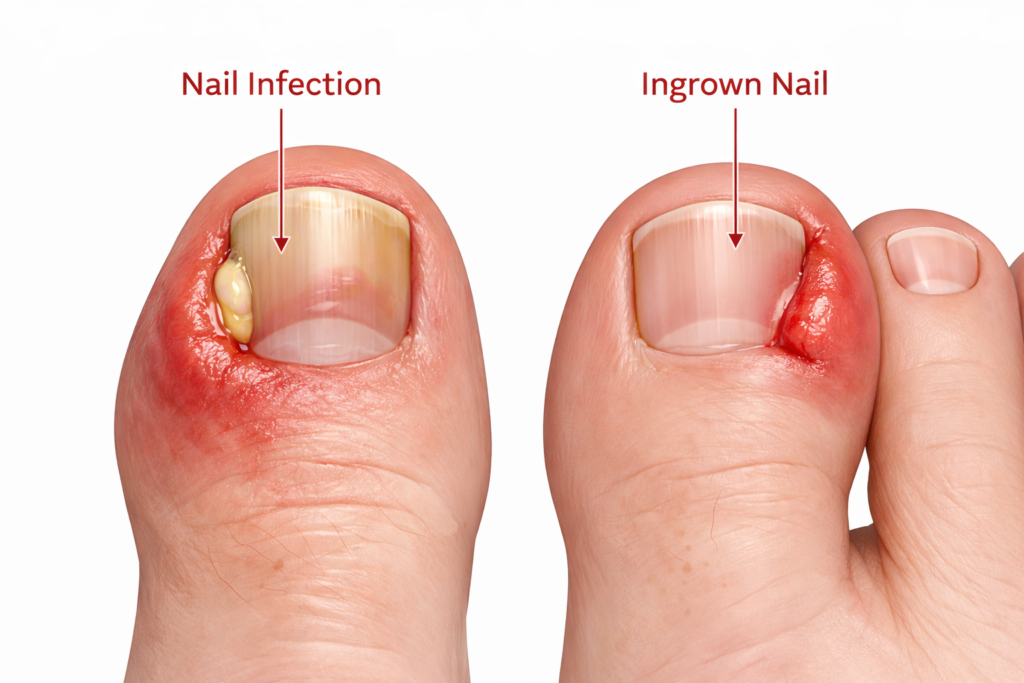
A nail infection usually causes redness, swelling, and tenderness of the skin around the nail fold, sometimes with fluid or pus. An ingrown nail happens when the edge of the nail grows into the surrounding skin, causing pain along the nail edge, especially when pressure is applied.
Understanding the difference can help you decide what simple care may help first and when medical advice may be needed.
What Is an Ingrown Nail?
An ingrown nail occurs when the edge of the nail presses or grows into the surrounding skin. This most commonly affects the big toe, although it can occur on other toes.
Pressure from the nail edge can irritate the skin and lead to swelling or tenderness along the nail border.
Common Causes
- Cutting nails too short
- Rounding the corners of the nail
- Wearing tight shoes
- Naturally curved nails
- Injury to the toe
Sometimes irritation from an ingrown nail may allow bacteria to enter the skin and lead to infection. You can learn more about infections around the nail in the guide on paronychia (nail infection).
What Is a Nail Infection (Paronychia)?
A nail infection, commonly called paronychia, is inflammation of the skin surrounding the nail. It can affect both fingernails and toenails.
This condition usually develops when bacteria or yeast enter small breaks in the skin near the nail fold.
Common Causes
- Nail biting or picking
- Cutting or damaging the cuticle
- Frequent exposure to water
- Small cuts around the nail
- Irritation from soaps or cleaning chemicals
For a deeper explanation of symptoms and causes, see the article on acute paronychia: causes and symptoms.
What It Looks or Feels Like
Ingrown Nail Symptoms
Mild symptoms
- Tenderness along one side of the nail
- Slight redness near the nail edge
- Discomfort when pressure is applied
More noticeable symptoms
- Swelling along the nail edge
- Pain when walking or wearing shoes
- Skin growing over the nail corner
Nail Infection Symptoms
Mild symptoms
- Redness around the nail fold
- Slight swelling near the cuticle
- Tenderness when touching the area
More noticeable symptoms
- Increasing swelling around the nail
- Throbbing discomfort
- Warm skin near the nail
- Visible fluid or pus beneath the skin
Nail Infection vs Ingrown Nail: Key Differences
| Feature | Ingrown Nail | Nail Infection |
|---|---|---|
| Main problem | Nail edge grows into the skin | Infection of skin around the nail |
| Common location | Usually the big toe | Fingers or toes |
| Early symptom | Pain along nail edge | Red swollen nail fold |
| Discharge | Rare early | May produce pus |
| Typical trigger | Nail cutting or pressure | Germs entering broken skin |
Can an Ingrown Nail Cause a Nail Infection?
Yes, this can sometimes happen.
When the nail presses into the skin, it may create a small break in the skin barrier. Germs may then enter the area and cause inflammation around the nail fold.
Because of this connection, early care of an ingrown nail may help reduce the risk of infection developing.
What You Can Safely Do First
If symptoms are mild, simple care may help the area settle.
You may consider:
- Soaking the finger or toe in warm water
- Keeping the area clean and dry
- Avoiding tight shoes that press on the toes
- Trimming nails straight across
- Avoiding picking or biting the skin around the nail
General nail care advice is also described in educational resources such as the Mayo Clinic guide to ingrown toenails.
When to See a Doctor
Medical evaluation is recommended if you notice:
- Spreading redness around the nail
- Severe or worsening pain
- Fever
- Visible pus that does not drain
- Symptoms lasting more than a few days
- Diabetes or a weakened immune system
You can also read more about warning signs in the guide on when to see a doctor for a nail infection.
Possible Complications
Most mild nail problems improve with early care. However, if irritation or infection continues, complications may occur.
Possible complications include:
- Spread of infection into surrounding skin
- Persistent swelling around the nail fold
- Changes in nail shape
- Repeated ingrown nails
Additional educational information about nail infections can also be found through the NHS information on paronychia.
Conclusion
Both ingrown nails and nail infections are common causes of redness and discomfort around the nail. Although they may appear similar at first, the main difference is whether the nail itself is pressing into the skin or whether the surrounding skin has become infected.
Recognizing this difference can help you choose simple first care and know when professional medical advice may be helpful.
Frequently Asked Questions
Medical care may be needed if pain becomes severe, redness spreads, pus appears, or symptoms do not improve after a few days.
Mild irritation around the nail may improve with gentle care. However, worsening redness, swelling, or persistent symptoms should be assessed by a healthcare professional.
They can be. Nail infections may cause throbbing discomfort, swelling, and tenderness around the nail fold.
Yes. When the nail edge breaks the skin, germs may enter the area and lead to infection around the nail.
An ingrown nail usually causes pain along the side of the nail where it presses into the skin. A nail infection typically causes redness, swelling, and tenderness around the nail fold.
Educational Disclaimer
This article is for educational purposes only and does not replace professional medical care. If you are unsure about your symptoms, consult a qualified healthcare provider.