
Loading views...
Nail discoloration is a change in nail color caused by factors such as minor injury, fungal infection, staining, or moisture exposure. Most cases are harmless and improve with simple care, but persistent or painful changes may need medical evaluation.
Many people notice nail color changes at some point, often due to everyday habits or minor injuries.
Read More from DermExplained
If you are wondering why your nails are changing color, the cause is often simple and manageable.
👉 To understand how this fits into overall nail health, explore our complete guide to nail conditions and nail health
In most cases, discolored nails are harmless and temporary.
They rarely indicate permanent nail damage.
What It Is
Nail discoloration refers to any change from the normal clear or pinkish nail color.
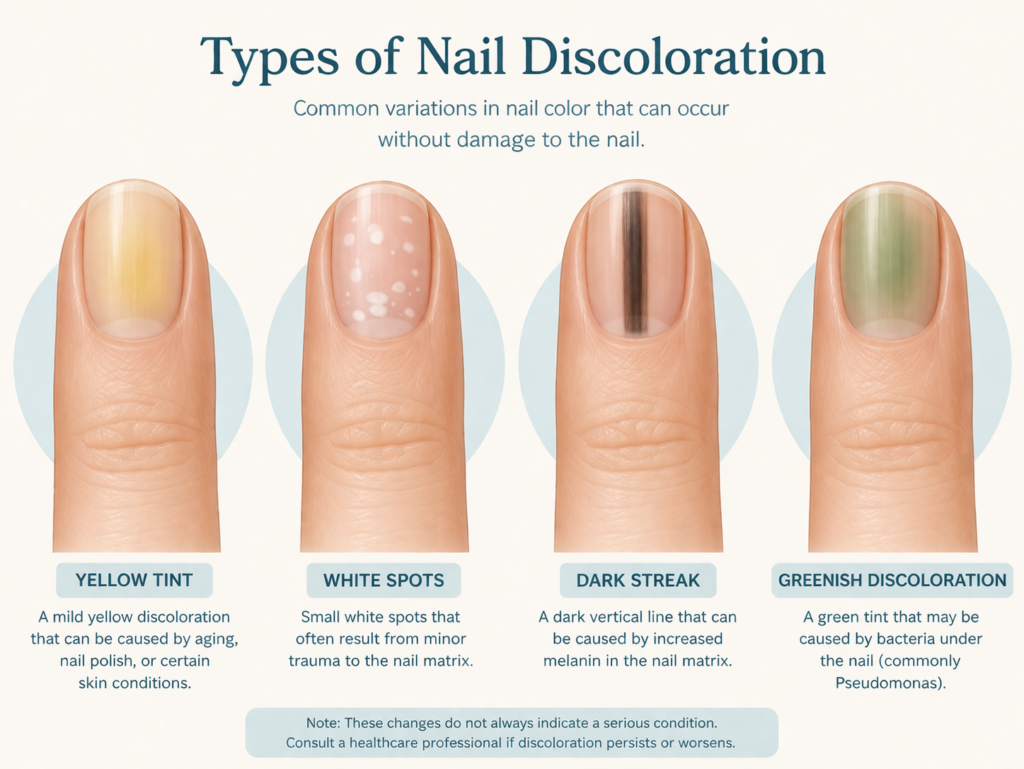
These nail color changes may appear as:
- Yellow, white, brown, green, or black nails
- Spots, streaks, or full nail discoloration
- Changes affecting one nail or several
In many cases, discolored nails reflect what is happening on or under the nail rather than a serious internal condition.
Quick self-check:
- Did the discoloration appear suddenly or gradually?
- Is one nail affected or several nails?
- Is there pain, swelling, or thickening?
These clues help identify possible causes of discolored nails.
What It Looks or Feels Like
Mild Changes
Mild nail color changes often include:
- Small white spots or lines
- Slight yellow tint
- Faint discoloration without discomfort
- One or two nails affected
These changes are usually linked to minor trauma or surface staining.
More Noticeable Changes
More obvious nail discoloration may include:
- Dark streaks or patches
- Green, brown, or black nail discoloration
- Nail thickening or lifting
- Mild discomfort or odor
👉 If the nail is lifting along with discoloration, this may be related to nail separation (onycholysis)
Common Causes of Discolored Nails
There are several possible causes of nail discoloration, including:
- Minor nail injury (trauma)
- Fungal nail infections
- Bacterial growth under the nail
- Nail polish staining
- Frequent exposure to water or chemicals
- Tight footwear (especially for toenails)
- Aging-related nail changes
- Less commonly, underlying health conditions
For example, yellow nails are often linked to fungal infection.
You can read more in this trusted guide to fungal nail infections on NHS
In addition, discoloration with swelling may suggest infection around the nail.
Learn more about this in paronychia (nail fold infection)
What You Can Safely Do First
- Keep nails clean and dry
- Trim nails regularly and gently
- Avoid long exposure to water
- Take breaks from nail polish
- Wear gloves during cleaning
- Avoid picking under the nail
These steps often help improve mild nail color changes as the nail grows out.
👉 For more daily habits that protect nail health, read nail care tips from the American Academy of Dermatology
👉 You can also follow our nail care and prevention guide
When to See a Doctor
- Discoloration spreads or worsens
- Severe or increasing pain develops
- Redness or swelling appears
- Visible pus does not drain
- Fever occurs
- Symptoms last more than a few days
- You have diabetes or a weakened immune system
Complications (If Ignored)
- Persistent nail color changes
- Nail thickening or distortion
- Nail lifting or separation
- Spread of infection
Conclusion
Although nail discoloration can look concerning, it is often manageable and temporary.
In many cases, simple care improves nail color changes over time.
Understanding why your nails are changing color helps you take the right first steps and recognize when to seek care.
👉 To explore related conditions, visit the nail conditions hub
FAQs About Nail Discoloration
What do nail color changes mean?
Nail color changes can result from injury, infection, or staining. Most causes are mild and improve over time.
Common causes of discolored nails include fungal infection, trauma, and moisture exposure.
Painless nail discoloration is often due to staining or minor injury.
Yellow, black, or white nails may reflect infection, injury, or surface changes.
You should seek care if nail discoloration spreads, becomes painful, or does not improve.
Educational Disclaimer
This article is for educational purposes only and does not replace professional medical care. If you are unsure about your symptoms, consult a qualified healthcare provider.