
Loading views...
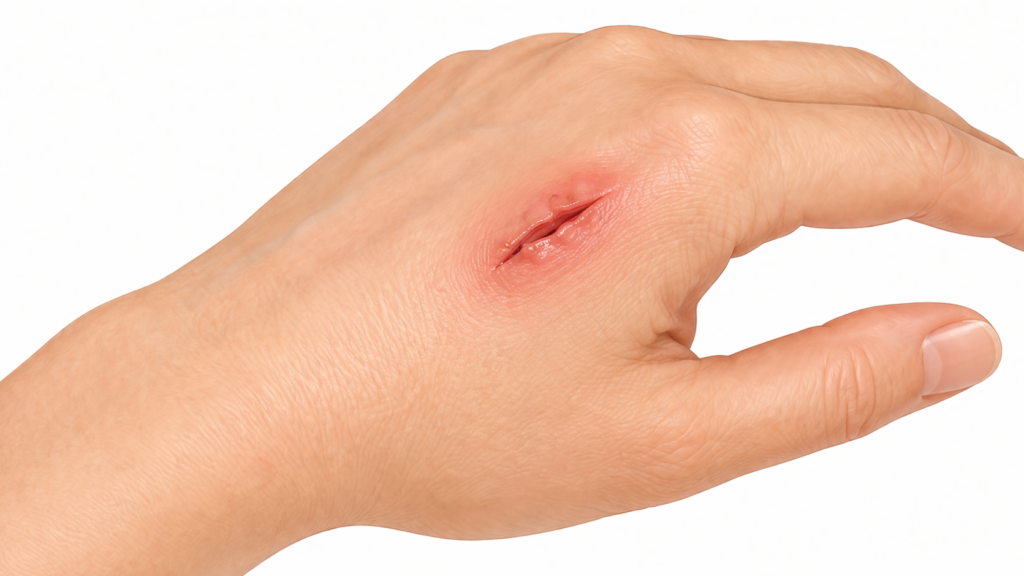
An infected cut is a common skin problem that can happen when bacteria enter a break in the skin. While many cuts heal on their own, some may become red, swollen, or painful. The good news is that early care can often help prevent worsening.
Reassurance: Most infected cuts are mild and improve with simple care. Recognizing early signs helps you act calmly and safely.
👉 Not sure if your skin infection is mild or serious?
Learn how infections behave in this simple guide: common skin infections explained
What Is an Infected Cut?
An infected cut happens when germs enter the skin through a wound. This may slow healing and cause irritation. In some cases, the body reacts with redness, warmth, or swelling.
Quick self-check:
- Is the cut becoming more red or swollen?
- Does it feel warm or painful?
- Is there fluid or discharge?
- Is healing slower than expected?
What It Looks or Feels Like
Mild:
- Light redness around the cut
- Slight tenderness
- Minor swelling
- Clear fluid
More noticeable:
- Spreading redness
- Increased pain or throbbing
- Yellow or cloudy discharge
- Warm skin around the wound
Common Causes
- Bacteria entering an open wound
- Dirty or unclean cuts
- Delayed cleaning after injury
- Frequent touching or scratching
- Weak immune response
For a deeper understanding of how skin infections develop, you can explore guidance from CDC skin infection basics.
What You Can Safely Do First
Early care can help the skin recover. Focus on simple and gentle steps.
- Wash the cut gently with clean water
- Keep the area clean and dry
- Cover with a clean dressing if needed
- Avoid picking or squeezing the wound
- Change dressings regularly
Home care tip: Clean, protect, and observe. Small improvements over 1–2 days are a good sign.
👉 Wondering why some cuts turn into boils?
See how deeper infections develop: understanding boils and skin infections
When to See a Doctor
Some signs suggest the infection may need medical attention.
- Spreading redness around the cut
- Fever or feeling unwell
- Severe or worsening pain
- Visible pus that is not draining
- Symptoms lasting more than a few days
- Diabetes or a weakened immune system
Important: If symptoms worsen quickly or do not improve, it is safer to seek medical care early.
Trusted guidance on wound care is also available from the NHS cuts and grazes guide.
Possible Complications
If left untreated, an infected cut may spread deeper into the skin. This can lead to larger infections such as abscesses or cellulitis.
However, early care usually prevents these outcomes.
Conclusion
Infected cuts are common and often manageable with simple care. The key is to notice early changes and keep the area clean. If symptoms worsen or do not improve, getting help is the safest next step.
👉 Concerned about swelling or pus near a wound?
Learn the difference here: what an abscess means and when to act
FAQs
How do I know if a cut is infected?
Look for redness, swelling, pain, warmth, or discharge. Slow healing may also be a sign.
Mild infections often improve with proper cleaning and care. Monitor closely for changes.
If there is severe pain, fever, or worsening symptoms, seek medical advice.
Yes, a clean dressing can protect the area and support healing.
Yes, mild redness is part of healing. However, spreading redness may need attention.