
Loading views...
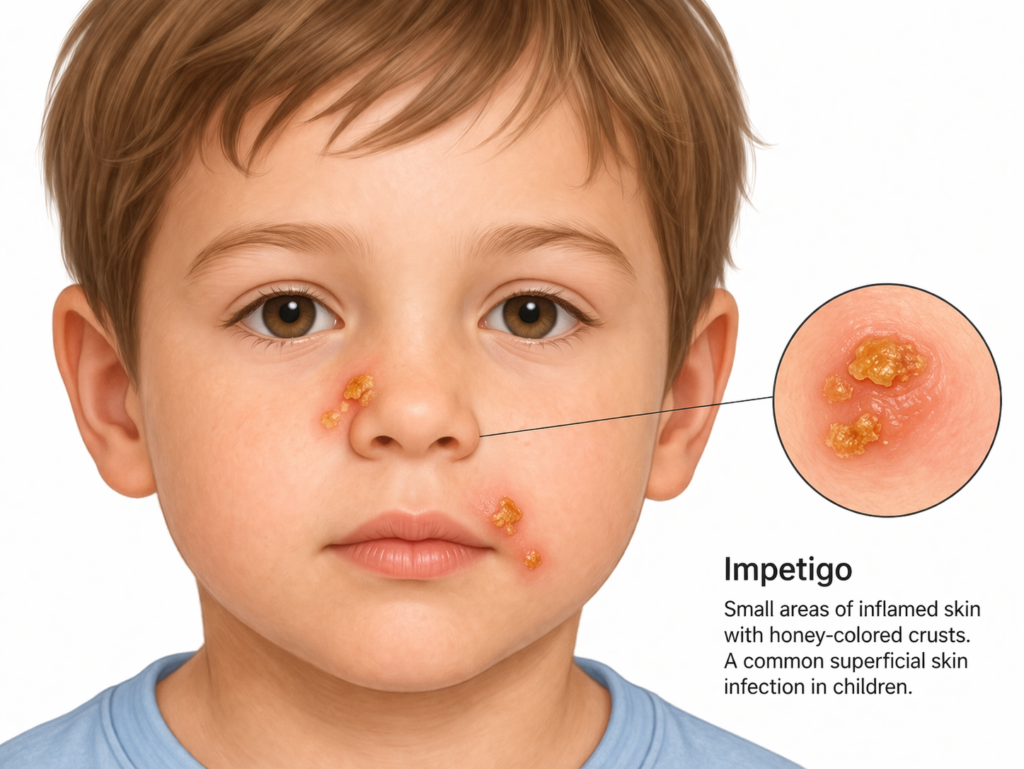
Impetigo is a common and usually mild skin infection that often affects children. It can look worrying, but in many cases it clears with simple care. This guide explains what impetigo is, what to look for, and what you can safely do first.
Reassurance: Impetigo is common and treatable. With early care and good hygiene, most cases improve without complications.
👉 Could this be another skin infection?
Learn how it compares to other conditions in this simple skin infection guide.
What Is Impetigo?
Impetigo is a surface skin infection caused by bacteria. It often appears around the nose, mouth, hands, or legs. It spreads easily through close contact or shared items. Children are affected most, but adults can also get it.
Quick self-check:
- Do you see small sores or blisters?
- Do they form a yellow or honey-colored crust?
- Are they spreading slowly?
What It Looks or Feels Like
Mild signs:- Small red spots or bumps
- Thin blisters that break easily
- Golden or yellow crust forming on the skin
- Mild itching
- Clusters of sores that spread
- Skin that looks moist or weepy
- Slight swelling around the area
- Discomfort or tenderness
Common Causes
- Bacteria entering small cuts or scratches
- Skin irritation from insect bites
- Poor hand hygiene
- Close contact with an infected person
- Warm, humid environments
What You Can Safely Do First
Simple care can help limit spread and support healing.
Home care steps:
- Gently wash the area with clean water and mild soap
- Pat dry with a clean towel
- Avoid scratching or picking the sores
- Keep nails short and clean
- Do not share towels, clothing, or bedding
- Cover the area lightly if needed
👉 Not sure if it’s impetigo or something else?
See the differences in this guide to boils and similar skin bumps.
When to See a Doctor
While many cases are mild, some situations need medical review.
Seek medical care if:
- Redness is spreading quickly
- There is fever
- Pain becomes severe or worsening
- There is visible pus that does not drain
- Symptoms last more than a few days
- You have diabetes or a weakened immune system
Possible Complications
Complications are uncommon but can happen.- Deeper skin infection
- Scarring in severe cases
- Rare kidney-related issues after infection
Conclusion
Impetigo may look concerning, but it is often mild and manageable. Good hygiene and simple care can help it improve. However, watch for warning signs and seek care if needed.
👉 Want to prevent skin infections like this?
Start with simple habits in this skin and nail care guide.
FAQs
Is impetigo contagious?
Yes. It can spread through direct contact or shared items like towels.
How long does impetigo last?
It may improve within a few days with care, but some cases last longer.
Can adults get impetigo?
Yes. Although more common in children, adults can also develop it.
Can impetigo heal on its own?
Mild cases may improve with hygiene and care, but monitoring is important.
How can I prevent it?
Keep skin clean, treat small cuts early, and avoid sharing personal items.