
Loading views...
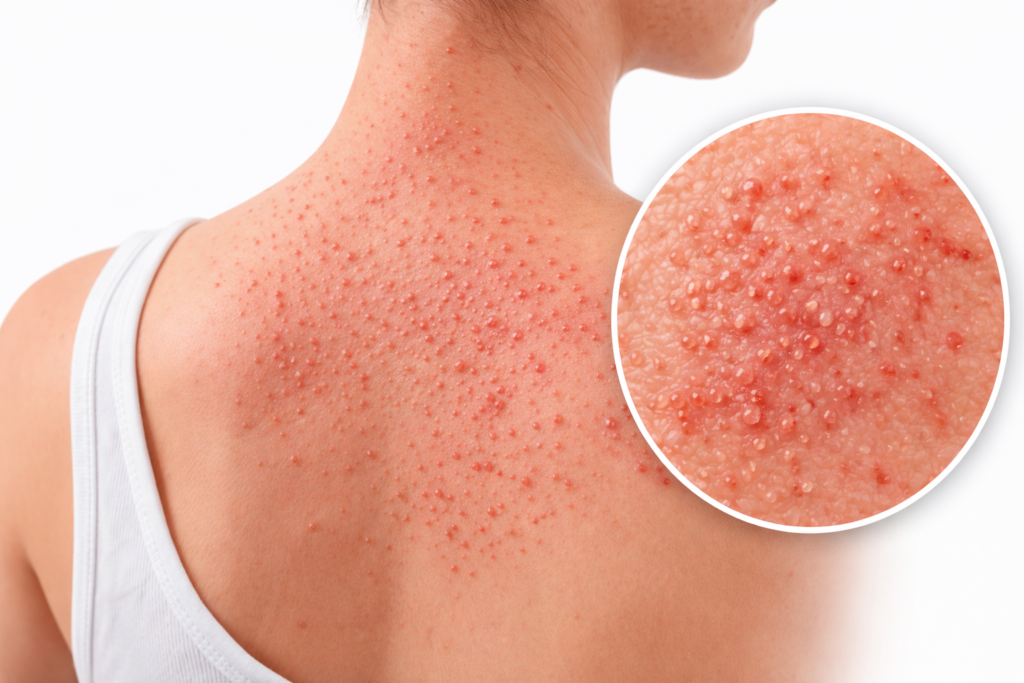
Heat rash, also called prickly heat or millaria, is a common skin condition that happens when sweat gets trapped under the skin. It often appears in hot, humid weather and can feel itchy or prickly. The good news is that it is usually harmless and improves with simple care.
Reassurance: Heat rash is very common, especially in warm climates. It often settles quickly once the skin is cooled and kept dry.
👉 Not sure if it’s heat rash or another skin problem?
Learn how to compare symptoms in our skin conditions guide.
What Is Heat Rash?
Heat rash happens when sweat ducts become blocked. Sweat cannot escape properly, so it gets trapped under the skin.
This leads to small bumps, irritation, and sometimes a prickling sensation.
Quick self-check:
- Have you been in hot or humid conditions?
- Do you notice small itchy or prickly bumps?
- Are the bumps in areas where sweat collects?
What It Looks or Feels Like
Mild:
- Small clear or red bumps
- Mild itching or tingling
- Slight skin irritation
More noticeable:
- Clusters of red bumps
- Prickly or stinging sensation
- Increased itching, especially with heat
- Common in skin folds, neck, chest, or back
Common Causes of Heat Rash
- Hot and humid weather
- Heavy sweating
- Tight or non-breathable clothing
- Prolonged bed rest
- Blocked sweat ducts
What You Can Safely Do First
Heat rash often improves with simple cooling and skin care steps.
Home care tips:
- Move to a cooler, well-ventilated space
- Wear loose, breathable clothing
- Keep the skin dry
- Take cool showers or use a damp cloth
- Avoid heavy creams that may block pores
👉 Want to rule out allergy as a cause for the rash?
See our simple guide on contact dermatitis.
When to See a Doctor
Although heat rash is usually mild, some symptoms need medical attention.
See a doctor if you notice:
- Spreading redness
- Fever
- Severe or worsening pain
- Visible pus that is not draining
- Symptoms lasting more than a few days
- If you have diabetes or a weakened immune system
Possible Complications
Most cases heal without problems. However, persistent sweating and irritation may lead to skin infection if the skin becomes damaged.
Keeping the skin clean and dry helps reduce this risk.
Conclusion
Heat rash is a common and manageable condition. It often improves quickly once your skin is cooled and allowed to breathe.
If symptoms persist or worsen, it is important to seek medical advice for proper evaluation.
👉 Still unsure about your skin symptoms?
Explore our common skin infections for clear comparisons to rule skin infections as a likely cause.
FAQs About Heat Rash
Yes, especially in hot weather or if sweating continues without proper skin care.
It often appears on the neck, chest, back, underarms, and skin folds.
Yes, although it is more common in babies, adults can develop it in hot conditions.
No, it is usually harmless. However, complications can occur if infection develops.
For more detailed medical background, refer to trusted sources like
Mayo cinic’s heat rash overview and DermNet NZ on miliaria.