
Loading views...
Paronychia is a common nail fold infection that causes redness, swelling, and tenderness around a fingernail or toenail.
Many people search online to understand the difference between fungal vs bacterial paronychia and what might be causing symptoms around their nail.
Read More from DermExplained
Understanding fungal vs bacterial paronychia helps explain why some infections appear suddenly while others develop slowly over time.
Most mild nail fold infections improve with simple care. However, persistent symptoms may require medical evaluation.
What Is the Difference Between Fungal and Bacterial Paronychia?
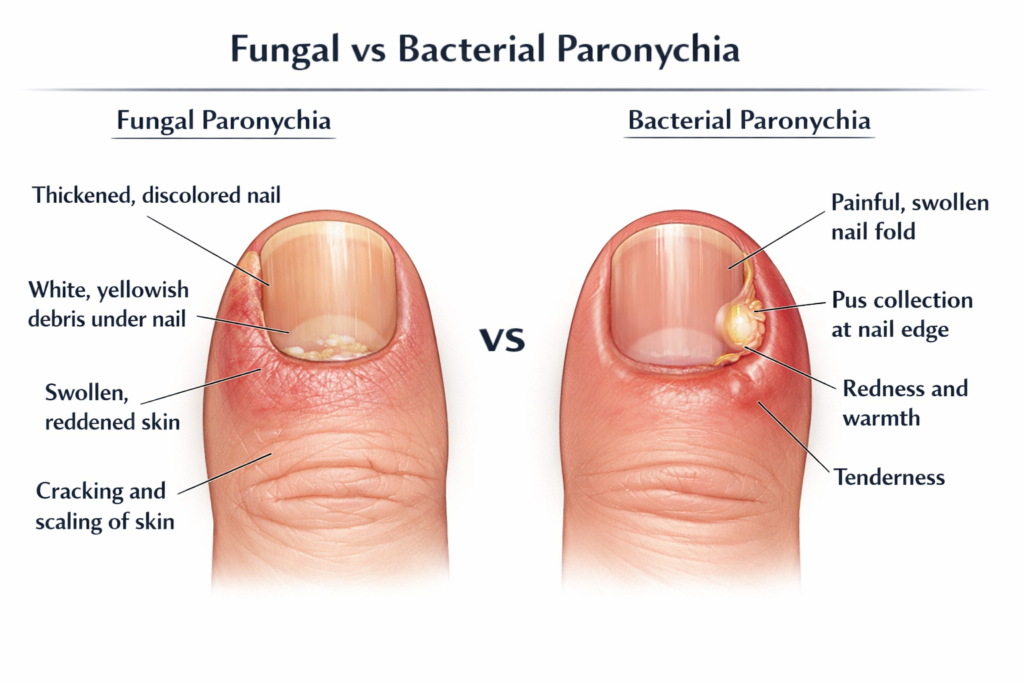
Fungal vs bacterial paronychia describes two common types of infection around the nail fold.
Bacterial paronychia usually appears suddenly and often affects one nail with noticeable pain and swelling.
Fungal paronychia, in contrast, develops more slowly and may involve several nails with persistent irritation around the nail folds.
Key Takeaways
- Bacterial paronychia usually appears suddenly and often affects one nail.
- Fungal paronychia usually develops slowly and may involve several nails.
- Pain is often stronger with bacterial infections.
- Persistent swelling around several nails may suggest fungal or chronic paronychia.
- Medical evaluation is recommended if symptoms worsen or do not improve.
Quick Answer: Difference Between Fungal and Bacterial Paronychia
The main difference between fungal vs bacterial paronychia is how quickly symptoms appear.
Bacterial paronychia usually begins suddenly within hours or days. The area may become painful and swollen around a single nail.
Fungal paronychia develops gradually. Symptoms may appear over several weeks and sometimes affect several nails.
Therefore, the speed of symptom development often helps explain fungal vs bacterial paronychia.
What Is Paronychia? (Nail Fold Infection Explained)
Paronychia is inflammation or infection of the skin surrounding the nail. This skin is called the nail fold.
Normally, the nail fold protects the nail and prevents microorganisms from entering the skin.
However, when this barrier becomes damaged, germs may enter and cause a nail fold infection.
Two common forms include:
- Bacterial paronychia, which develops quickly
- Fungal paronychia, which develops slowly
For a full overview of the condition, you can read our guide explaining paronychia and nail fold infections.
Paronychia Symptoms: What It Looks or Feels Like
Recognizing early paronychia symptoms can help people understand what may be happening around the nail.
Mild Paronychia Symptoms
Both fungal and bacterial nail fold infections may cause:
- Redness around the nail
- Mild swelling near the cuticle
- Tenderness when touching the area
- Warmth around the nail fold
In many cases these symptoms appear in both fungal vs bacterial paronychia.
More Noticeable Paronychia Symptoms
Symptoms of Bacterial Paronychia
Signs that may suggest bacterial paronychia include:
- Sudden onset over hours or days
- Throbbing or significant pain
- Swelling around a single nail
- Rapid redness near the cuticle
Because bacterial infections develop quickly, symptoms often appear suddenly.
If symptoms started suddenly, you may find it helpful to read more about acute paronychia and how it develops quickly.
Symptoms of Fungal Paronychia
Signs more commonly seen with fungal paronychia include:
- Symptoms developing slowly over weeks
- Persistent swelling around the nail folds
- Several nails affected
- Nail ridges, thickening, or discoloration
Over time these symptoms may resemble chronic paronychia.
You can also learn more about chronic paronychia and long‑lasting nail fold inflammation.
Simple Symptom Guide: Chronic vs Acute Paronychia
Sometimes the pattern of symptoms offers useful clues.
Signs More Consistent With Acute Bacterial Paronychia
- Symptoms start suddenly
- Pain is throbbing or intense
- Only one nail is affected
- Swelling develops quickly
These features often suggest acute bacterial paronychia.
Signs More Consistent With Fungal or Chronic Paronychia
- Symptoms develop gradually
- Nail fold swelling returns repeatedly
- Several fingers are affected
- Nail ridges or discoloration appear
These patterns are more typical of fungal paronychia or chronic paronychia.
However, only a healthcare professional can confirm the cause.
Key Differences Between Fungal and Bacterial Paronychia
The table below summarizes the difference between fungal and bacterial paronychia.
| Feature | Bacterial Paronychia | Fungal Paronychia |
|---|---|---|
| Onset | Rapid | Gradual |
| Pain | Often significant | Usually milder |
| Nails involved | Usually one | Often several |
| Nail changes | Less common early | Nail ridges or discoloration |
| Duration | Shorter | Often persistent |
Overall, these patterns help explain fungal vs bacterial paronychia symptoms.
Common Causes of Paronychia Infections
Causes of Bacterial Nail Fold Infection
Common triggers of bacterial paronychia include:
- Nail biting
- Picking the skin around the nail
- Hangnails
- Small cuts near the nail fold
- Aggressive manicures
- Ingrown nails
These activities allow bacteria to enter the skin and cause infection.
Causes of Fungal Nail Fold Infection
Common causes of fungal paronychia include:
- Frequent hand washing
- Long exposure to moisture
- Repeated irritation of the nail folds
- Damage to the cuticle seal
- Long periods of wet work
Consequently, fungi may grow around the nail folds and lead to chronic paronychia.
What You Can Safely Do First for Paronychia
Early care may help mild nail fold infections improve.
Safe first steps include:
- Soaking the finger in warm water
- Gently drying the area
- Avoiding nail biting or picking
- Keeping hands clean and dry
- Wearing gloves during prolonged wet work
Importantly, avoid pushing back or cutting the cuticle while the area is irritated.
For practical guidance, see our article on safe home care for mild paronychia.
When to See a Doctor for Paronychia
Medical evaluation may be needed if symptoms worsen.
Seek care if:
- Redness spreads beyond the nail fold
- Fever develops
- Pain becomes severe
- Visible pus does not drain
- Symptoms last more than a few days
- You have diabetes or immune suppression
In these situations, professional care is important.
For additional clinical information, reputable medical sources such as the Cleveland clinic guide to paronychia provide further explanation of nail fold infections.
Possible Complications of Paronychia
Most cases of fungal vs bacterial paronychia improve without long‑term problems.
However, untreated infections may sometimes lead to:
- Persistent nail fold inflammation
- Changes in nail shape
- Recurrent infections
- Spread of infection into nearby skin
Early attention to symptoms helps reduce these risks.
Conclusion: Understanding Fungal vs Bacterial Paronychia
Understanding fungal vs bacterial paronychia helps explain why nail infections develop differently.
Bacterial infections usually appear quickly and often cause noticeable pain.
Meanwhile, fungal infections tend to develop slowly and may affect several nails.
Recognizing the difference between fungal and bacterial paronychia helps people know when to try simple care and when to seek medical advice.
FAQs
Bacterial paronychia usually develops quickly and affects one nail. Fungal paronychia develops more slowly and may involve several nails.
Most nail fold infections are not easily spread between people. Good hand hygiene still helps reduce infection risk.
Repeated irritation, moisture exposure, or nail picking can weaken the nail fold and allow infections to recur.
Yes. Fungal nail fold infections may affect several nails, particularly when hands are frequently exposed to moisture.
Acute paronychia appears suddenly and is often caused by bacteria. Chronic paronychia develops gradually and may involve fungal infection or ongoing irritation.
Educational Disclaimer
This article is for educational purposes only and does not replace professional medical care. If you are unsure about your symptoms, consult a qualified healthcare provider.