
Loading views...
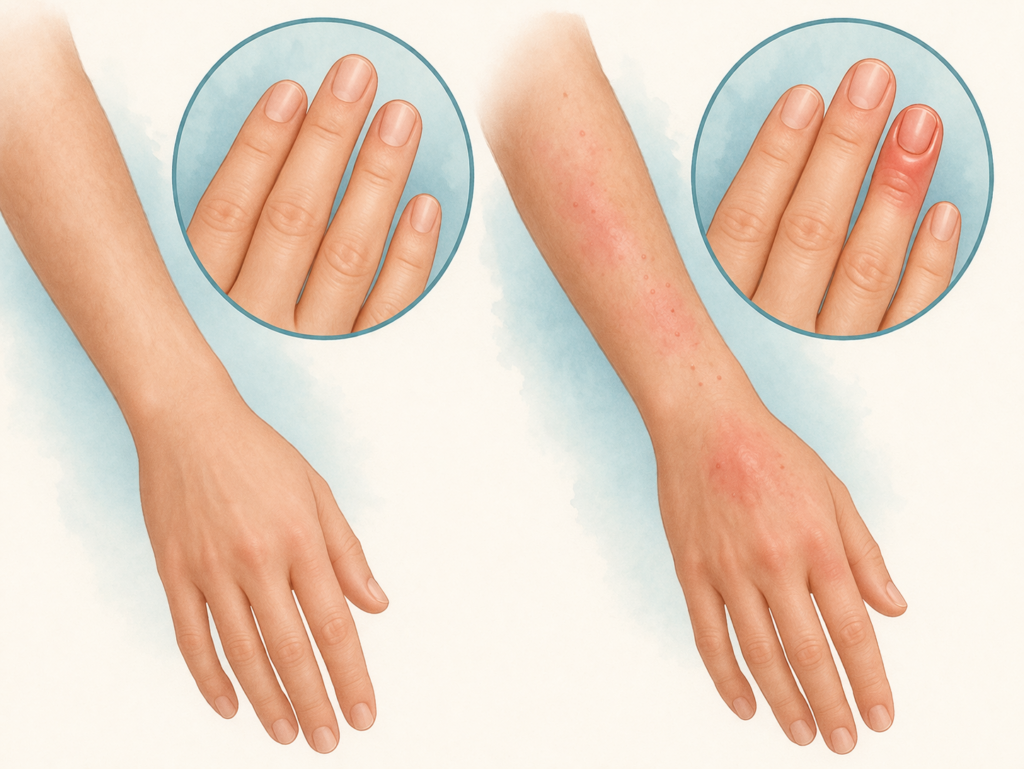
If you’re noticing redness, swelling, or mild pain on your skin, you may be dealing with a common skin infection.
Many people search for answers at this stage, wanting to understand what it is, whether it’s serious, and what they can safely do. The reassuring part is that most common skin infections are mild early on and improve with simple care.
Most common skin infections start small and stay manageable. Early understanding helps you take calm, safe steps without panic.
👉 Not sure what kind of skin problem you’re dealing with?
Explore our complete guide to skin and nail conditions to better understand your symptoms.
What Are Common Skin Infections?
Common skin infections happen when bacteria, fungi, or viruses enter the skin through small openings and cause irritation.
They often develop through:
- Minor cuts or cracks
- Nail edges or skin folds
- Hair follicles
- Insect bites
Most common skin infections remain localized, especially when addressed early.
Quick Self-Check:
- Do you see redness or swelling?
- Is the area warm or slightly painful?
- Did it begin after a small injury or irritation?
These are common early skin infection symptoms.
Common Skin Infection Symptoms
Recognizing symptoms early helps you decide what to do next.
Mild Symptoms
- Slight redness
- Warmth in one area
- Mild tenderness
- Light swelling
- Itching or dryness
More Noticeable Symptoms
- Increasing redness
- Pain or throbbing
- Tight or shiny skin
- Small bumps or blisters
- Gradual spreading
If symptoms appear around the nail, it may be an infection around the nail (paronychia), one of the most common localized infections.
Types of Common Skin Infections
Understanding the types of skin infections makes it easier to recognize patterns.
Paronychia (Nail Fold Infection)
- Affects skin around the nail
- Often linked to moisture or nail habits
👉 Learn more: paronychia symptoms and care
Cellulitis
- A deeper skin infection
- May spread gradually
- Skin feels warm and tender
Impetigo
- A surface infection
- Often seen in children
- May form crusted patches
Fungal Skin Infections
- Common in moist areas
- Often itchy or scaly
Folliculitis
- Infection of hair follicles
- Small red bumps
Boils (Furuncles)
- Deeper infections forming lumps
- Can become more painful over time
Common Causes of Skin Infections
Many common skin infections come from everyday situations.
- Small cuts or injuries
- Nail biting or picking
- Frequent exposure to water
- Poor hygiene
- Insect bites
- Skin irritation
- Reduced immunity
Simple hygiene plays an important role in prevention, as outlined in skin infections and hygiene guidance.
👉 Want to understand nail-related infections better?
Read our complete guide to paronychia and nail infections for clear, step-by-step guidance.
How to Treat Common Skin Infections at Home
For mild cases, simple care is often enough.
Home Care Box:
- Keep the area clean and dry
- Wash gently with clean water
- Avoid squeezing or picking
- Protect the skin from irritation
- Use clean coverings if needed
These steps support how to treat skin infections at home, especially in early stages.
When to See a Doctor
Some common skin infections need medical attention.
⚠️ Seek medical care if you notice:
- Spreading redness
- Fever
- Severe or worsening pain
- Visible pus that does not drain
- Symptoms lasting more than a few days
- Diabetes or a weakened immune system
You can also review warning signs in this NHS guide to skin infections.
Possible Complications
Most common skin infections remain mild, but if ignored, they may:
- Spread to nearby skin
- Become more uncomfortable
- Take longer to heal
Early care helps reduce these risks.
👉 Still unsure if your symptoms need attention?
Learn how to recognize warning signs in our complete infection guide so you can act with confidence.
Conclusion
Common skin infections are a normal part of everyday life and are often manageable when recognized early.
By understanding skin infection symptoms, exploring the types of skin infections, and knowing how to treat skin infections at home, you can take safe, confident first steps.
Knowing when to seek help is just as important and helps you stay in control of your health.
FAQs
They include paronychia, cellulitis, fungal infections, folliculitis, and impetigo.
Redness, warmth, swelling, and mild pain are common early signs.
Keep the area clean, dry, and avoid irritation. Most mild cases improve with simple care.
Watch for spreading redness, increasing pain, or swelling.
Yes, nail infections like paronychia are a common localized type.
Educational Disclaimer
This article is for educational purposes only and does not replace professional medical care. If you are unsure about your symptoms, consult a qualified healthcare provider.