
Loading views...
Boils on the skin are a common reason people notice a painful, swollen bump. If this is happening to you, it can feel worrying at first. However, in many cases, it can be managed early with simple care. Many of these symptoms fall under common skin infections, which often share similar early signs. In simple terms, understanding what a boil on the skin is and what causes it can help you stay calm. More importantly, it helps you decide what to do next.
Reassurance: Most boils on the skin start small. With simple care, they often improve. Recognizing early boil symptoms helps you act early and avoid unnecessary worry.
👉 Not sure what this skin problem could be?
Explore our guide to common skin infections to better understand possible causes and next steps.
What It Is
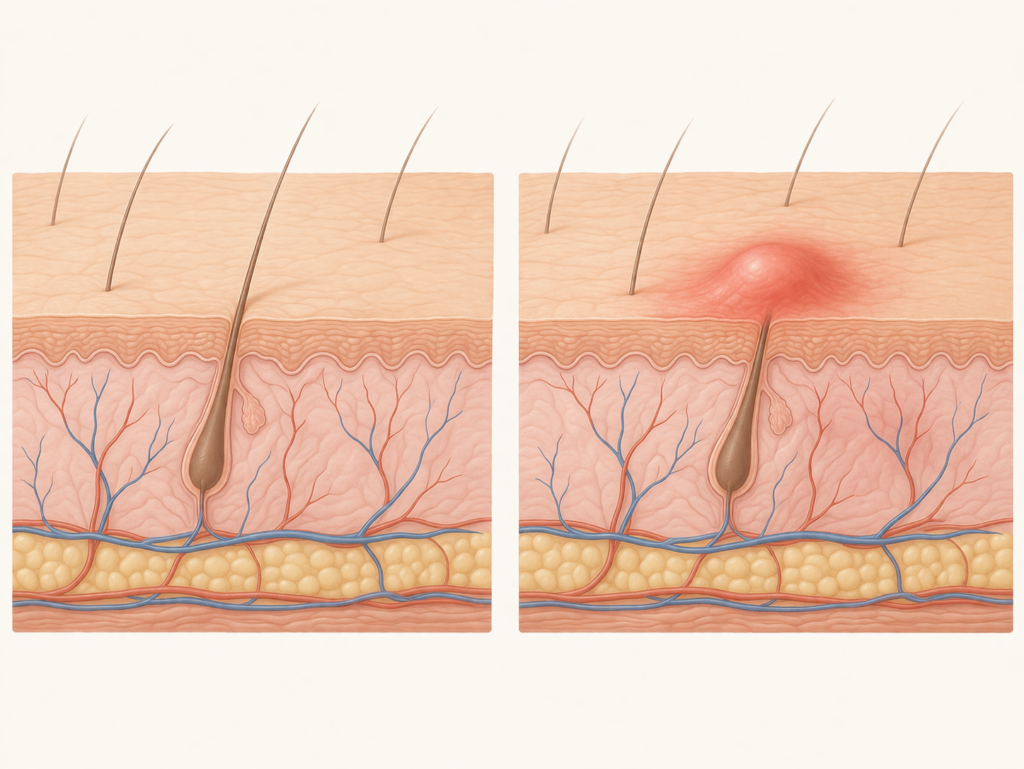
A boil on the skin is a painful, swollen lump. It develops due to a localized infection, often starting in a hair follicle. At first, the body reacts by forming a small bump. Then, over time, the bump may grow and become softer in the center. Because of this, boils on the skin can change in size and feeling over a few days. Boils often appear in areas where friction or sweating is common. For example:- Face
- Neck
- Armpits
- Buttocks
- Thighs
Quick Self-Check:
- A small red bump that slowly grows
- The area feels warm and tender
- The center may soften over time
What It Looks or Feels Like
At this stage, it helps to recognize boil symptoms early. This makes it easier to decide what to do.Mild Symptoms
- Small, firm red bump
- Light tenderness
- Local warmth
More Noticeable Symptoms
- The bump becomes larger
- Pain increases over time
- The center feels soft or filled
- The surrounding skin looks red
Common Causes of Boils on Skin
In most cases, boils on the skin happen when bacteria enter through small breaks in the skin. Common causes include:- Friction from tight clothing
- Shaving or minor skin injury
- Ingrown hairs
- Heavy sweating
- Poor hygiene
- Close contact with infected skin
- Lowered immune defenses
👉 Want to reduce your risk of future boils?
Learn simple prevention steps in our skin infection home care guide to protect your skin.
What You Can Safely Do First
If you notice early boil symptoms, you can take simple steps right away.
Home Care Tips:
These steps support natural healing. In many cases, the boil on the skin improves gradually.
In addition, you can follow general hygiene advice from the Centers for Disease Control and Prevention (CDC).
- Gently clean the area with water
- Apply a warm compress for 10–15 minutes
- Repeat this several times daily
- Avoid squeezing or picking the boil
- Wear loose clothing to reduce friction
- Wash your hands after touching the area
When to See a Doctor
Although many boils on the skin improve, some situations need medical attention.
Seek medical care if you notice:
These signs suggest the infection may be more serious.
For more information, you may also review the NHS boil overview.
- Redness spreading outward
- Fever or feeling unwell
- Pain becoming severe
- Fluid that does not drain
- No improvement after a few days
- Repeated or multiple boils
- Diabetes or weakened immunity
Possible Complications
In some cases, untreated boils on the skin may lead to:- Spread of infection
- Larger grouped boils
- Skin scarring
- Repeated infections
👉 Trying to understand how infections can spread?
Read about cellulitis symptoms and early warning signs to recognize more serious infections.
Conclusion
Boils on the skin are common and often manageable. While they may feel uncomfortable, many improve with simple care. Overall, the key is to act early, avoid irritation, and watch for warning signs. If symptoms worsen, seeking care is the safest step.FAQs
What causes boils on the skin?
Boils on the skin happen when bacteria enter through small breaks, often around hair follicles.
Can a boil go away on its own?
Yes, many boils improve naturally with simple care and warm compresses.
Is it safe to squeeze a boil?
No. Squeezing can worsen the infection and cause it to spread.
How long does a boil take to heal?
Most boils improve within a few days to a week.
When should I worry about a boil?
You should seek care if symptoms worsen, spread, or do not improve.