
Loading views...
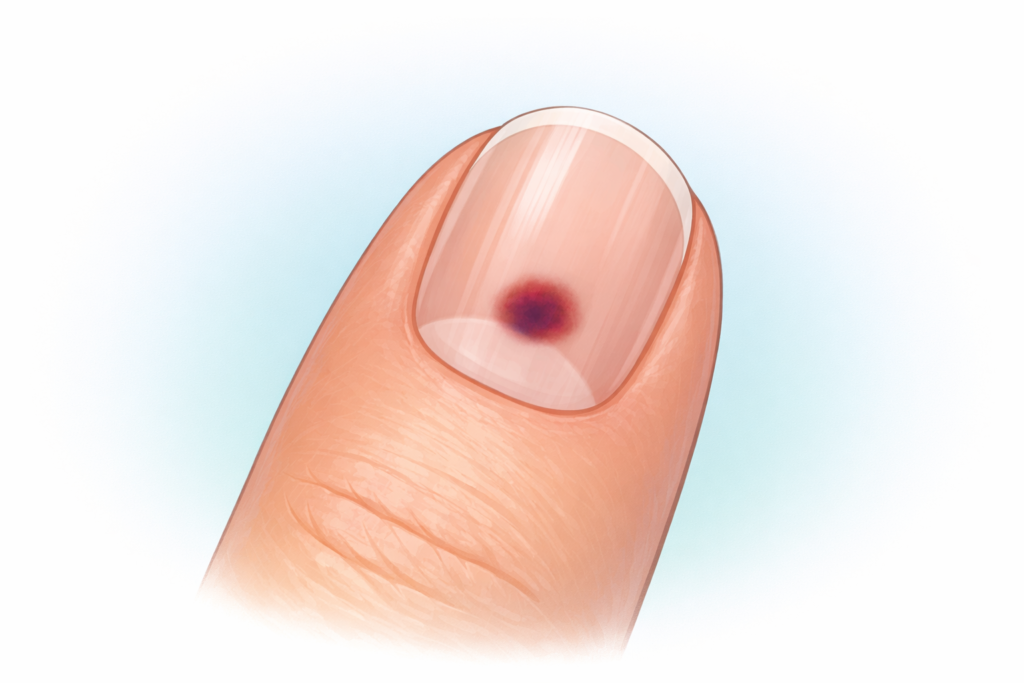
Blood under the nail is usually caused by a minor injury and may appear as a dark red, purple, or black spot beneath the nail.
This condition, often called a subungual hematoma, one of the common nail conditions, can look concerning but is commonly harmless. In many cases, it improves on its own as the nail grows out.
Read More from DermExplained
Understanding the symptoms and causes of blood under fingernail or toenail can help you stay calm and know what steps to take.
What Is Blood Under the Nail (Subungual Hematoma)?
Blood under the nail happens when small blood vessels beneath the nail break due to injury or pressure.
This leads to nail bruising, where blood becomes trapped under the nail plate.
It may affect either a blood under fingernail or blood under toenail, depending on the type of trauma.
In simple terms, it is similar to a bruise, but located under the nail.
Now that you understand what it is, it helps to recognize how it may appear or feel.
What Does Blood Under Nail Look or Feel Like?
The appearance and symptoms of a bruised nail can vary depending on the severity of the injury.
Mild symptoms (early nail bruising)
- Small dark spot under nail
- Red, purple, or black discoloration
- Mild tenderness when touched
- Nail surface remains smooth
At this stage, symptoms are usually mild and manageable.
More noticeable symptoms (pressure under nail)
- Larger black spot under nail after injury
- Throbbing or pressure-like pain
- Nail feels tight due to trapped blood
- Partial lifting of the nail in some cases
As pressure builds, the discomfort may become more noticeable.
These symptoms often relate closely to the underlying cause.
Common Causes of Blood Under Nail
Most cases of blood under nail are linked to trauma or repeated pressure.
- Direct injury (e.g., hitting the nail)
- Dropping a heavy object on the finger or toe
- Tight shoes causing blood under toenail
- Sports activities causing repeated impact
- Minor repeated trauma over time
For example, runners may notice nail bruising from repeated pressure inside shoes.
In many situations, this type of injury is explained further in this guide on
nail trauma explained simply, which outlines how everyday impacts affect the nail.
Once you identify the cause, the next step is knowing how to manage it safely.
What You Can Safely Do for a Bruised Nail
If symptoms are mild, simple home care can help reduce discomfort from blood under the nail. This may include:
- Rest the affected finger or toe
- Apply a cool compress to reduce discomfort
- Keep the nail clean and dry
- Wear comfortable shoes to avoid pressure
- Avoid further injury to the nail
These steps support natural healing without interfering with the nail.
In most cases, the nail discoloration grows out gradually over time.
If you are unsure whether your symptoms could be an infection instead, you can compare with this guide on
early signs of paronychia around the nail.
For a broader medical overview, the Mayo Clinic provides a helpful explanation of nail injuries and when they may need evaluation.
However, some situations may require medical attention.
When to See a Doctor for Blood Under Nail
Although most cases are mild, certain symptoms may indicate a need for evaluation.
- Spreading redness around the nail
- Fever
- Severe or worsening pain
- Visible pus that does not drain
- Symptoms lasting more than a few days
- Diabetes or a weakened immune system
These signs may suggest complications beyond simple nail bruising.
Guidance from the Dermnetnz also highlights similar warning signs that should not be ignored.
Understanding potential complications can help you stay informed.
Possible Complications of Nail Bruising
Complications from blood under nail are uncommon but may occur. They may include:
- Nail separation or loss
- Infection around the nail
- Persistent discoloration
- Temporary nail deformity
In most situations, these changes improve gradually as the nail grows back.
Conclusion
Blood under the nail is most often caused by minor trauma and is usually not serious.
With simple care, most cases of nail bruising improve as the nail grows out. Recognizing symptoms and knowing when to seek help can make the situation easier to manage.
Importantly, most people recover without long-term problems.
FAQs About Blood Under Nail
It is usually caused by injury or pressure that damages small blood vessels under the nail.
Most cases are not serious and improve on their own.
It may take weeks to months as the nail grows out.
This is trapped blood under the nail, often called a subungual hematoma.
In some cases, the nail may loosen, but it often grows back.
Educational Disclaimer
This article is for educational purposes only and does not replace professional medical care. If you are unsure about your symptoms, consult a qualified healthcare provider.