
Not sure what this skin condition is?
Try our Skin Symptom Checker to understand possible causes.
Loading views...
An ingrown toenail is a common and often manageable condition. It is one of the common nail conditions that happens when the edge of the nail grows into the surrounding skin, which can lead to discomfort.
In many cases, simple early care can help relieve symptoms and prevent it from getting worse. Understanding what to look for and what to do first can make a big difference.
An ingrown toenail happens when the nail edge grows into the skin, causing pain, redness, and swelling. Mild cases may improve with simple care, but worsening symptoms such as spreading redness or persistent pain may require medical attention.
What It Is
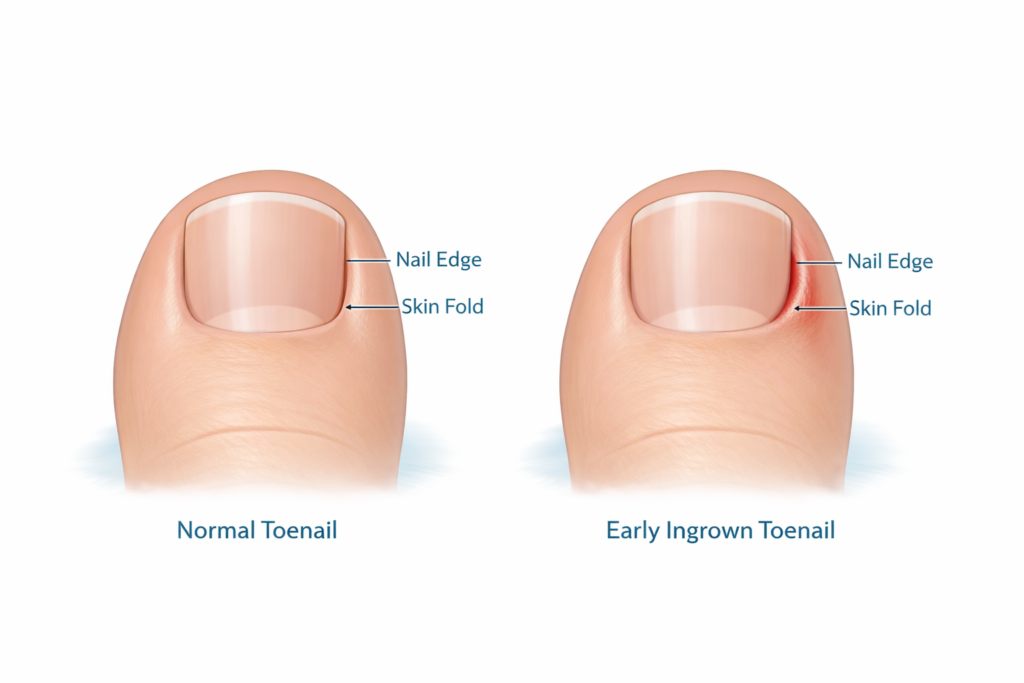
An ingrown toenail occurs when the side or corner of a toenail presses into or grows into the surrounding skin.
This most often affects the big toe. While it may begin as mild irritation, it can become more uncomfortable if pressure continues or the skin becomes inflamed.
In some cases, this irritation can develop into a localized infection around the nail, sometimes called paronychia (infection around the nail).
What It Looks or Feels Like
The symptoms of an ingrown toenail can vary depending on how early or advanced it is.
Mild symptoms
- Slight pain along one side of the nail
- Redness around the nail edge
- Mild swelling
- Tenderness when touched
More noticeable symptoms
- Increased pain when walking or wearing shoes
- Swelling spreading around the toe
- Skin that feels warm or firm
- Fluid or discharge in more advanced cases
Common Causes
Understanding the common causes can help you prevent ingrown toenails in the future.
It may also help to understand how the nail and surrounding skin normally work by reviewing nail anatomy and the role of the nail fold.
- Cutting nails too short or rounding the edges
- Tight or narrow shoes
- Repeated pressure (walking long distances or sports)
- Naturally curved or thick nails
- Toe injury
- Poor foot hygiene
- Sweaty feet
What You Can Safely Do First
If your symptoms are mild, simple care at home may help reduce discomfort and prevent worsening.
You can also follow general hygiene advice from trusted public health sources such as foot care guidance from the CDC.
- Soak your foot in clean, warm water
- Keep the area clean and dry afterward
- Wear open or loose-fitting shoes
- Avoid cutting the nail too short
- Gently lift the nail edge with clean cotton if comfortable
- Reduce pressure on the affected toe
These steps are usually most helpful when started early.
When to See a Doctor
While many ingrown toenails improve with basic care, some situations need medical attention.
Seek medical care if you notice:
- Spreading redness around the toe
- Fever
- Severe or worsening pain
- Visible pus that does not drain
- Symptoms lasting more than a few days
- Difficulty walking
- If you have diabetes or a weakened immune system
Early evaluation can help prevent complications and support proper healing.
Possible Complications
If not managed appropriately, an ingrown toenail may lead to complications.
For more detailed medical background, you can refer to DermNet NZ’s overview of ingrown toenails.
- Infection around the nail (paronychia)
- Abscess formation
- Recurring ingrown toenails
- Overgrowth of skin around the nail
Conclusion
Ingrown toenails are common and often improve with simple care when addressed early.
Paying attention to proper nail trimming and footwear can help reduce the chance of recurrence. If symptoms worsen or do not improve, seeking medical care is the safest next step.
Frequently Asked Questions
How do I fix an ingrown toenail at home?
Mild cases may improve by soaking the foot, keeping the area clean, and reducing pressure on the toe.
Some mild cases may improve with simple care, especially if pressure on the nail is reduced.
It may worsen over time and can lead to infection or increased pain.
Signs may include increasing pain, swelling, warmth, or fluid from the area.
Cutting deeply into the nail may make it worse. Gentle care is usually safer in early stages.
Educational Disclaimer
This article is for educational purposes only and does not replace professional medical care. If you are unsure about your symptoms, consult a qualified healthcare provider.