
Not sure what this skin condition is?
Try our Skin Symptom Checker to understand possible causes.
Loading views...
Many people think of the nail as only the hard surface that we trim. In reality, the nail is part of a small but complex structure known as the nail unit. Understanding basic nail anatomy can help explain why certain nail problems occur. Educational resources such as NHS guidance on nail problems also describe how the structures around the nail protect against irritation and infection.
Two of the most important protective structures are the nail fold and the cuticle. These parts of the skin around the nail help protect the nail root from germs and irritation. When they are damaged, infections around the nail such as paronychia may develop.
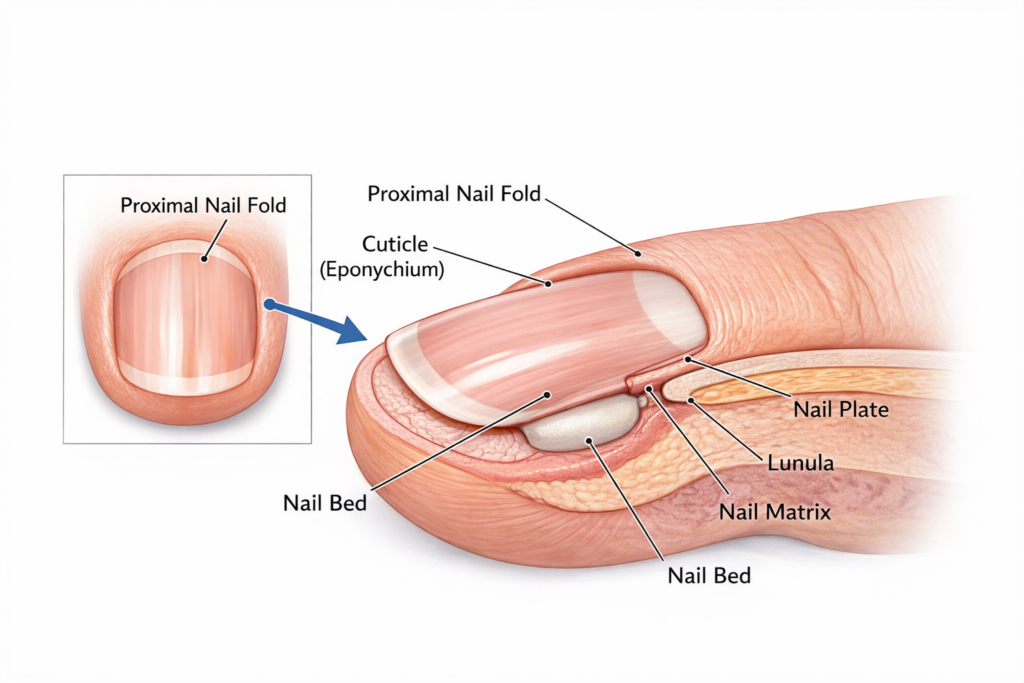
The nail fold and cuticle are protective parts of nail anatomy. The nail fold is the skin surrounding the nail, while the cuticle is a thin seal between the nail plate and skin. Together they protect the nail root from germs, irritation, and infection.
Learning how the nail fold and cuticle work together can help you understand how to keep your nails healthy.
Helpful Nail Care Tools
Simple nail-care items may help protect the cuticle and surrounding skin.
What Is Nail Anatomy?
Nail anatomy refers to the different structures that form and protect the nail. The visible nail plate is only one part of the nail unit.
Important parts of the nail anatomy include:
- Nail plate – the hard surface of the nail
- Nail bed – the skin beneath the nail plate
- Nail matrix – the area where the nail grows
- Lunula – the pale half‑moon at the base of some nails
- Nail fold – the skin surrounding the nail
- Cuticle – the thin protective seal between skin and nail
Each of these structures works together to support normal nail growth and protect the nail from injury and infection.
The Nail Fold: What It Is
The nail fold is the skin that surrounds the sides and base of the nail. It helps support the nail and protects the growing nail from outside irritation.
Types of Nail Folds
There are two main types of nail folds:
Proximal nail fold
The skin at the base of the nail where the nail begins to grow.
Lateral nail folds
The skin along the sides of the nail.
What the Nail Fold Does
The nail fold anatomy plays an important protective role:
- Protects the growing nail
- Supports the edges of the nail
- Helps form a barrier against bacteria and fungi
If the nail fold becomes irritated or injured, the area may become swollen, red, or painful.
The Cuticle: What It Is
The cuticle of the nail is a thin layer of skin that attaches the nail plate to the proximal nail fold. It acts like a seal between the nail and the surrounding skin.
Function of the Cuticle
The function of the cuticle is to protect the nail root. It helps prevent germs, moisture, and debris from entering the space where the nail grows.
Because of this protective role, the cuticle should not be aggressively cut or removed.
Some people prefer using cuticle oil to soften the area instead of aggressive trimming.
Why the Cuticle Is Important
Damage to the cuticle can break the protective seal between the nail plate and the skin. Public health sources like CDC information on nail infections explain how germs can enter when this barrier is disrupted. When this happens, bacteria or fungi may enter the nail fold and cause infection.
Cuticle vs Nail Fold
People often confuse the cuticle vs nail fold, but they are different structures.
| Feature | Nail Fold | Cuticle (Eponychium) |
|---|---|---|
| Location | Skin fold covering the base of the nail | Thin layer of dead skin attached to the nail plate |
| Function | Protects the nail matrix from infection | Forms a seal between the nail plate and skin |
| Structure | Living skin tissue | Non-living keratinized cells |
| Clinical Relevance | Can become inflamed in paronychia | Often removed during manicures |
Understanding the difference between the cuticle vs nail fold helps explain why both structures are important for nail protection.
Why the Nail Fold and Cuticle Matter
The nail fold and cuticle work together to form a protective barrier around the nail.
When these structures are healthy, they help prevent irritation and infection. However, damage to the skin around the nail may increase the risk of problems.
Common triggers include:
- Nail biting
- Picking at the cuticle
- Frequent exposure to water
- Aggressive manicures
- Small cuts around the nail
These factors can injure the skin around the nail, making it easier for germs to enter.
What You Can Safely Do First
Simple nail‑care habits can help protect the nail fold anatomy and keep the cuticle healthy.
You can:
- Keep nails clean and trimmed
- Avoid biting or picking the cuticle
- Moisturize the skin around the nails
- Wear gloves when hands are frequently wet
- Avoid aggressive nail grooming
A gentle hand and cuticle moisturizer may help dry skin around the nails.
These habits help maintain the natural barrier formed by the cuticle of the nail and the surrounding skin.
When to See a Doctor
Medical advice may be helpful if you notice:
- Spreading redness around the nail
- Severe or worsening pain
- Fever
- Visible pus that does not drain
- Symptoms lasting more than a few days
- Nail infections in people with diabetes or immune suppression
As further explained in our guide on when to see a doctor, these signs may suggest a nail fold infection (paronychia) that needs professional evaluation.
Complications
If irritation or infection around the nail is not addressed, problems may persist or worsen.
Possible complications may include:
- Recurrent nail fold infections
- Chronic inflammation of the nail fold
- Changes in nail growth
Early care and healthy nail habits may help reduce these risks.
Conclusion
The nail fold and cuticle are small but important parts of nail anatomy. Together they form a protective seal that helps keep the nail healthy.
Understanding the parts of the nail anatomy makes it easier to recognize early nail problems and protect the delicate skin around the nail.
Simple nail‑care habits can go a long way in maintaining healthy nails.
FAQs
What is the nail fold?
The nail fold is the skin that surrounds the sides and base of the nail. It supports the nail and protects the growing nail from irritation and infection.
The cuticle of the nail is a thin layer of skin that seals the space between the nail plate and the proximal nail fold.
In the cuticle vs nail fold comparison, the nail fold is the surrounding skin, while the cuticle is the thin protective seal that attaches the nail plate to that skin.
The function of the cuticle is to protect the nail root by sealing the gap between the nail and the skin, helping prevent germs from entering.
Common causes of damage to the skin around the nail include nail biting, picking at the cuticle, frequent water exposure, and aggressive manicures.
Educational Disclaimer
This article is for educational purposes only and does not replace professional medical care. If you are unsure about your symptoms, consult a qualified healthcare provider.