
Not sure what this skin condition is?
Try our Skin Symptom Checker to understand possible causes.
Loading views...
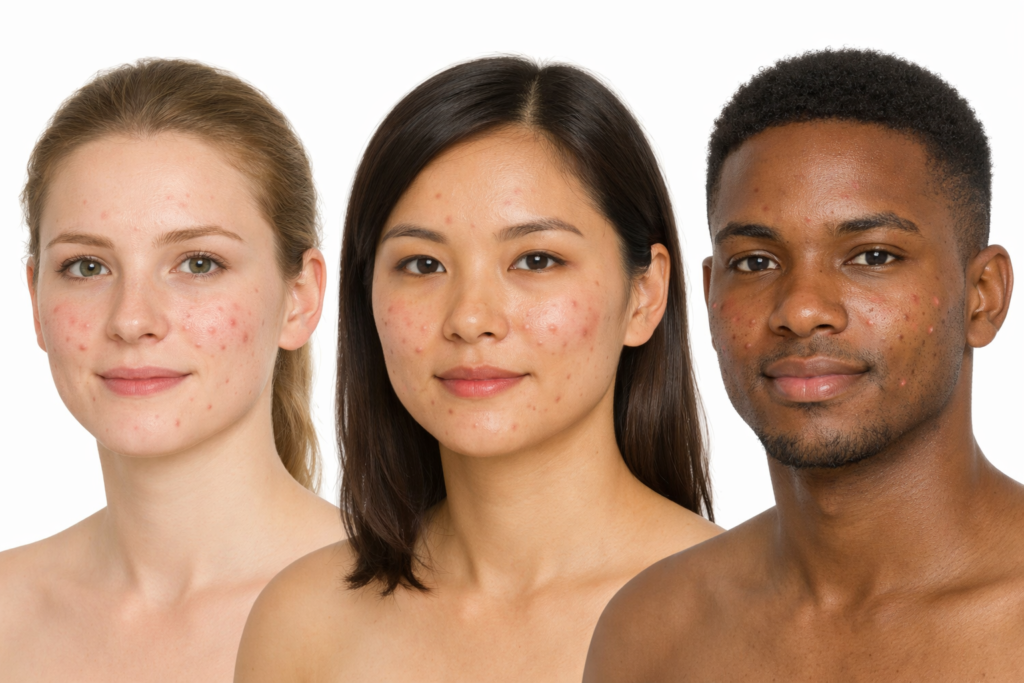
Acne is a common skin condition that causes pimples, blackheads, or bumps on the skin. It often affects the face, chest, and back. This guide explains what acne is, why it happens, and what you can safely do first.
Reassurance: Acne is very common and often improves with time and gentle care. Many people experience it at some stage of life.
In This Guide
- What acne is and why it happens
- Different types of acne
- Safe home care steps
- What can make acne worse
- When to seek medical help
👉 Not sure if these bumps are acne or something else?
Start with our skin condition guides to compare symptoms safely.
What Acne Is
Acne develops when tiny openings in the skin (pores) become blocked with oil and dead skin cells. This can lead to different types of spots.
Bacteria may grow in these blocked pores. This can cause redness, swelling, and tenderness.
Quick self-check:
- Do you have pimples, blackheads, or bumps on your skin?
- Are the spots mainly on your face, chest, or back?
- Do they come and go over time?
Where Acne Commonly Appears
- Face (most common)
- Chest
- Upper back
- Shoulders
Acne by Location
Acne can appear in different areas of the body.
- Face: Often linked to oil production and hormones
- Back (bacne): May be related to sweat and friction
- Chest: Can be triggered by heat and tight clothing
Types of Acne (Overview)
Acne can appear in different forms, including whiteheads, blackheads, inflamed pimples, and deeper lumps. Learn more about types of acne.
What Acne Looks or Feels Like
Mild:
- Small bumps or clogged pores
- Whiteheads or blackheads
- Occasional pimples
More noticeable:
- Red, inflamed pimples
- Tender or painful bumps
- Larger lumps under the skin
- Marks left after healing
Common Causes of Acne
- Increased oil production
- Hormonal changes
- Blocked pores
- Bacteria in the skin
- Oily skin products
- Friction from clothing or masks
Read more in our guide on what causes acne.
What Can Make Acne Worse
- Picking or squeezing spots
- Using harsh scrubs or soaps
- Heavy or oily skin products
- Frequent touching of the face
- Tight or non-breathable clothing
What You Can Safely Do First
Gentle, consistent care can help improve acne over time.
- Wash your skin gently twice daily
- Use mild, non-irritating cleansers
- Avoid picking or squeezing spots
- Choose non-oily skin products
- Keep hair and hands away from affected areas
Home care tip: Keep your routine simple and consistent. Skin often improves with gentle care rather than stronger or harsher products.
A Simple Daily Routine
- Cleanse gently in the morning and evening
- Avoid touching or picking your skin
- Use light, non-oily products
For step-by-step guidance, see acne home care.
👉 Still confused about your skin symptoms?
Compare symptoms in our rash vs infection guide.
Could It Be Something Else?
Acne can sometimes look similar to other skin conditions.
- Rashes may appear as red patches without blocked pores
- Skin infections may cause spreading redness or warmth
- Heat rash may cause small itchy bumps in hot weather
If you are unsure, compare symptoms in our rash vs infection guide.
When to See a Doctor
Most acne is mild. However, some situations need medical attention.
Signs of infection:
- Spreading redness
- Fever
- Visible pus not draining
Severity concerns:
- Severe or worsening pain
- Deep or widespread acne
- Scarring
Higher risk situations:
- Symptoms lasting more than a few days
- Diabetes or immune suppression
Important: Seek medical advice if acne becomes severe, painful, or causes scarring. Early care can help prevent complications.
Possible Complications
- Dark marks after healing
- Permanent scarring
- Emotional distress or reduced confidence
Acne can affect how you feel about your appearance, but this is very common and manageable.
Conclusion
Acne is a common condition that can often be managed with simple care. Understanding your skin helps you respond calmly and effectively.
If symptoms worsen or do not improve, it is always safe to seek medical advice.
👉 Want a clearer answer about your skin problem?
Explore our common skin infections guide for more guidance.
Frequently Asked Questions
Acne is caused by blocked pores, excess oil, dead skin cells, and bacteria.
Acne may be serious if it is painful, widespread, or causing scars.
No. Popping pimples can worsen inflammation and increase the risk of scarring.
Yes. Many cases improve over time, especially with gentle and consistent care.
No. Acne is not caused by poor hygiene. Over-washing can irritate the skin.
For more information, see DermNet acne guide and Mayo Clinic acne overview.