
Not sure what this skin condition is?
Try our Skin Symptom Checker to understand possible causes.
Loading views...
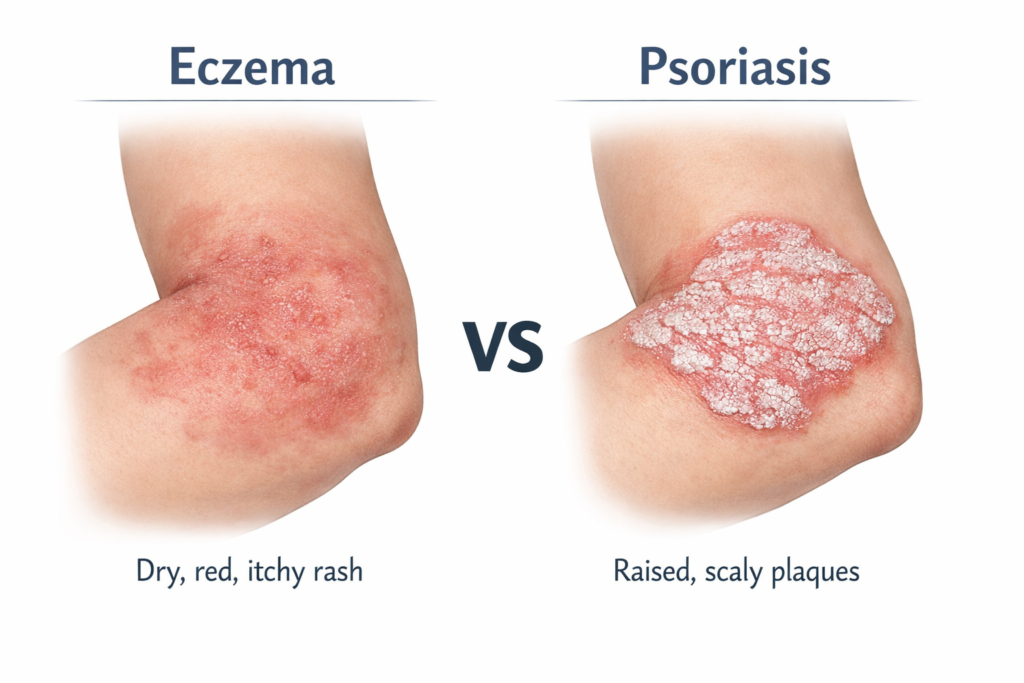
The difference between eczema and psoriasis often comes down to how the skin feels and looks. Eczema usually causes intense itching and irritation. In contrast, psoriasis forms thicker, scaly patches with clearer edges.
Both conditions are common and manageable. Understanding eczema vs psoriasis helps you choose the right first steps and know when to seek care.
Reassurance: It is very common to confuse eczema and psoriasis. Many people do. With simple care and the right guidance, both conditions can be managed effectively.
Quick answer: Eczema is usually itchier and affects skin folds. Psoriasis causes thicker, scaly patches on areas like elbows and knees.
👉 Is your skin dry, itchy, or uncomfortable?
Start with simple steps in our dry skin care guide.
What Is the Difference Between Eczema and Psoriasis?
Eczema and psoriasis are inflammatory skin conditions. However, they behave differently.
Eczema is linked to sensitive skin and irritation. It often flares with triggers like soaps, allergens, or dry weather.
Psoriasis is related to the immune system. It causes skin cells to build up faster than normal, forming thicker patches.
These patterns are commonly recognized in dermatology and help guide early understanding.
Quick self-check:
- Very itchy skin, especially in folds → often eczema
- Thick, scaly patches with clear edges → often psoriasis
- Symptoms started in childhood → more common with eczema
- Elbows, knees, or scalp involved → more common with psoriasis
Key Differences at a Glance
Key differences at a glance:
- Eczema: itchier, softer patches, often in skin folds
- Psoriasis: thicker, scaly plaques, often on elbows and knees
- Eczema: linked to irritation and triggers
- Psoriasis: linked to immune system activity
Side-by-Side Comparison
| Feature | Eczema | Psoriasis |
|---|---|---|
| Main cause | Skin sensitivity and irritation | Immune system activity |
| Itching | Often intense | Mild to moderate |
| Appearance | Red or darker patches, less defined | Thick plaques with silvery scales |
| Edges | Less defined | Clearly defined |
| Skin texture | Dry, rough, sometimes sensitive | Thick, scaly, plaque-like |
| Common locations | Skin folds (elbows, knees, neck) | Elbows, knees, scalp |
| Age of onset | Often childhood | Often adulthood |
| Scaling | Mild or minimal | Thick and visible |
| Triggers | Soaps, allergens, dry skin | Stress, infections, skin injury |
| Associated symptoms | Sensitive or inflamed skin | Nail changes or joint discomfort |
Where Eczema and Psoriasis Usually Appear
Eczema:
- Inside elbows
- Behind knees
- Neck and face
- Hands
Psoriasis:
- Elbows and knees (outer areas)
- Scalp
- Lower back
- Nails
What It Looks or Feels Like
Mild:
- Dry or rough skin
- Light itching
- Small patches
More noticeable:
- Eczema: intense itching, sensitive skin, color changes
- Psoriasis: thick plaques, visible scaling, clearer borders
How Severe Can Each Condition Become?
Mild: Small patches with occasional discomfort.
More noticeable: Larger areas with thicker skin or more itching.
These conditions are widely recognized in dermatology and often follow predictable patterns.
How These Conditions Change Over Time
Eczema: often comes and goes with triggers such as weather, soaps, or stress.
Psoriasis: tends to follow longer cycles, with flare-ups and periods of calmer skin.
Common Triggers Compared
Eczema triggers:
- Dry weather
- Harsh soaps or detergents
- Allergens like dust
- Stress
Psoriasis triggers:
- Stress
- Skin injury (cuts or scratches)
- Infections
- Cold weather
Common Causes
- Eczema: dry skin, irritants, allergens, stress
- Psoriasis: immune activity, family history, infections, stress
If your skin is mainly dry and flaky, you may also benefit from our guide to dry skin.
What You Can Safely Do First
- Moisturize daily with fragrance-free products
- Avoid harsh soaps and detergents
- Use lukewarm water when bathing
- Wear soft, breathable fabrics
- Try to reduce scratching
Home care tip: Apply moisturizer within a few minutes after bathing. This helps protect your skin barrier.
👉 Is your main symptom sudden itching or raised bumps?
See our guide to hives and itchy skin.
When to See a Doctor
In many cases, these conditions are not dangerous. However, medical review helps confirm what you are dealing with and guide care.
- Spreading redness
- Fever
- Severe or worsening pain
- Visible pus not draining
- Symptoms lasting more than a few days
- Diabetes or immune suppression
Important: Seek care promptly if symptoms worsen quickly or signs of infection appear.
Possible Complications
- Skin infection from scratching
- Sleep disturbance due to itching
- Skin thickening over time
- Psoriasis may affect nails or joints
Quick Visual Difference
Eczema often looks softer and less defined. Psoriasis usually appears thicker, with clearer edges and visible scaling.
Conclusion
Eczema and psoriasis may look similar, but simple clues can help you tell them apart. Focus on itching, thickness, and location.
Start with gentle skin care and avoid triggers where possible. If you are unsure or symptoms persist, a medical review can give clarity and peace of mind.
👉 Still unsure what your skin condition might be?
Explore our common skin conditions overview.
FAQs
What is the difference between eczema and psoriasis?
Eczema is linked to irritation and itching, while psoriasis is an immune-related condition with thicker, scaly patches.
If symptoms worsen, spread, become painful, or do not improve after a few days.
Eczema usually causes more intense itching than psoriasis.
It often appears on elbows, knees, scalp, and lower back.
Yes, especially in mild cases. However, patterns and texture often differ.
For more detailed medical information, visit NHS eczema guide and Mayo Clinic psoriasis overview.