
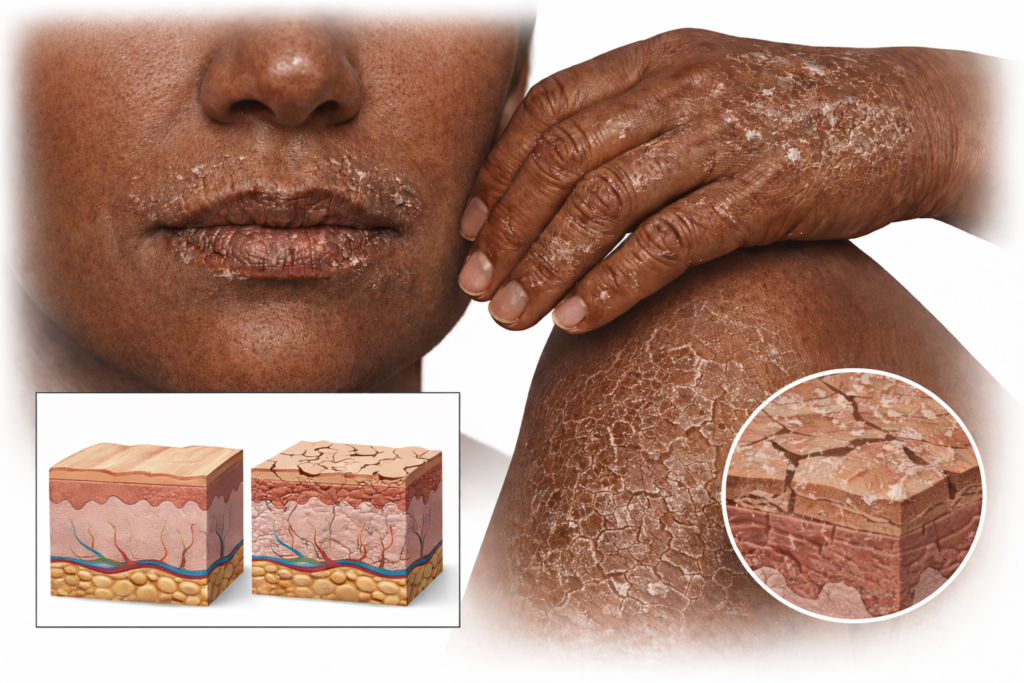
Not sure what this skin condition is?
Try our Skin Symptom Checker to understand possible causes.
Loading views...
Dry skin is very common and can affect anyone at any age. It often feels rough, tight, or itchy. In many cases, dry skin is harmless and improves with simple care. However, some skin problems can look similar. If you’re unsure, it helps to explore our guide to common skin rashes to understand possible differences. Understanding what causes it and how to manage it can help you feel more comfortable and confident.
Reassurance: Dry skin is usually not serious. It often improves with gentle skin care and simple lifestyle changes.
👉 Wondering why your skin suddenly feels rough or itchy?
Learn more in our simple guide on eczemas, another common condition that causes an itch and dryness.
What Is Dry Skin?
Dry skin, also called xerosis, happens when the skin loses moisture. This can weaken the skin barrier, making it feel rough or irritated. The skin normally holds water and natural oils. When these are reduced, the skin becomes dry and less flexible.
Quick self-check:
- Does your skin feel tight after washing?
- Do you notice flaking or rough patches?
- Is there mild itching, especially in dry weather?
What It Looks or Feels Like
Mild:- Slight tightness after bathing
- Dry or rough texture
- Light flaking
- Occasional itching
- Visible scaling or peeling
- Cracked or rough patches
- Persistent itching
- Redness or darker patches depending on skin tone
Common Causes
- Cold or dry weather
- Frequent washing or hot showers
- Harsh soaps or cleansers
- Aging skin
- Low humidity indoors
- Certain skin conditions like eczema
What You Can Safely Do First
Simple skin care steps often improve dry skin within a few days.
Home care tips:
These steps help restore the skin barrier and reduce irritation.
- Use lukewarm water instead of hot water
- Apply a gentle moisturizer after bathing
- Choose mild, fragrance-free soaps
- Pat your skin dry instead of rubbing
- Wear soft, breathable fabrics
- Use a humidifier if indoor air is dry
👉 Not sure which skin care routine works best?
See our practical guide on building a simple skin infection care routine.
When to See a Doctor
Dry skin is usually mild, but sometimes it needs medical review.
Seek medical advice if you notice:
You can also read more general guidance from the NHS dry skin resource.
- Spreading redness
- Fever
- Severe or worsening pain
- Visible pus not draining
- Symptoms lasting more than a few days
- You have diabetes or a weakened immune system
Possible Complications
If untreated, dry skin may lead to:- Cracks that can become painful
- Skin infections from broken skin
- Worsening of conditions like eczema
Conclusion
Dry skin is common and manageable. In most cases, simple care can restore comfort and improve your skin. If symptoms persist or worsen, it is best to seek medical advice. Taking early steps can keep your skin healthy and protected.
👉 Want to prevent dry skin from coming back?
Learn practical prevention tips in a guide on preventing dry skin.
FAQs
Does dry skin go away on its own?
It can improve, but simple skin care steps usually speed up recovery and reduce discomfort.
Can drinking more water fix dry skin?
Hydration helps overall health, but external moisturizing is still important for skin care.
How often should I moisturize dry skin?
Applying moisturizer at least once or twice daily is often helpful, especially after bathing.
Is dry skin a sign of a serious condition?
Most cases are mild. However, persistent or severe dryness may need medical review.
What causes dry skin suddenly?
Dry skin can appear suddenly due to weather changes, harsh soaps, or frequent washing.