
Not sure what this skin condition is?
Try our Skin Symptom Checker to understand possible causes.
Loading views...
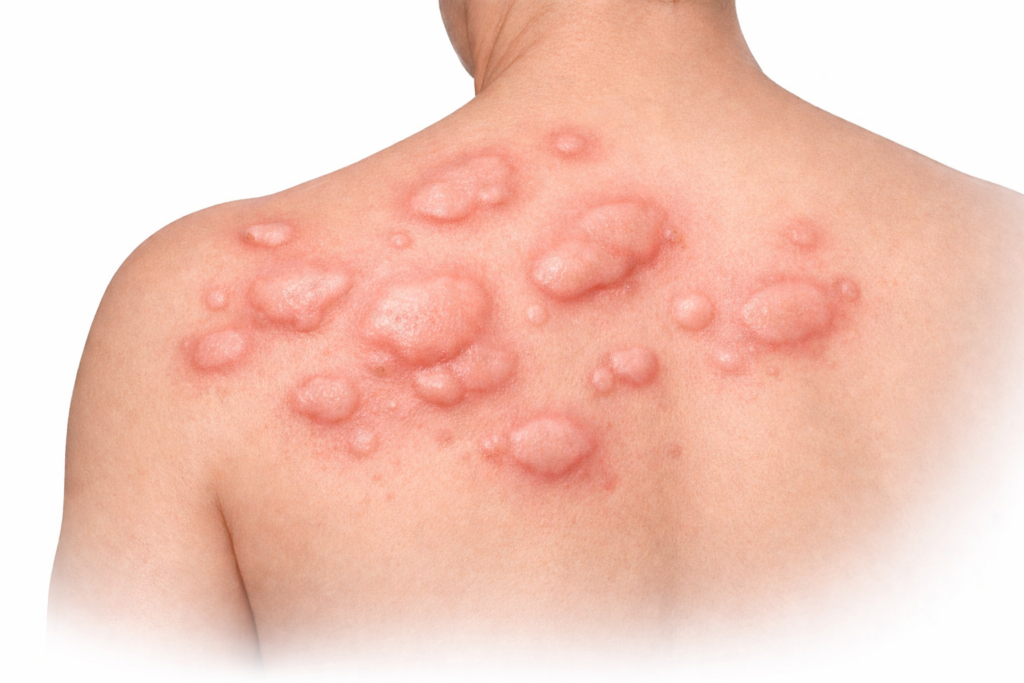
Hives (also called urticaria) are raised, itchy skin welts that can appear suddenly anywhere on the body. They often look like red or pale bumps and may change shape or move around. Although they can feel uncomfortable, most cases are short-lived and not dangerous.
Reassurance: Hives are common and often settle within hours to days. Many people experience them at least once.
👉 Not sure if your rash is hives or something else?
Start with our guide to common skin rashes and causes.
What Are Hives?
Hives, also called urticaria, are a skin reaction where small blood vessels leak fluid. This causes raised, itchy welts on the skin.
They can appear quickly and may fade within hours, only to reappear elsewhere. Hives are often linked to allergic reactions but can also occur without a clear cause.
Quick Self-Check:
- Raised, itchy bumps or welts
- Red or pale areas with clear edges
- Lesions that change shape or location
- Sudden onset after food, medication, or exposure
What It Looks or Feels Like
Mild:
- Small, itchy bumps
- Light redness or skin swelling
- Symptoms that come and go quickly
More noticeable:
- Large, raised welts
- Intense itching or burning sensation
- Swelling around eyes, lips, or hands
- Widespread rash across the body
Common Causes
- Allergic reactions to foods (such as nuts, eggs, or seafood)
- Medications
- Infections
- Insect bites or stings
- Heat, cold, or pressure on the skin
- Stress or emotional triggers
- Unknown causes (common in many cases)
What You Can Safely Do First
Many cases of hives improve with simple care and avoiding triggers.
- Try to identify and avoid possible triggers
- Wear loose, comfortable clothing
- Use cool compresses to soothe itching
- Avoid hot showers or overheating
- Keep skin cool and calm
Home Care Tip: Cool environments often help reduce itching and swelling.
👉 Could this be an allergic skin reaction?
Learn more in our guide to contact dermatitis explained.
When to See a Doctor
Most hives are mild, but some situations need urgent attention.
Seek medical care if you notice:
- Spreading redness across large areas
- Fever
- Severe or worsening pain
- Visible pus not draining
- Symptoms lasting more than a few days
- If you have diabetes or a weakened immune system
Also seek urgent care if you have:
- Swelling of the lips, tongue, or throat
- Difficulty breathing
- Dizziness or fainting
Complications
Most hives resolve without complications. However, severe allergic reactions can affect breathing and require urgent care.
Repeated episodes may affect sleep and daily comfort.
Conclusion
Hives can appear suddenly and feel uncomfortable, but they are often temporary and manageable. Identifying triggers and keeping the skin cool can help.
If symptoms are severe, persistent, or involve breathing problems, seek medical care promptly.
👉 Want to understand itching skin better?
Read Mayo clinic’s guide on itchy skin causes.
FAQs
What causes hives?
They are often caused by allergic reactions, infections, or physical triggers like heat or pressure.
Many cases last a few hours to days, though some may recur over time.
No. Hives cannot spread from person to person.
Yes, stress can trigger or worsen hives in some people.
They are serious if they affect breathing or cause swelling of the face or throat.
For more information, see NHS guide on hives and DermNet NZ urticaria overview.