
Not sure what this skin condition is?
Try our Skin Symptom Checker to understand possible causes.
Loading views...
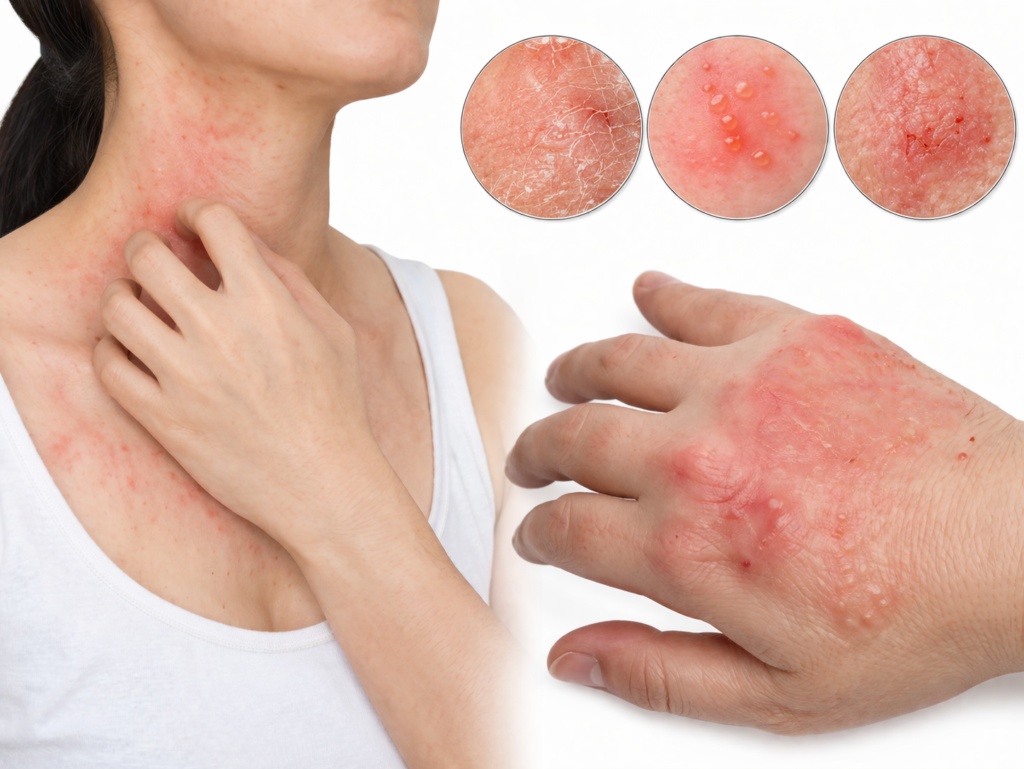
Contact dermatitis is a common skin reaction that happens when your skin touches something irritating or allergenic. It often causes redness, itching, or a rash. The good news is that most cases are mild and improve with simple care once the trigger is removed.
Reassurance: Contact dermatitis is very common and usually not serious. Most people recover quickly once they avoid the cause and care for their skin gently.
👉 Not sure if your rash is irritation or infection?
Learn how to recognize early signs of skin infections and what to do first.
What Is Contact Dermatitis?
Contact dermatitis is a type of skin inflammation. It happens when your skin reacts to something it touches.
There are two main types:
- Irritant contact dermatitis: Caused by substances like soaps, detergents, or chemicals
- Allergic contact dermatitis: Caused by an immune reaction to allergens like metals or plants
Quick self-check:
- Did the rash appear after touching something new?
- Is it limited to one area of contact?
- Does it itch or feel irritated?
What It Looks or Feels Like
Mild symptoms:
- Red or pink skin
- Dryness or rough patches
- Mild itching or burning
More noticeable symptoms:
- Swelling or tenderness
- Blisters or small bumps
- Cracked or peeling skin
- More intense itching
Common Causes
- Soaps, detergents, and cleaning products
- Perfumes or cosmetics
- Nickel in jewelry or watches
- Latex or rubber products
- Certain plants (like poison ivy)
- Hair dyes or skin products
What You Can Safely Do First
Most cases improve with simple skin care and avoiding the trigger.
- Stop using any new or suspected products
- Wash the area gently with clean water
- Keep the skin clean and dry
- Avoid scratching the area
- Wear loose, breathable clothing
Home care tips:
- Use mild, fragrance-free soap if needed
- Apply a simple moisturizer to protect the skin barrier
- Cool compresses may help soothe itching
👉 Wondering how to calm irritated skin safely?
See some simple steps in our guide to common skin rashes or that on skin infections home-care.
When to See a Doctor
Contact dermatitis is often mild, but some situations need medical attention.
- Spreading redness beyond the original area
- Fever or feeling unwell
- Severe or worsening pain
- Visible pus that is not draining
- Symptoms lasting more than a few days
- If you have diabetes or a weakened immune system
Important: If the rash worsens quickly or shows signs of infection, seek medical care promptly.
Complications (If It Gets Worse)
If the skin becomes damaged or scratched, bacteria can enter and cause a skin infection. This may lead to increased redness, warmth, or swelling.
Early care helps reduce this risk.
Conclusion
Contact dermatitis is a common and manageable skin condition. In most cases, it improves once the trigger is removed and the skin is cared for gently.
If symptoms persist or worsen, it is best to seek medical advice. Early attention helps prevent complications and supports faster healing.
👉 Still unsure what caused your skin reaction?
Explore possible triggers in Dermnets’s guide to skin allergies and prevention tips.
FAQs
It is usually caused by direct contact with irritants like soaps or allergens such as metals or plants.
Most mild cases improve within a few days after avoiding the trigger. Some may last longer if exposure continues.
No, it cannot spread from person to person.
It can become more serious if the skin gets infected or if symptoms worsen without care.
Avoid known triggers, use gentle skin products, and protect your skin when handling chemicals.
For more detailed medical information, you can visit
NHS contact dermatitis guide or
Mayo clinic’s contact dermatitis overview.