
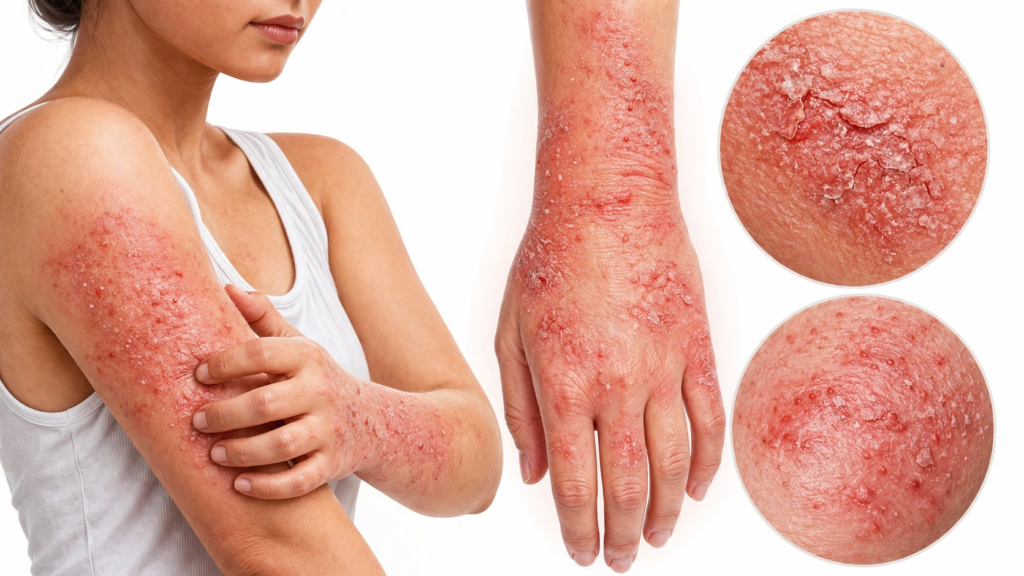
Not sure what this skin condition is?
Try our Skin Symptom Checker to understand possible causes.
Loading views...
Eczema is a common cause of dry, itchy skin. It can lead to red or darker patches that feel irritated. Many people search for eczema symptoms and treatment because the condition often comes and goes. The good news is that simple care steps can help calm your skin.
Reassurance: Eczema is not contagious. It is a manageable condition. With the right care, flare-ups can become less frequent and less uncomfortable.
👉 Wondering if your rash could be eczema?
Explore how eczema compares to other common skin rashes.
What Is Eczema?
Eczema, also known as atopic dermatitis, is a condition where the skin becomes dry, sensitive, and easily irritated. It is one of the most common causes of itchy skin eczema. The skin barrier becomes weaker, so moisture escapes more easily.
This explains why people with eczema often have persistent dry skin and flare-ups.
Quick Self-Check:
- Do you have recurring dry, itchy skin?
- Does scratching make the rash worse?
- Do triggers like soaps or weather changes affect your skin?
What It Looks or Feels Like
Mild symptoms:
- Dry or rough patches of skin
- Light itching that comes and goes
- Slight redness or darker areas on the skin
More noticeable symptoms:
- Persistent or intense itching, especially at night
- Thickened or cracked skin from repeated irritation
- Patches that may ooze or crust after scratching
- Wider areas of inflamed skin during flare-ups
These eczema symptoms can vary from person to person. However, itching is usually the most common complaint.
Common Causes
- Dry skin, especially in cold or dry climates
- Harsh soaps, detergents, or skin products
- Allergens such as dust or pollen
- Stress or emotional changes
- Family history of eczema, asthma, or allergies
Understanding these triggers is an important part of eczema home care.
What You Can Safely Do First
If you are wondering about eczema symptoms and treatment, start with gentle, supportive care. These steps can help protect your skin.
Home Care Tips:
- Moisturize your skin regularly to reduce dryness
- Choose mild, fragrance-free cleansers
- Avoid long, hot showers that dry the skin
- Pat your skin dry gently after washing
- Wear soft fabrics like cotton instead of rough materials
- Keep nails short to reduce skin damage from scratching
These simple steps support dry skin care and help reduce flare-ups over time.
👉 Looking for more ways to calm skin problems?
Learn practical tips for itchy skin relief at home.
When to See a Doctor
Most cases of eczema improve with basic care. However, some situations need medical attention.
Seek medical care if you notice:
- Spreading redness beyond the original area
- Fever or feeling unwell
- Severe or worsening pain
- Visible pus or fluid that is not draining
- Symptoms lasting more than a few days without improvement
- You have diabetes or a weakened immune system
If you are unsure, it can help to read more about when to seek medical care for skin problems.
Possible Complications
If eczema is not well managed, repeated scratching can damage the skin. This may increase the risk of infection. Over time, the skin may also become thicker.
Early care and trigger control can reduce these risks.
Conclusion
Eczema is a common cause of itchy skin and dry skin rash. While it can be uncomfortable, it is manageable. With consistent eczema home care and awareness of triggers, many people control their symptoms well.
If your symptoms change or do not improve, it is always okay to seek medical advice. You are taking the right step by learning more about your skin.
👉 Want to better understand dry skin and flare-ups?
See how to improve your dry skin care routine.
FAQs
Eczema can appear as a dry skin rash, but it is a specific condition linked to skin sensitivity and inflammation.
Regular moisturizing, avoiding irritants, and gentle skin care are key steps.
Triggers may include dry skin, irritants, weather changes, allergens, and stress.
Common eczema symptoms include itching, dry patches, redness, and thickened skin.
Eczema is a condition that causes dry, itchy, and sensitive skin. It often comes and goes over time.
Learn More
- Read more about common skin rashes and inflammatory conditions
- Discover simple tips for itchy skin relief at home
- Eczema overview from DermNet
- Eczema guidance from NHS