
Not sure what this skin condition is?
Try our Skin Symptom Checker to understand possible causes.
Loading views...
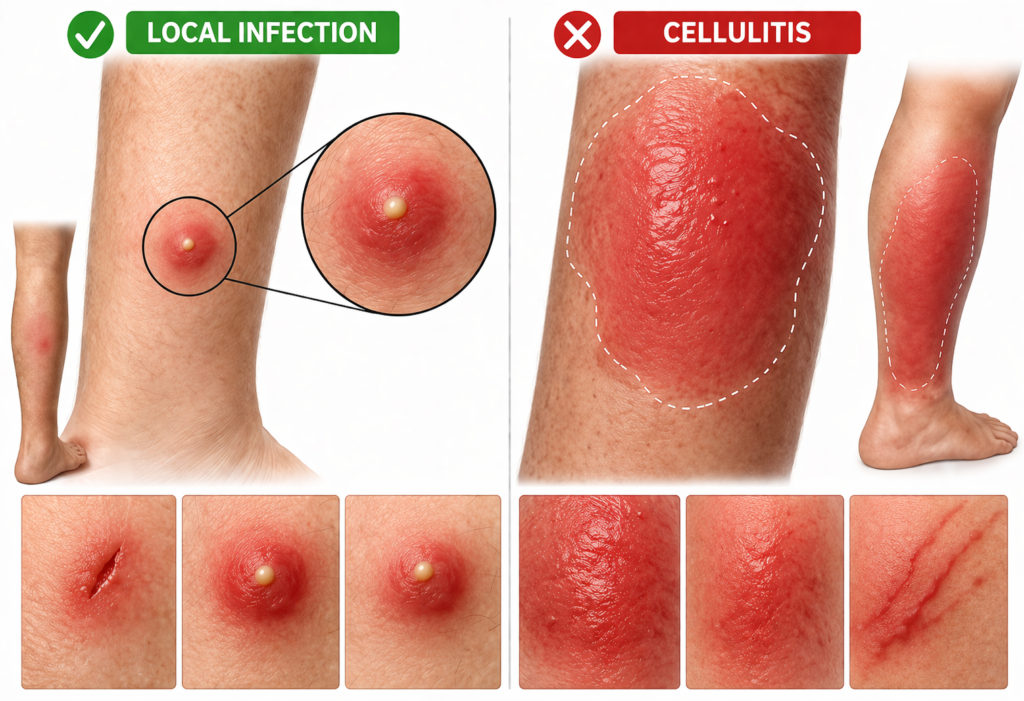
It can be difficult to tell whether you have a simple skin problem or something more serious. When comparing cellulitis vs local infection, both may look similar at first. However, knowing the difference helps you stay calm and take safe action.
Many people worry when they notice redness or swelling. The good news is that most local skin infections remain small and improve with simple care. Still, some infections may spread deeper into the skin.
Reassurance: Most skin infections are mild and settle with basic care. However, early recognition of spreading signs helps prevent complications and reduces anxiety.
👉 Not sure if your skin infection is mild or spreading?
Start with this guide to common skin infections explained.
What It Is
A local infection affects a small, defined area of the skin. It often stays close to a visible cause such as a cut, bite, or ingrown hair.
In contrast, cellulitis is a deeper skin infection. It spreads through the skin layers and may extend beyond the original area.
In simple terms:
- Local infection stays contained
- Cellulitis spreads and involves deeper tissue
Quick Comparison: Cellulitis vs Local Infection
| Feature | Local Infection | Cellulitis |
|---|---|---|
| Area | Small and localized | Spreading and expanding |
| Edges | Well-defined | Blurred or unclear |
| Pain | Mild to moderate | Increasing or severe |
| Skin Feel | Slightly tender | Warm, tight, swollen |
| General Symptoms | Usually none | May include fever or fatigue |
| Progression | Often stable | Can worsen quickly |
| Urgency | Monitor at home | Needs medical review |
Quick Self-Check:
- Is the redness small and contained? – Likely a local infection
- Is it spreading outward? – Could be cellulitis
- Do you feel unwell or feverish? – Seek care
What It Looks or Feels Like
Mild (Local Infection)
- Small, defined redness
- Localized swelling
- Mild tenderness
- Often linked to a visible cause
More Noticeable (Possible Cellulitis)
- Spreading redness with unclear borders
- Warm or tight skin
- Increasing pain
- Swelling beyond the original area
- Possible fever or fatigue
If you are unsure, comparing symptoms with similar conditions can help. For example, this guide on boil vs abscess differences explains other types of skin infections.
Common Causes
- Small cuts or wounds
- Insect bites
- Scratching irritated skin
- Ingrown hairs
- Untreated minor infections
- Weakened skin barrier
According to the NHS cellulitis guide, bacteria can enter through even tiny skin breaks.
What You Can Safely Do First
If the area looks like a local skin infection, simple steps may help.
Home Care Steps:
- Clean gently with water
- Keep the area dry
- Avoid squeezing or scratching
- Rest the affected area
- Watch for changes over 1–2 days
These steps often help mild infections settle. However, always monitor for signs of spread.
👉 Want a simple step-by-step guide for early care?
See how to manage minor infections in this infected cuts care guide.
When to See a Doctor
Understanding the difference between local infection vs cellulitis is important here. Some signs suggest the infection may be spreading.
Seek medical care if you notice:
- Redness that keeps spreading
- Fever or chills
- Severe or worsening pain
- Pus that is not draining
- Symptoms lasting more than a few days
- Conditions like diabetes or low immunity
The CDC cellulitis overview highlights that early care reduces complications.
Possible Complications
If cellulitis progresses, it may spread deeper into the skin. In rare cases, it can affect the bloodstream.
However, early recognition of spreading infection signs helps prevent this.
Conclusion
Most local infections remain small and improve with simple care. In contrast, cellulitis tends to spread and may need medical attention.
Focus on changes over time. If redness grows, pain worsens, or you feel unwell, seek care early.
You do not need to diagnose the condition yourself. Instead, use these signs to guide your next step safely.
👉 Still unsure if it’s cellulitis or a minor infection?
Compare symptoms clearly in this simple comparison guide.
FAQs
Cellulitis spreads and affects deeper skin layers, while a local infection stays small and contained.
No. Small infections can be monitored. However, spreading or worsening symptoms need medical review.
Look for expanding redness, increased pain, warmth, or fever.
It can become serious if untreated, but early care usually prevents complications.
Yes, it can happen if bacteria spread deeper into the skin.