
Not sure what this skin condition is?
Try our Skin Symptom Checker to understand possible causes.
Loading views...
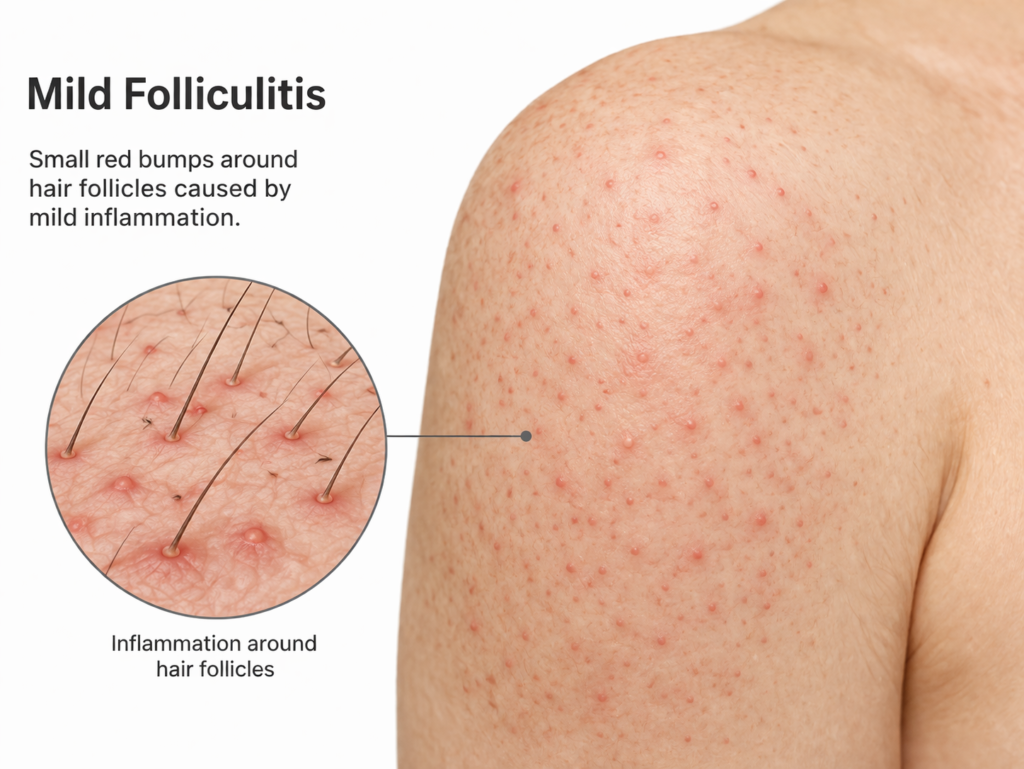
Folliculitis is a common skin condition where hair follicles become inflamed. It often appears as small red bumps or pimples. In many cases, it is mild and improves with simple care at home.
Reassurance: This condition is usually harmless. With gentle care, most cases settle without complications.
👉 Not sure if it’s folliculitis or another skin issue?
See how it compares in this guide on common skin infections.
What Is Folliculitis?
Folliculitis occurs when a hair follicle becomes irritated or infected. This can happen due to bacteria, friction, or blocked pores.
It can affect any area with hair, including the scalp, face, chest, back, arms, and legs.
Quick self-check:
- Small red or white bumps around hair
- Itching or mild discomfort
- Clusters of spots in shaved or sweaty areas
- Skin feels irritated but not severely painful
What It Looks or Feels Like
Mild:
- Small red bumps around hair follicles
- Occasional itching or tingling
- Minimal discomfort
More noticeable:
- Pus-filled bumps that resemble pimples
- Redness and warmth around the area
- Clusters that may spread
- Tenderness when touched
Common Causes
- Bacterial growth on the skin
- Shaving or friction from tight clothing
- Excess sweating and trapped moisture
- Blocked hair follicles
- Use of oily or pore-clogging products
- Exposure to poorly maintained hot tubs
What You Can Safely Do First
Most mild cases improve with simple, consistent care.
Home care tips:
- Wash the area gently with clean water and mild soap
- Avoid scratching or squeezing the bumps
- Wear loose, breathable clothing
- Pause shaving until the skin settles
- Use clean towels and avoid sharing personal items
For general skin care hygiene advice, you can refer to guidance from the CDC skin infection prevention resource.
👉 Could this develop into something deeper?
Learn the warning signs in this guide on skin abscesses.
When to See a Doctor
While folliculitis is often mild, some cases need medical attention.
Seek medical care if you notice:
- Spreading redness beyond the initial area
- Fever or feeling generally unwell
- Severe or worsening pain
- Visible pus that does not drain
- Symptoms lasting more than a few days
- You have diabetes or a weakened immune system
You can also read general advice on skin infections from the Mayo clinic’s overview of folliculitis.
Possible Complications
Most cases heal without issues. However, more severe or untreated cases may lead to:
- Deeper infections such as boils
- Persistent skin irritation
- Temporary changes in skin color
- Localized hair loss
Conclusion
Folliculitis is common and usually mild. With simple care, it often improves quickly. Paying attention to early signs helps prevent worsening.
If symptoms do not improve or become more severe, it is best to seek medical advice.
👉 Want to reduce your risk of future flare-ups?
Explore prevention tips in this guide on boils and skin care prevention.
Frequently Asked Questions
Maintain good hygiene, avoid tight clothing, and use clean shaving tools.
It can. Shaving may irritate follicles, especially with dull blades or dry skin.
It may spread through shared items like towels, but most cases are not highly contagious.
No. Although they can look similar, folliculitis involves hair follicles rather than oil glands.
Yes, mild cases often resolve within a few days with proper hygiene.