
Not sure what this skin condition is?
Try our Skin Symptom Checker to understand possible causes.
Loading views...
If you are trying to understand a boil vs abscess, you are not alone. Both can look similar at first. However, they differ in depth and severity. Knowing the difference helps you stay calm and take the right first steps.
Reassurance: Most boils and small abscesses are common and manageable. Many improve with simple care. However, it helps to know what to watch for.
👉 Not sure if it’s a skin infection?
Start with this simple guide on common skin infections explained.
Quick Comparison: Boil vs Abscess
Scroll →
| Feature | Boil | Abscess |
|---|---|---|
| Depth | Surface (near hair follicle) | Deeper under the skin |
| Size | Usually small | Often larger |
| Pain | Mild to moderate | Moderate to severe |
| Feel | Firm bump | Deeper swelling, may feel soft |
| Progression | May resolve on its own | More likely to need medical care |
What Is the Difference Between a Boil and an Abscess?
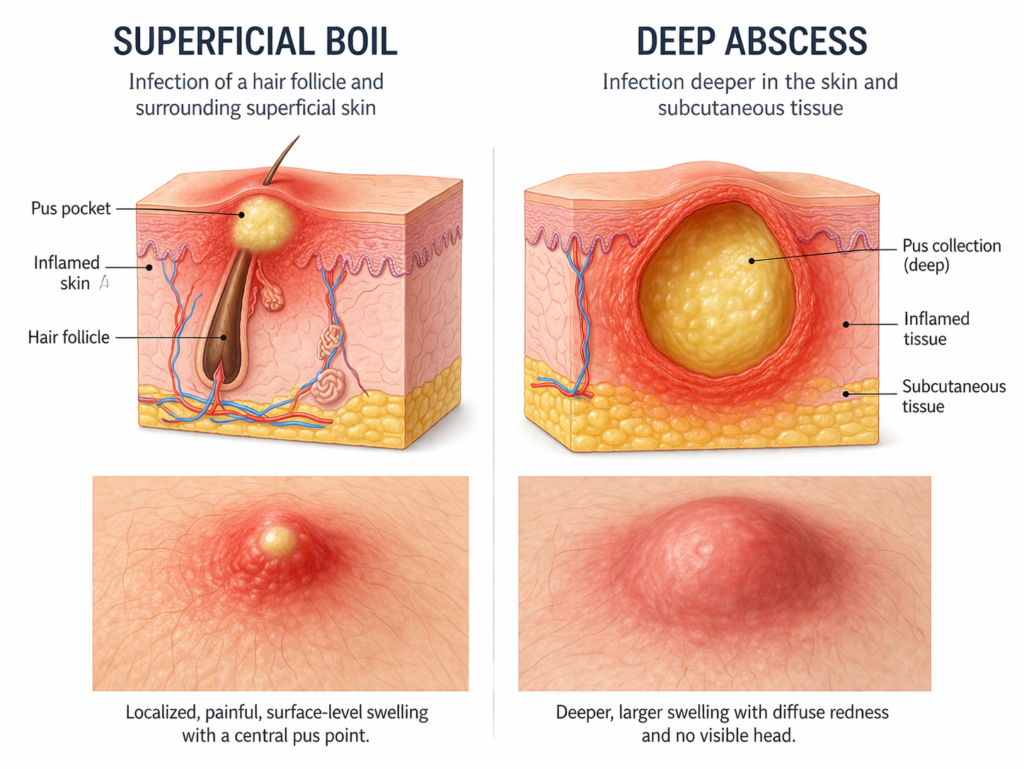
A boil is a small infection that starts in a hair follicle or oil gland. An abscess is a deeper collection of infection under the skin. It may involve more surrounding tissue. In simple terms, a boil is more superficial. An abscess is deeper and may feel more intense.
Quick Self-Check:
- Small bump with a central point – May be a boil
- Larger swelling with deeper pain – May be an abscess
- Increasing discomfort – Monitor closely
What It Looks or Feels Like
Mild (Early Stage)
- Small red bump
- Mild tenderness
- Warm skin
- Firm swelling
More Noticeable
- Larger swelling
- Increased pain or pressure
- Soft center may develop
- Skin may appear stretched
Common Causes
- Bacteria entering small skin breaks
- Blocked hair follicles
- Friction or sweating
- Weakened immune defenses
- Poor skin hygiene
What You Can Safely Do First
Many mild cases can improve with simple care at home.
Home Care Tips:
- Use a warm compress for 10 – 15 minutes
- Keep the area clean
- Avoid squeezing or picking
- Wash hands before and after contact
👉 Want simple home care steps?
Follow this safe guide on skin infection home care.
You should notice gradual improvement within a few days.
When to See a Doctor
Some symptoms suggest you need medical review.
Seek medical care if you notice:
For more guidance, see the NHS abscess guide or the CDC skin infection overview.
- Spreading redness
- Fever or feeling unwell
- Severe or worsening pain
- Visible pus not draining
- No improvement after a few days
- Diabetes or weakened immunity
Possible Complications
Most cases settle well. However, untreated infections may spread.- Deeper skin infection
- Recurring boils
- Skin scarring
Conclusion
Understanding a boil vs abscess helps you act early and safely. While both are infections, their depth and severity differ. Start with simple care. Then monitor closely. Seek help if symptoms worsen or persist.
👉 Still unsure what you’re dealing with?
Learn more about abscess symptoms and causes.
Frequently Asked Questions
Is a boil the same as an abscess?
No. A boil is smaller and more superficial. An abscess is deeper.
Can a boil turn into an abscess?
Yes. It may deepen if the infection spreads.
Should I squeeze a boil?
No. This can worsen the infection.
When should I worry?
Seek care if pain worsens, redness spreads, or fever appears.
How long do they take to heal?
Mild cases may improve in a few days.