
Not sure what this skin condition is?
Try our Skin Symptom Checker to understand possible causes.
Loading views...
If you’re noticing redness, swelling, or discomfort on your skin, you may be dealing with a mild infection. Many people search for skin infection home care because they want to know what they can safely do first.
The reassuring part is that many mild skin infections improve with simple, gentle care at home, especially when addressed early. To understand the bigger picture, you can explore our skin infections guide.
Most early or minor skin infections can improve with basic home care. Acting early often helps prevent worsening.
👉 Not sure what type of skin infection you may have?
Explore our complete skin infections guide to better understand your symptoms.
What It Is
Before looking at what to do, it helps to understand what’s happening in the skin.
Skin infection home care refers to simple, safe steps you can take to support healing when symptoms are mild.
Skin infections can develop when bacteria or other germs enter through small breaks in the skin. Because of this, early care focuses on keeping the area clean, reducing irritation, and allowing the skin to recover naturally.
General hygiene guidance from trusted sources like the World Health Organization hygiene recommendations supports keeping skin clean as a key step in preventing and managing infections.
Quick self-check:
- Is the area only mildly red or tender?
- Is there no fever or spreading redness?
- Is the discomfort still manageable?
If yes, trying home care for a skin infection may be appropriate.
What It Looks or Feels Like
Now that you understand the basics, the next step is recognizing how a mild infection may appear.
Mild Symptoms
- Slight redness
- Mild swelling
- Tenderness when touched
- Warmth in a small area
- Minor irritation around a cut, nail, or hair follicle
More Noticeable Symptoms
- Increasing discomfort
- Localized swelling
- Skin feeling tight
- Area not improving yet but still limited
In some cases, symptoms may appear around the nail. When this happens, it could relate to a paronychia (nail infection) explained in more detail on our dedicated page.
Common Causes
Understanding what may have triggered the infection can help you avoid further irritation.
Skin infections often begin when the natural skin barrier is disrupted, allowing germs to enter.
- Small cuts or scratches
- Nail biting or picking
- Frequent exposure to water
- Insect bites
- Ingrown hairs
- Dry or cracked skin
- Poor skin or nail hygiene
For example, infections around the nail may start as early signs of nail infection, especially after minor injury.
What You Can Safely Do First
Once you recognize early symptoms, the next step is taking safe action.
Home Care Guidance:
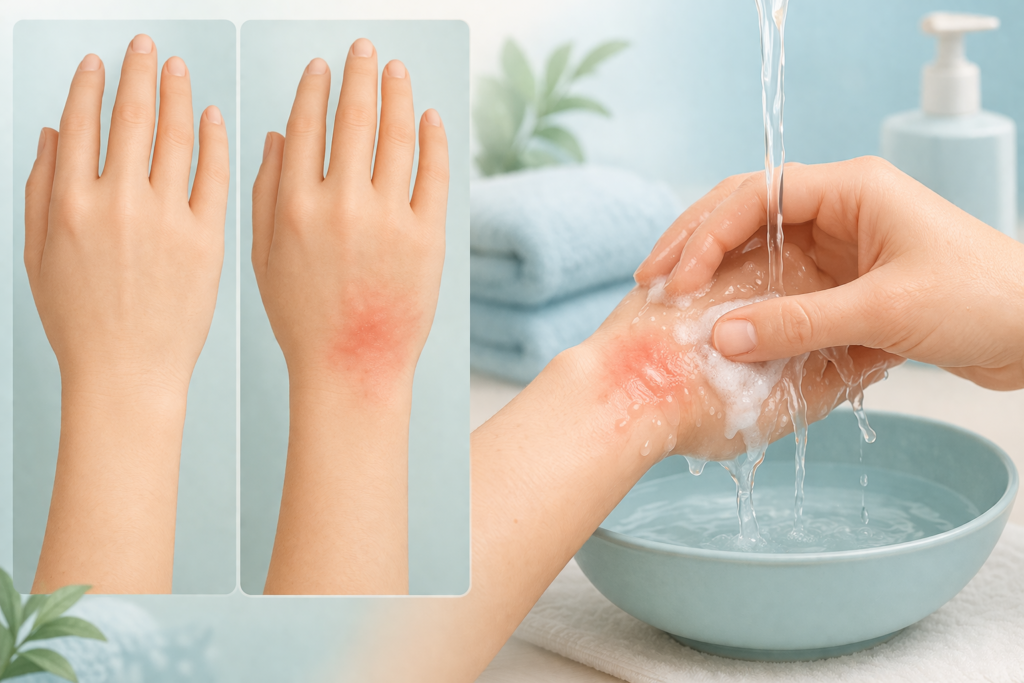
If you’re wondering how to treat a skin infection at home, start with these simple steps:
1. Keep the Area Clean
Start with gentle cleaning, as this helps remove irritants.
- Wash with clean water and mild soap
- Avoid scrubbing
2. Use Warm Soaks
Next, you can use warmth to ease discomfort.
- Soak in warm (not hot) water for short periods
- Helps reduce swelling
3. Keep It Dry Between Care
After cleaning, dryness is important.
- Pat dry gently
- Avoid prolonged moisture
4. Avoid Irritation
At this stage, protecting the skin is key.
- Do not squeeze, pick, or scratch
- Avoid pressure or tight clothing
5. Protect the Area
If needed, provide light protection.
- Use a clean, light covering
- Change regularly
6. Support Healing
Finally, allow your body to recover.
- Rest the area
- Maintain hygiene
Together, these steps form the foundation of early treatment for skin infections at home and are often enough for mild cases.
👉 Want to reduce your risk of future skin infections?
Learn simple habits in our skin infection prevention guide.
What to Avoid
While home care can help, certain actions may slow healing.
Even when using home remedies for mild skin infections, it’s best to avoid:
- Harsh chemicals or unknown substances
- Tight bandaging that traps moisture
- Repeated touching or picking
- Ignoring worsening symptoms
For broader guidance, resources like the NHS skin infection guidance also emphasize avoiding irritation and monitoring changes.
When to See a Doctor
Although many mild infections improve, it’s important to recognize when home care is no longer enough.
Seek medical care if you notice:
- Spreading redness (which may indicate a more serious infection such as cellulitis)
- Fever or feeling unwell
- Severe or worsening pain
- Visible pus that does not drain
- Symptoms lasting more than a few days
- If you have diabetes or a weakened immune system
Complications (If Not Managed Early)
If early care is delayed or ineffective, complications can develop over time.
- Spread to surrounding skin
- Increased pain
- Slower healing
- Need for medical treatment
For instance, repeated or ongoing nail infections may relate to chronic nail infection causes and care, especially with repeated exposure to moisture or irritation.
👉 Still unsure if your symptoms need medical attention?
Read our paronychia guide to understand warning signs of nail infections.
Conclusion
In summary, skin infection home care focuses on simple, early steps that support natural healing.
Most mild infections improve with gentle care—but the key is paying attention to changes and acting early.
By combining simple care with awareness of warning signs, you can manage symptoms confidently while knowing when to seek help.
FAQs
Yes, mild infections often improve with proper self care for minor skin infections.
If there’s no improvement within a few days, it’s best to seek medical advice.
Warm soaks can support healing in early or mild cases.
A light covering may help protect the area, but avoid trapping moisture.
Start by gently cleaning the area and avoiding irritation.
Educational Disclaimer
This article is for educational purposes only and does not replace professional medical care. If you are unsure about your symptoms, consult a qualified healthcare provider.