
Not sure what this skin condition is?
Try our Skin Symptom Checker to understand possible causes.
Loading views...
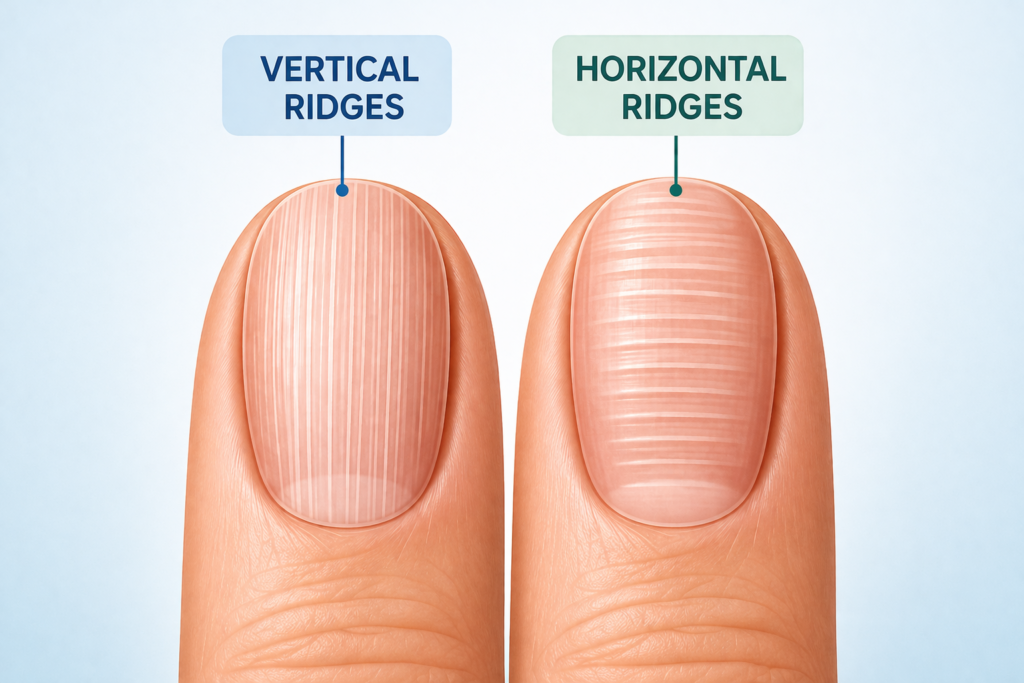
Ridged nails are nails with vertical or horizontal lines on their surface. Vertical ridges are usually harmless and linked to aging, while horizontal ridges may signal temporary stress or illness. Most cases improve with simple care, but sudden or deep ridges should be evaluated. Ridged nails are very common and often not a cause for concern. Many people notice these changes gradually over time, especially as nails naturally age. 👉 Not sure what your nail changes mean? Explore our complete guide to nail conditions for a clearer understanding.
Most ridged nails are not dangerous.
- Vertical ridges on nails are often a normal part of aging
- Many cases improve with simple nail care
- Only certain patterns need medical attention
What It Is
Ridged nails are nails that develop visible grooves or lines on their surface. These ridges can vary in depth and pattern, and they may affect one or several nails. To better understand them, it helps to know there are two main types:- Vertical ridges on nails (running from cuticle to tip)
- Horizontal ridges on fingernails (running across the nail)
Quick self-check:
Now that you understand what ridged nails are, the next step is recognizing how they typically appear.
- Are the ridges running vertically? → Often normal
- Did the ridges appear suddenly? → Monitor closely
- Are several nails affected at once? → Consider evaluation
What It Looks or Feels Like
Mild Symptoms
- Fine vertical ridges on nails
- Slightly rough nail surface
- No pain or color change
More Noticeable Symptoms
- Deep grooves in the nail
- Horizontal ridges on fingernails
- Nails that split or peel
- Changes in nail color or thickness
Common Causes of Ridged Nails
- Natural aging (most common cause)
- Dry or brittle nails
- Repeated minor trauma (picking or manicures)
- Temporary illness or physical stress
- Nutritional imbalance (in some cases)
- Skin conditions affecting the nail
- Circulation or systemic health changes (less common)
What You Can Safely Do First
Simple home care steps:
These simple habits can gradually improve the appearance of ridged nails and support healthy nail growth.
These habits are part of maintaining overall nail health. You can see the healthy nail care tips for more details on this.
Even with good care, it is important to recognize when symptoms may need medical attention.
- Keep nails short and neatly trimmed
- Gently smooth rough nail surfaces
- Moisturize nails and cuticles regularly
- Avoid harsh nail treatments or chemicals
- Protect hands during cleaning or washing
When to See a Doctor
Seek medical advice if you notice:
If you are unsure whether your symptoms are serious, you can also review guidance from this nail health resource from Mayo Clinic.
Recognizing these signs early helps ensure appropriate care.
- Deep or worsening ridges
- Horizontal ridges on fingernails affecting multiple nails
- Nail discoloration (dark, yellow, or white changes)
- Pain, swelling, or surrounding skin changes
- Symptoms lasting more than a few days
- Fever or spreading redness
- Visible pus that does not drain
- If you have diabetes or a weakened immune system
Complications
Most ridged nails do not cause complications and remain stable.- Deep ridges may weaken the nail
- Persistent changes may affect nail growth
- Underlying causes may occasionally require attention
Conclusion
Ridged nails are usually harmless, especially when they appear as vertical lines linked to aging or dryness. With simple care, many people can improve how their nails look and feel. Paying attention to changes helps you decide when to seek advice.
👉 Want to understand related nail problems?
Explore our guide to nail infections (paronychia) to learn what to watch for and when to seek care.
FAQs
What do ridges on nails mean?Ridges on nails are often linked to aging or minor nail stress. Horizontal ridges may reflect temporary changes in nail growth.
Are vertical ridges on nails normal?
Yes. Vertical ridges on nails are common and usually harmless.
What causes horizontal ridges on fingernails?
They may occur after illness or stress affecting nail growth.
Can ridged nails go away?
Some improve with care, but age-related ridges may remain.
When should I worry about nail ridges?
If ridges are deep, sudden, or associated with other symptoms, they should be checked.