
Not sure what this skin condition is?
Try our Skin Symptom Checker to understand possible causes.
Loading views...
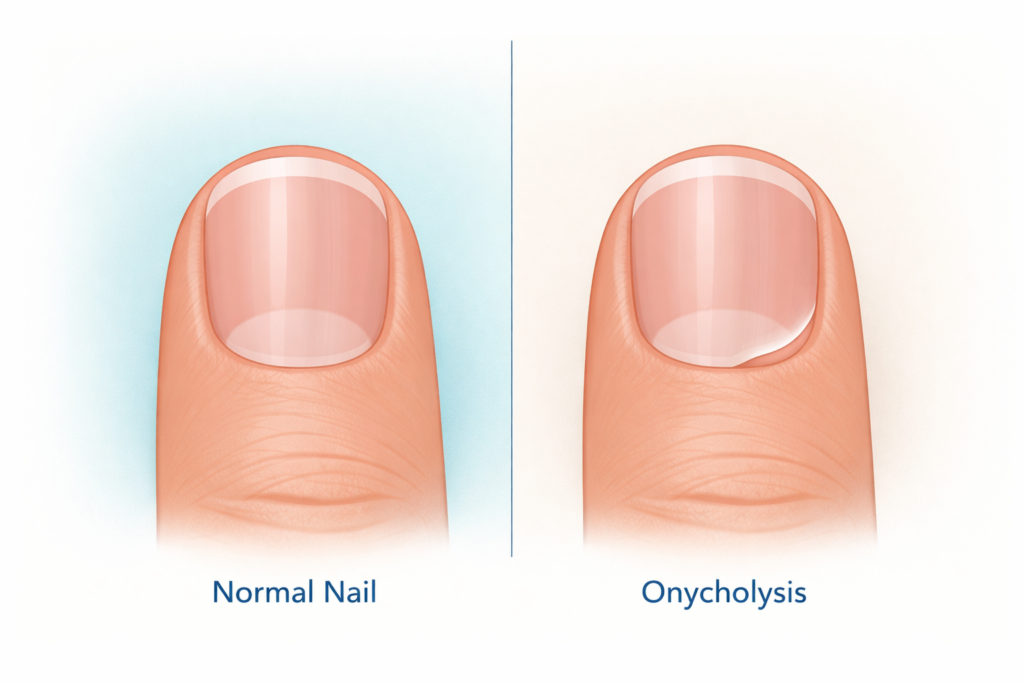
Nail separation, also called onycholysis, happens when the nail starts lifting from the nail bed. Many people first notice a white area at the tip and wonder, “why is my nail separating?”
In most cases, it develops slowly and does not cause pain at first. However, the nail may continue coming off the nail bed if the cause is not addressed.
Understanding nail separation helps you take the right first steps. It also helps you know when to seek medical care.
👉 Start here: Explore common nail conditions explained to understand related nail problems.
What Is Nail Separation (Onycholysis)?
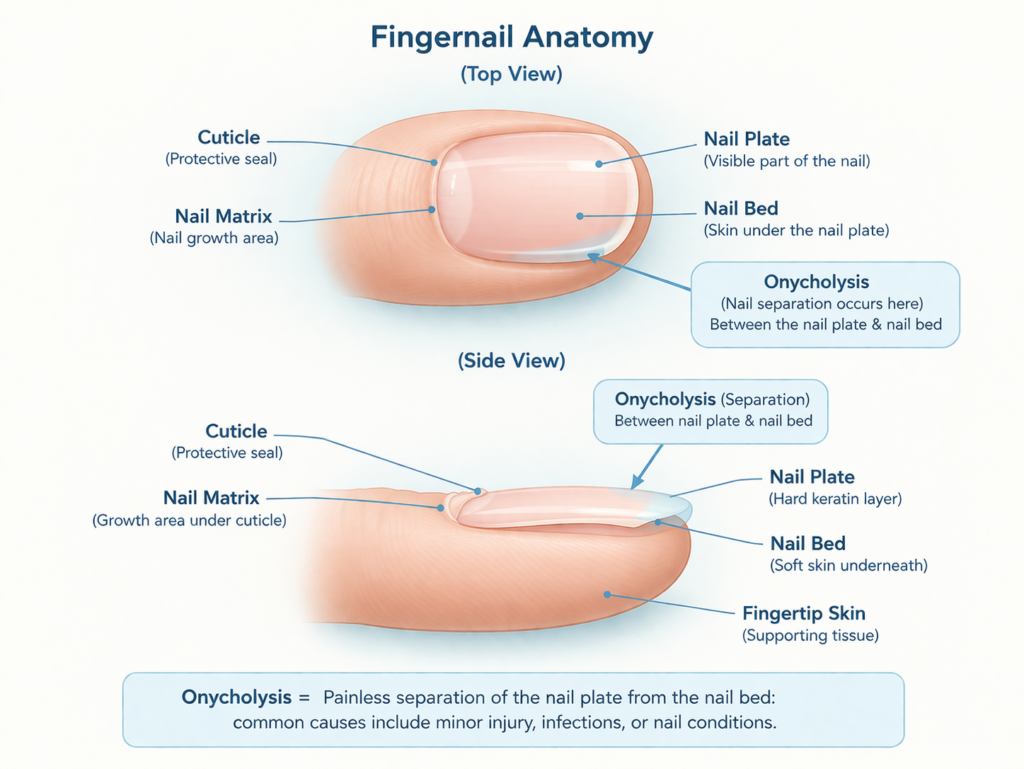
Nail separation occurs when the nail plate lifts away from the nail bed. This process is also known as onycholysis.
In most cases, nail separation starts at the tip. Then, it slowly moves backward.
- The lifted area may look white or pale
- Sometimes it appears yellow, brown, or green
- Air or debris can collect underneath
- The nail may feel loose
According to NHS guidance on nail problems, nail separation often relates to irritation, injury, or infection.
What It Looks or Feels Like When a Nail Is Lifting
If your nail is lifting from the nail bed, you may notice early or more advanced changes.
Mild Symptoms
- Small white area at the tip
- No pain
- Slight lifting of the nail
- Nail feels loose but stable
More Noticeable Symptoms
- Larger part of the nail lifting
- Yellow, brown, or green discoloration
- Dirt or debris under the nail
- Mild discomfort or sensitivity
- Changes in nail shape
Compare symptoms with nail infection around the cuticle explained.
Common Causes of Nail Separation
If you are asking “why is my nail separating?”, several causes may explain it.
- Repeated trauma, such as tight shoes or nail injuries
- Frequent contact with water or cleaning chemicals
- Fungal or bacterial infections
- Skin conditions like psoriasis or eczema
- Harsh nail products or manicures
- Less commonly, underlying health conditions
For example, the Mayo Clinic overview of nail disorders explains that both damage and medical conditions can affect nails.
What You Can Safely Do First for Nail Separation
If your nail is coming off the nail bed, simple care steps can help prevent worsening.
Safe first-care for nail separation:
- Trim the nail short
- Avoid pulling or lifting the nail
- Keep nails clean and dry
- Reduce contact with water
- Avoid harsh chemicals or nail products
- Wear gloves during cleaning
These steps protect the nail. As a result, nail separation is less likely to worsen.
In addition, World Health Organization hygiene advice supports keeping nails clean and dry.
👉 Related: Learn why nails become thick or damaged.
When Nail Separation Needs Medical Attention
Although nail separation is often mild, some symptoms may need medical evaluation.
See a doctor if you notice:
- Spreading redness
- Fever or feeling unwell
- Severe or increasing pain
- Pus or discharge
- Rapid worsening of nail separation
- No improvement after a few days
- Diabetes or weak immunity
If symptoms persist, NHS nail advice recommends medical review.
Possible Complications
- Infection under the nail
- Permanent nail changes
- Partial or full nail loss
- Chronic nail problems
Conclusion
Nail separation is common. In many cases, it improves with simple care.
However, symptoms may worsen if ignored. Therefore, early care is important.
If the nail does not improve, seek medical advice.
👉 Next step: Explore common nail problems and how to tell them apart.
FAQs About Nail Seperation
Nail separation can happen due to injury, moisture, infection, or skin conditions.
It usually means the nail has detached, a condition known as onycholysis.
In mild cases, yes. However, persistent nail separation should be checked.
Yes. In many cases, the nail grows back normally over time.
Healing may take several months as the nail grows out.
Educational Disclaimer
This article is for educational purposes only and does not replace professional medical care. If you are unsure about your symptoms, consult a qualified healthcare provider.